Why the plate matters more than the brand
Cellar cooling makers build several generations under similar names, and one series can include units with different compressors, controllers and cabinet sizes. WhisperKool's SC series alone spans four capacities in two housings. A fan motor or a probe that fits one may not fit the next, and the only dependable way to tell them apart is the model and serial number stamped on the housing.
The plate also records the electrical rating the unit was built for. WhisperKool's split system manual asks installers to make sure the supplied voltage matches the rating on the unit's specification plate, and a technician checks those same figures before testing a compressor or ordering a part.
- Model number: the series and the capacity.
- Serial number: on many makes it also encodes the build date or revision.
- Voltage, running amps and the circuit the unit needs.
- On most plates, the refrigerant type and charge, which matter for any sealed-system work.
Source: WhisperKool — SC Pro series owner's manual — The SC series covers the 2000, 3000, 4000 and 8000 in two cabinet sizes; support asks first for the model and serial number, then installation details and photos; the manual ends with a form for model and serial number; WhisperKool — Platinum split 4000–8000 owner's manual — Ensure the voltage supplied matches the rating specified on the unit's specification plate
Where to look on each kind of unit
Start with the paperwork, then the housing. The plate is rarely on the controller or behind the cellar-side grille, and it is never worth removing a panel to find.
Through-the-wall units
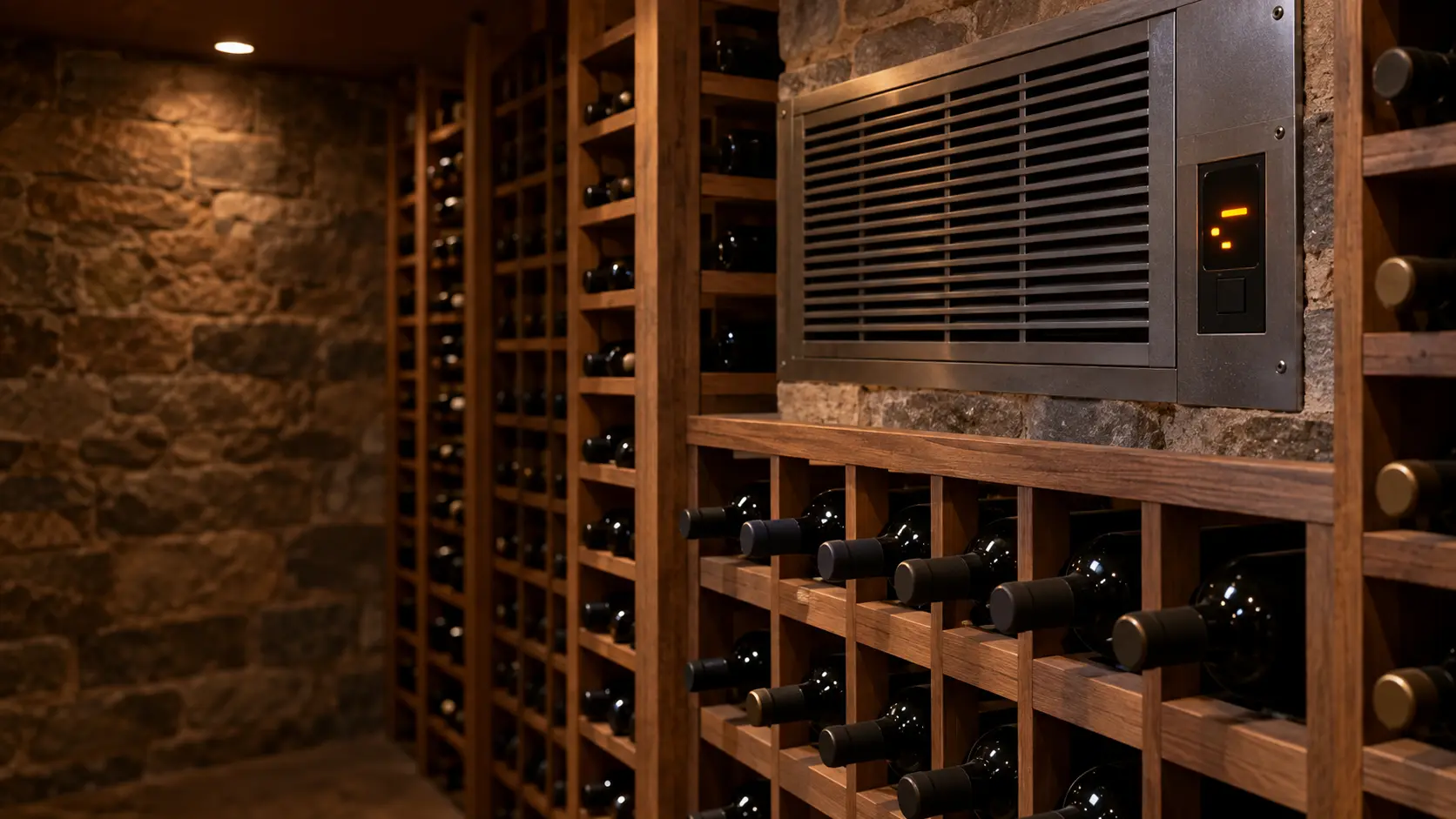
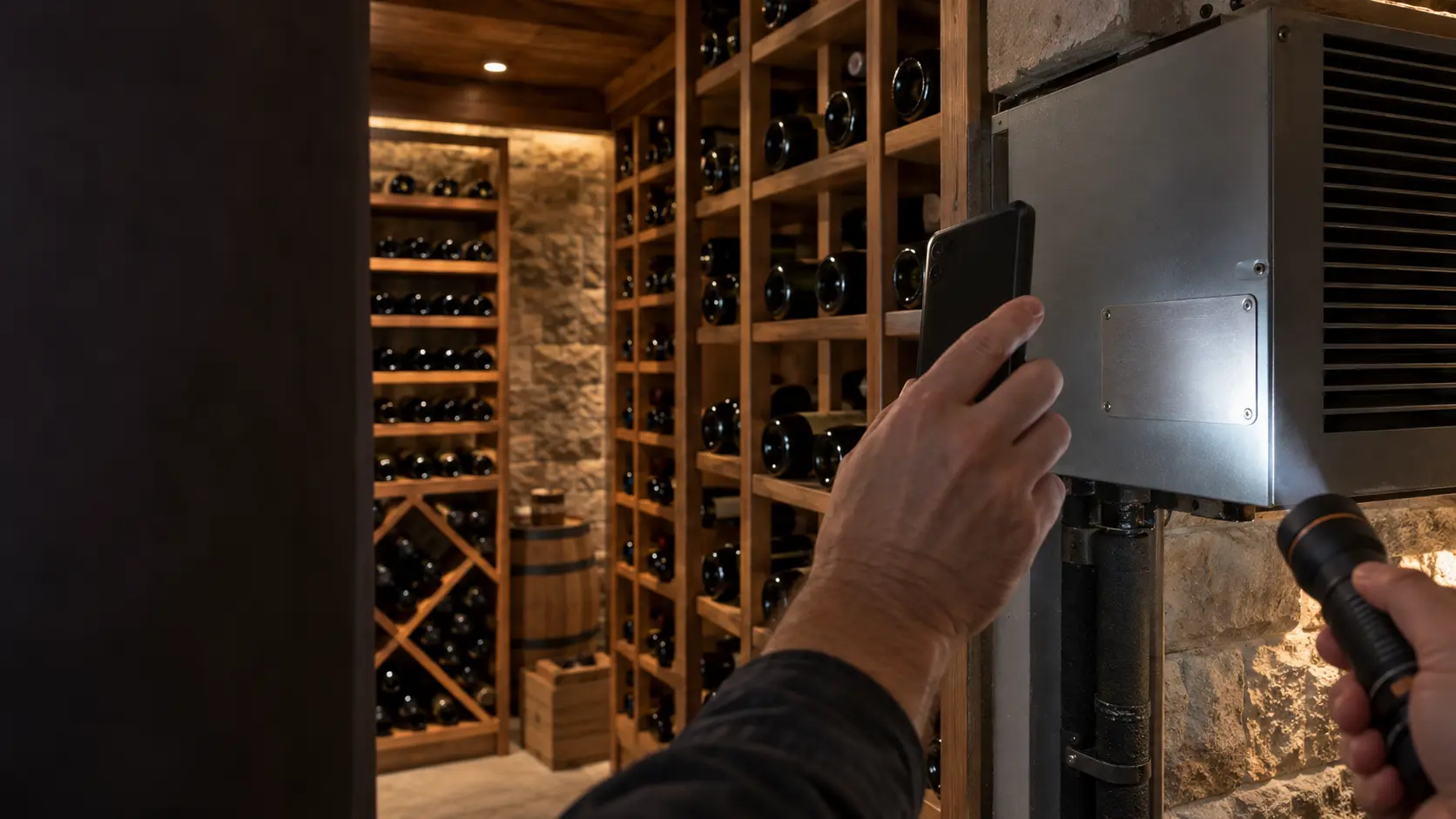
The cellar side shows only a grille, so look at the side panels from the exhaust room with a flashlight and a phone held flat to the wall. CellarPro puts its serial number on the left side of the housing. If trim is fitted tightly around the unit, the plate may be visible only through a gap between housing and framing; photograph it through the gap rather than pulling the unit, which is heavy and sealed into the wall. Breezaire's WKL units alone weigh from 45 to 101 pounds.
Ducted units
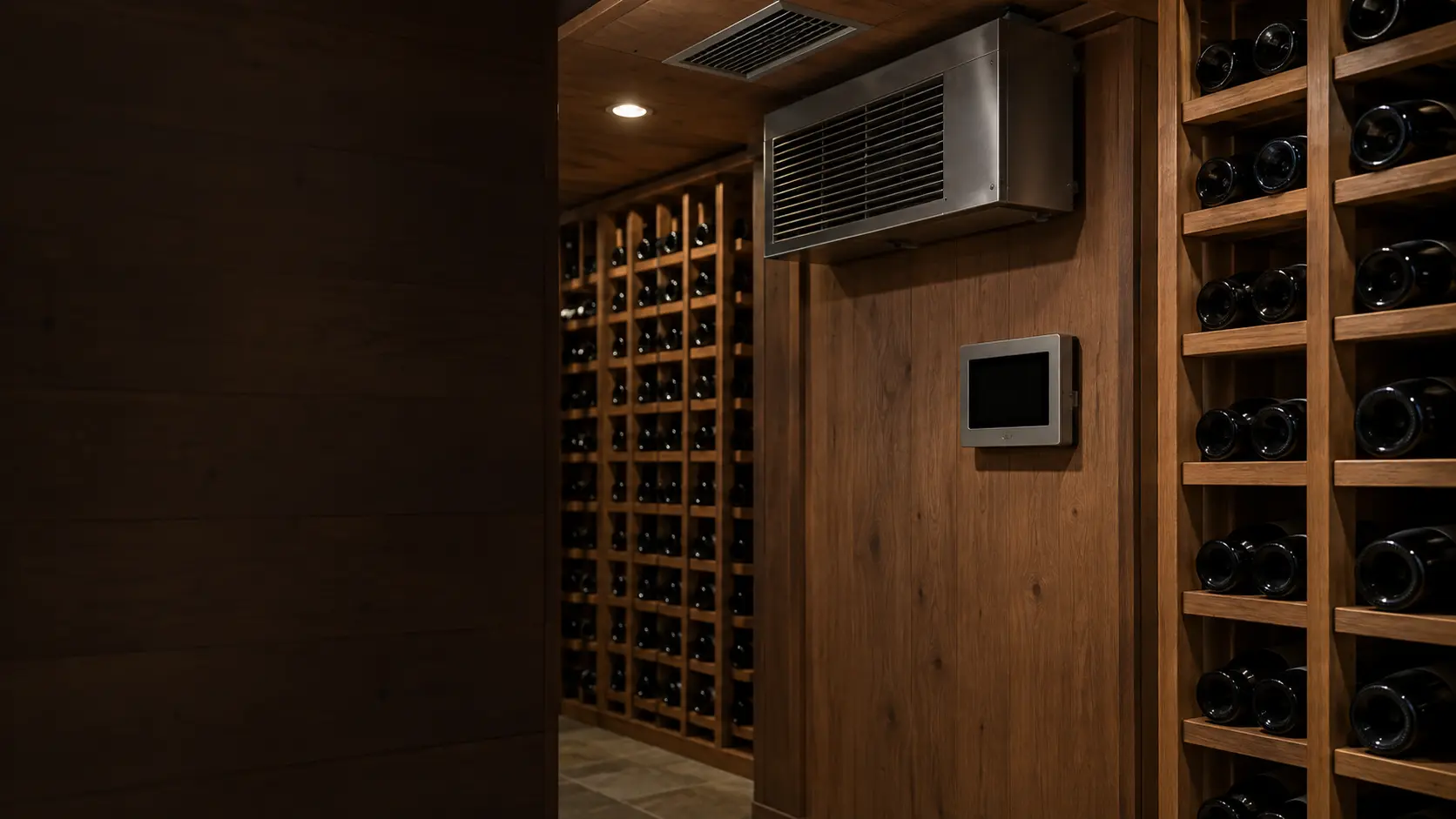
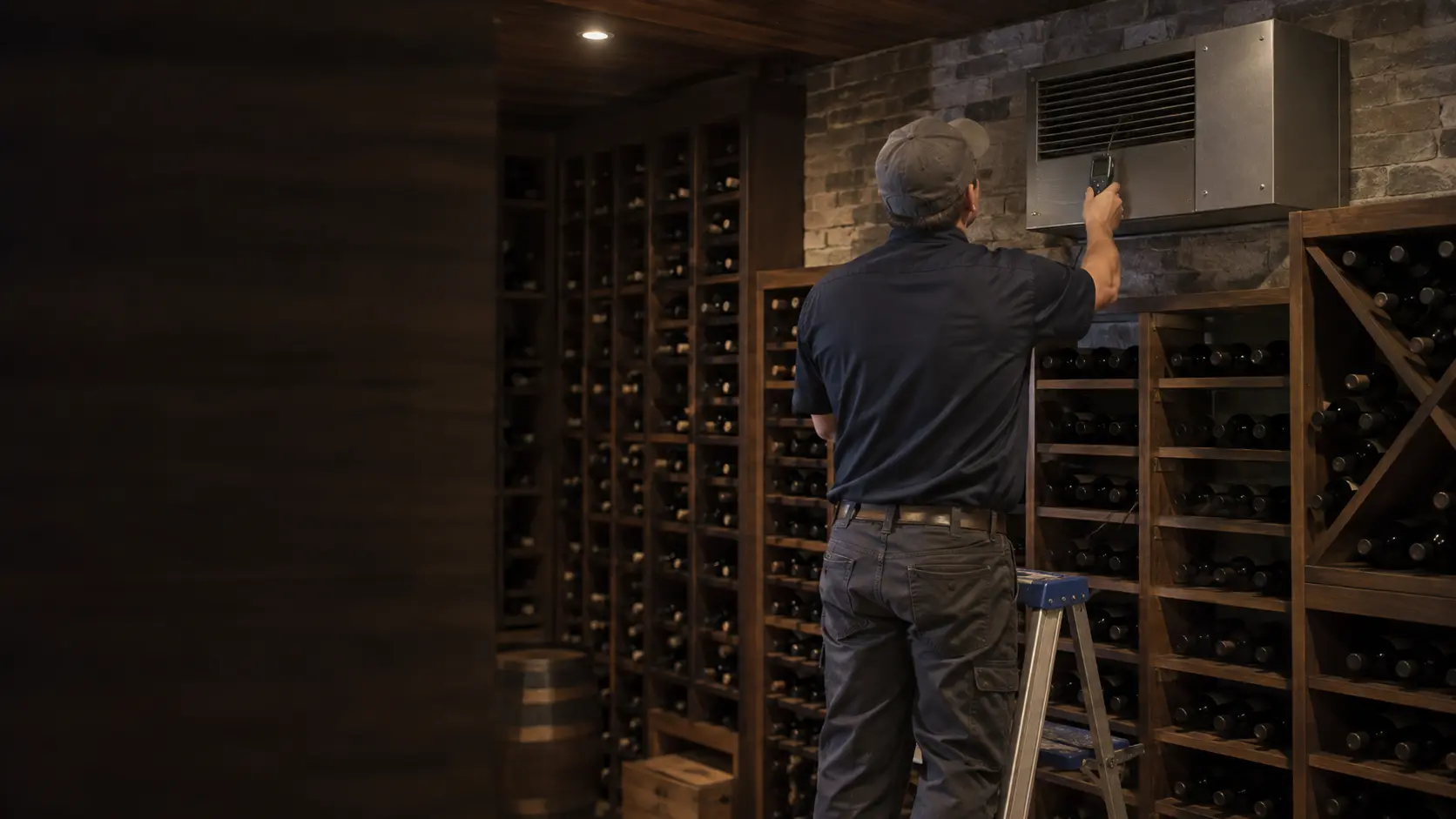
A ducted self-contained unit usually sits in a closet, a basement or above a ceiling, with ducts running to the cellar. Its plate is on the cabinet, often at the end where the power connects. In a ceiling space, take the photo from a ladder with the unit switched off at its breaker, and do not stand on joists or ductwork to reach it.
Split systems and ceiling-mounted units
A split system has two pieces and usually two plates. Outside or in a mechanical room, the condenser cabinet carries one, often near the electrical box; the evaporator in the cellar carries its own, typically on a side of the housing or behind its access cover. A ceiling-mounted unit's plate may face the ceiling itself, so check the manual or the installer's invoice before climbing up to look.

When the plate is missing or unreadable
Plates fade in humid exhaust rooms and disappear under paint when trim is refinished. Look for the owner's manual first. CellarPro asks owners to write the serial number on an early page, Breezaire's WKL instructions carry blank fields for the model, serial number, installer and date on the first page, and WhisperKool's manual ends with a form asking for the same numbers. Many installers also recorded them on the invoice or the start-up sheet left in the cellar.
If none of that survives, photograph the controller, both grilles, the drain port and the exhaust side, and measure the housing. A technician can often narrow the model from those details, though parts for a unit with no plate take longer to confirm.
- The owner's manual: the first pages and the back.
- The installer's invoice or start-up sheet.
- The builder's or cellar designer's handover documents.
- The confirmation email, if the unit was registered online.
Source: CellarPro — 1800 series owner's manual — The seven-digit serial number is on the left side of the cooling unit; the manual asks owners to write it in the space provided; WhisperKool — SC Pro series owner's manual — The SC series covers the 2000, 3000, 4000 and 8000 in two cabinet sizes; support asks first for the model and serial number, then installation details and photos; the manual ends with a form for model and serial number; Breezaire — WKL Series installation instructions — WKL units weigh 45 to 101 lb; the first page has fields for model, serial number, installer and date
Photographing it so it can be read
Hold the phone square to the plate, turn off the flash if the metal is shiny and light it with a flashlight held at an angle instead. Take one close shot that fills the frame and one wider shot that shows where the plate sits on the unit. Zoom in on the photo before putting the ladder away; a blurred digit costs more time than the climb.
Send the photos with your booking, along with the controller reading and any code, and say from which side of the wall or ceiling the unit is reached. That one message decides whether the technician arrives with the right parts and the right ladder.