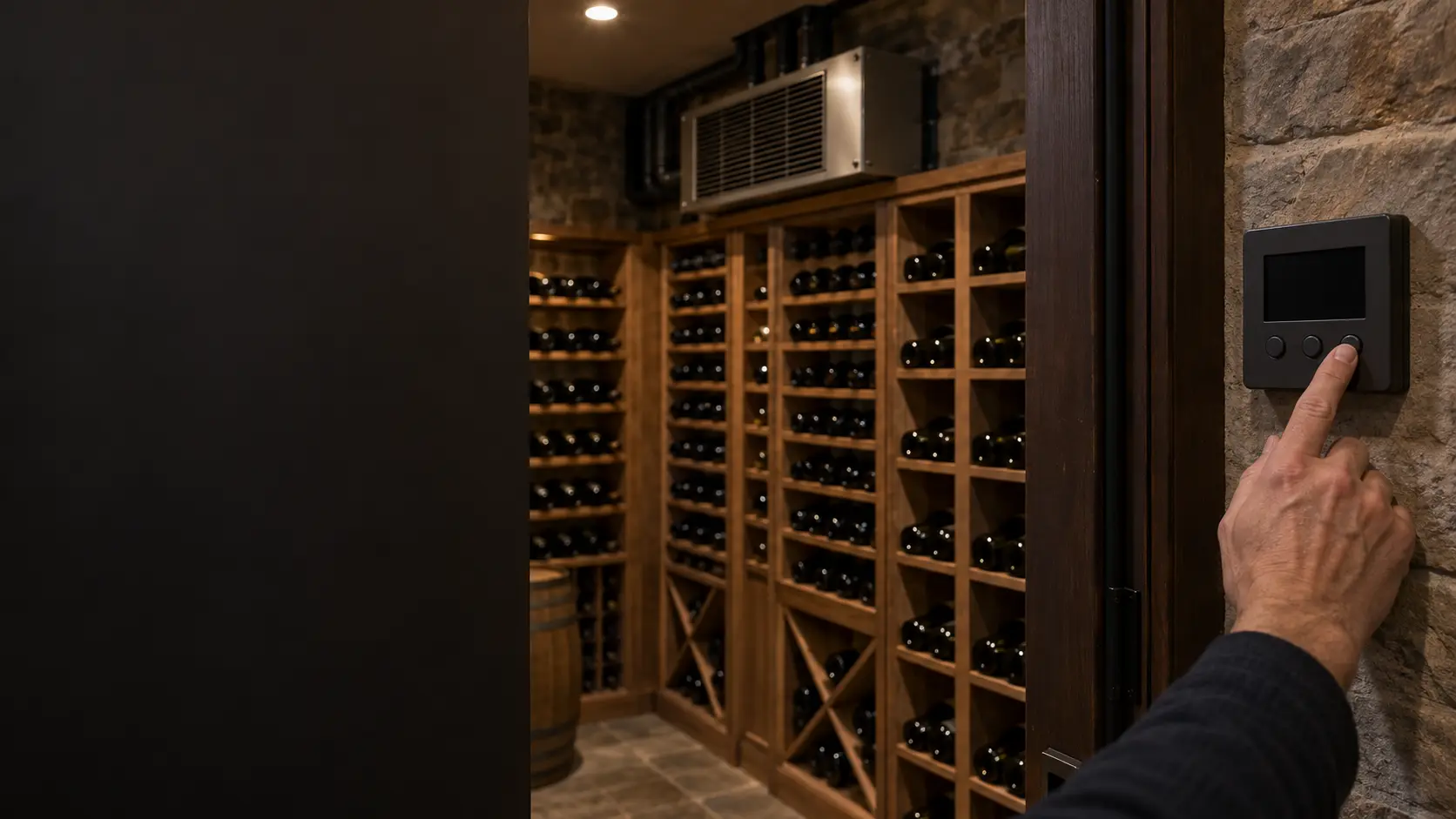


Checks an owner can make in the cellar
Troubleshooting
guides.
What an owner can safely check on a cellar cooling system, from a thermometer and hygrometer among the racks to the controller's set point, the filter, the drain outlet and the exhaust side, and where to stop and book.
Mon–Sat, 8am–8pm
- Three guides
- Read before you book
- Says where to stop
Book a visit
Three short steps, about a minute.
or call (844) 398-5977
Loading appointment form…
The appointment form couldn’t load. Please try again.
Troubleshooting,
guide by guide.
Use this section before you book, when you want to know whether the trouble sits in the unit, in the room or somewhere in between. Everything here can be done with a probe thermometer, a flashlight, a sheet of paper and the manual that came with the unit, and none of it involves opening a housing.
All 18 guides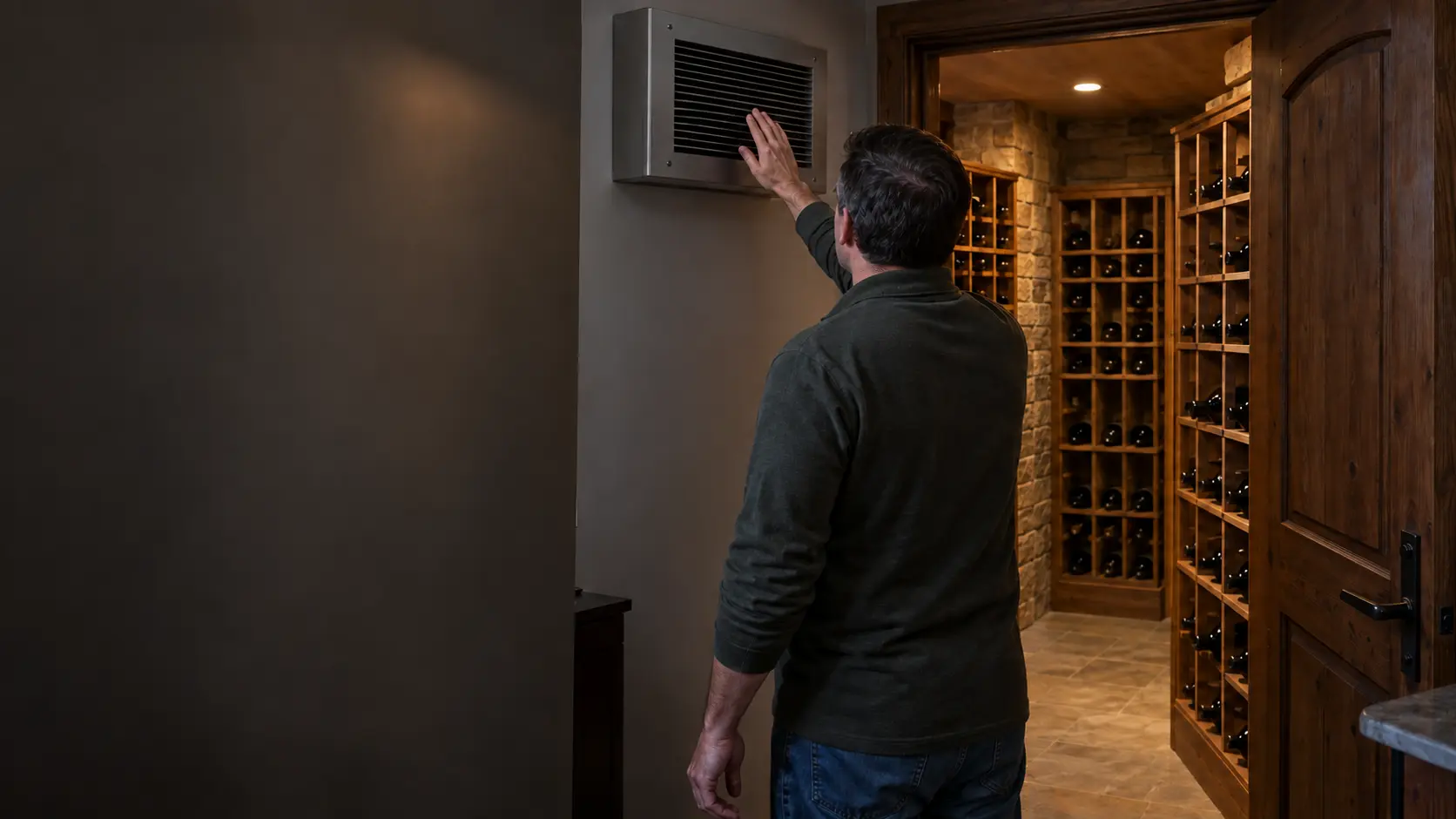
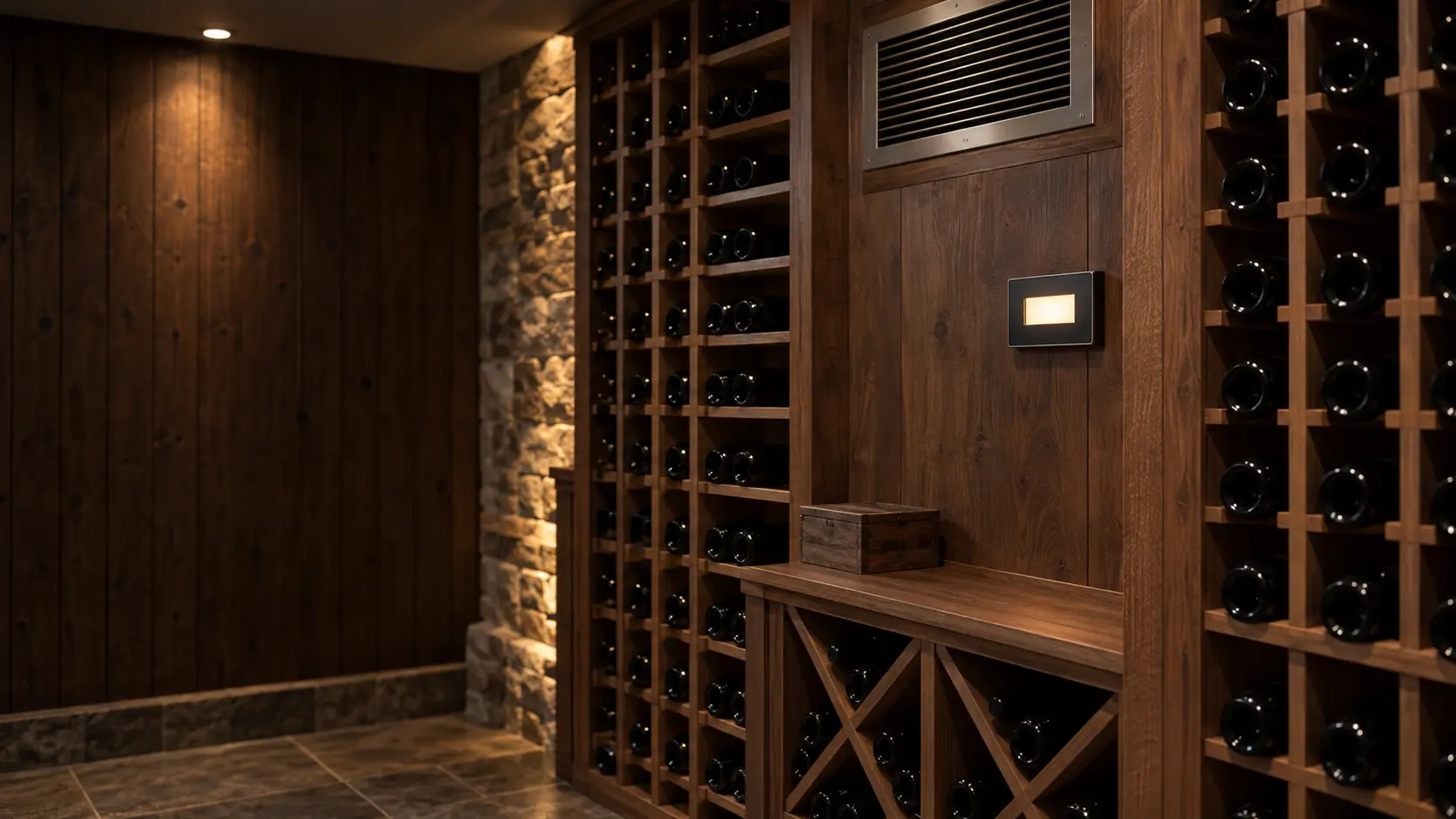
Checks an owner can make in the cellar.
Cellar cooling is split across two spaces, the cellar itself and the room or outdoor spot where the heat goes, so most checks here are done twice, once on each side. Readings from only one side are the most common reason a problem stays unexplained after a first call.
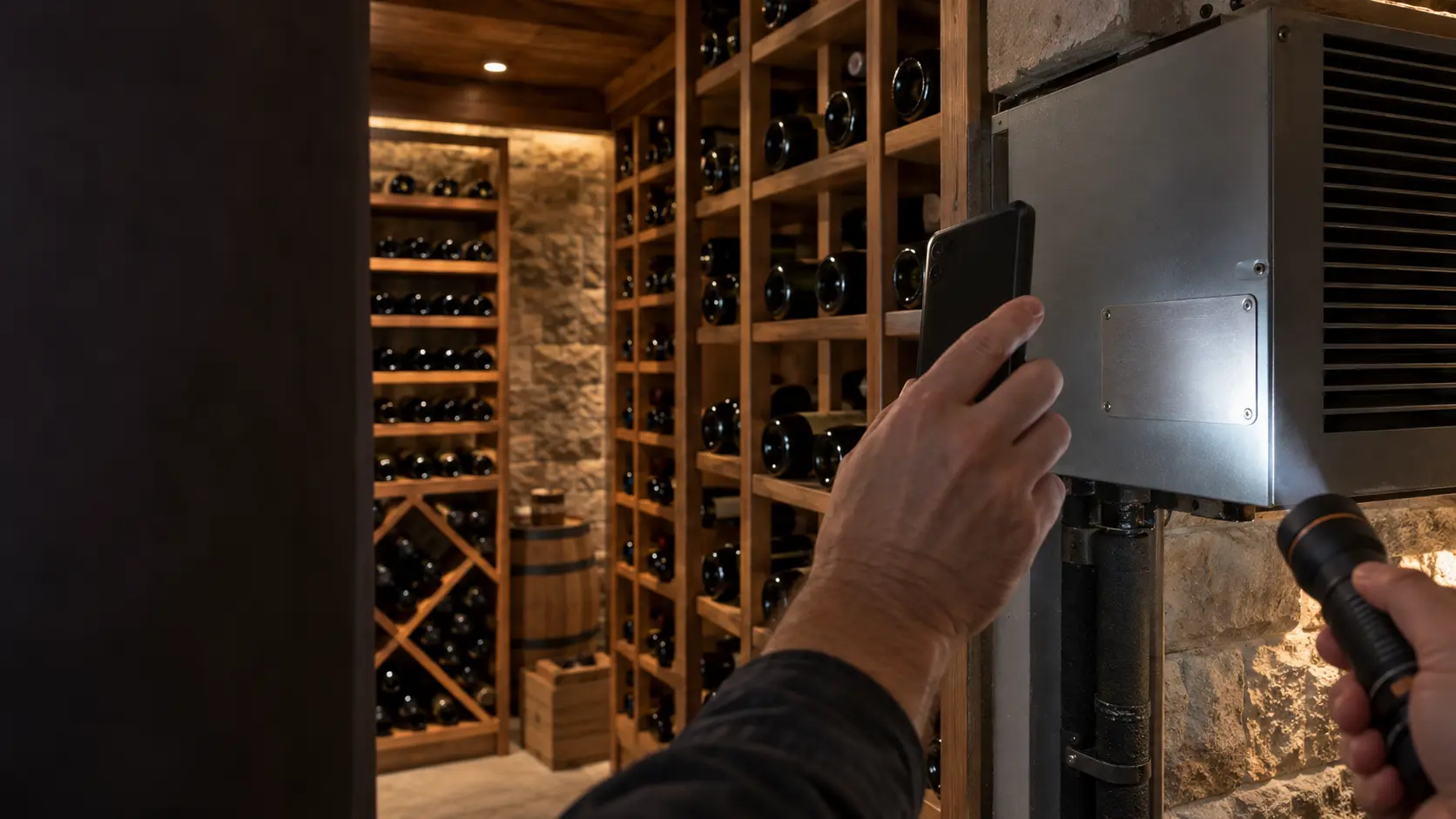
Two guides deal with information rather than symptoms. One explains what a cellar controller actually shows, from the number on the display to the letters of its alarms, using the makers' own manuals. The other shows where the model plate sits on each kind of unit and how to photograph it, since the right parts depend on it.
Every guide marks where an owner's part ends: a breaker that will not stay on, water near power, anything behind a panel, the refrigerant lines of a split system. Those limits appear at the point where they apply rather than in small print at the end, and nothing in this section asks you to pull a unit out of its wall.
Not sure where to start?The short answerCellar cooling checks before booking: twenty minutes on both sides of the wall
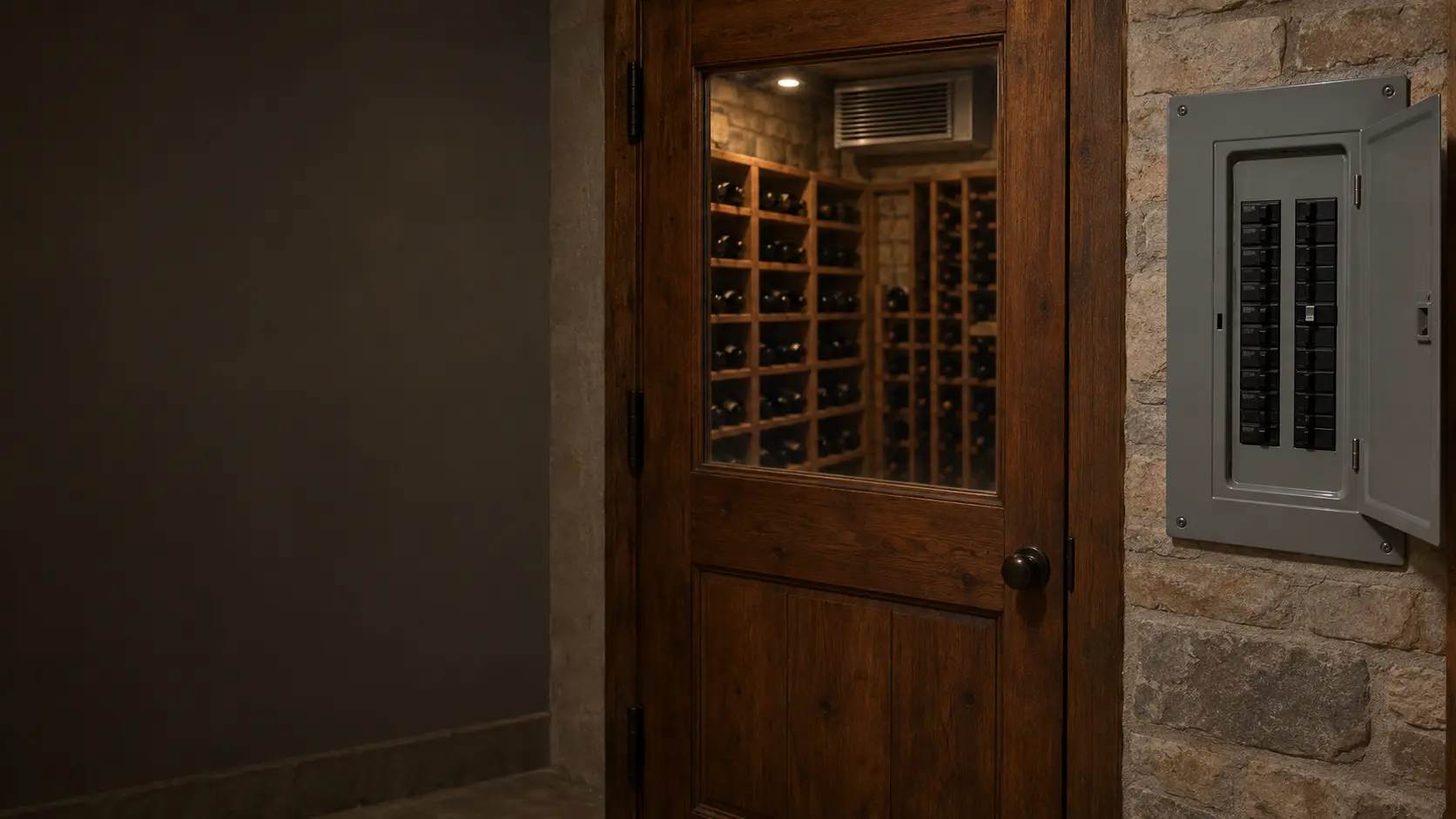
Wine cellar cooling troubleshooting starts with readings an owner can take safely: a thermometer in a water-filled bottle on a middle rack, the air at both grilles, the exhaust room temperature, the breaker and outlet, the door seal and the drain outlet.
The short answerReading the cellar controller: set point, probes, modes and alarms
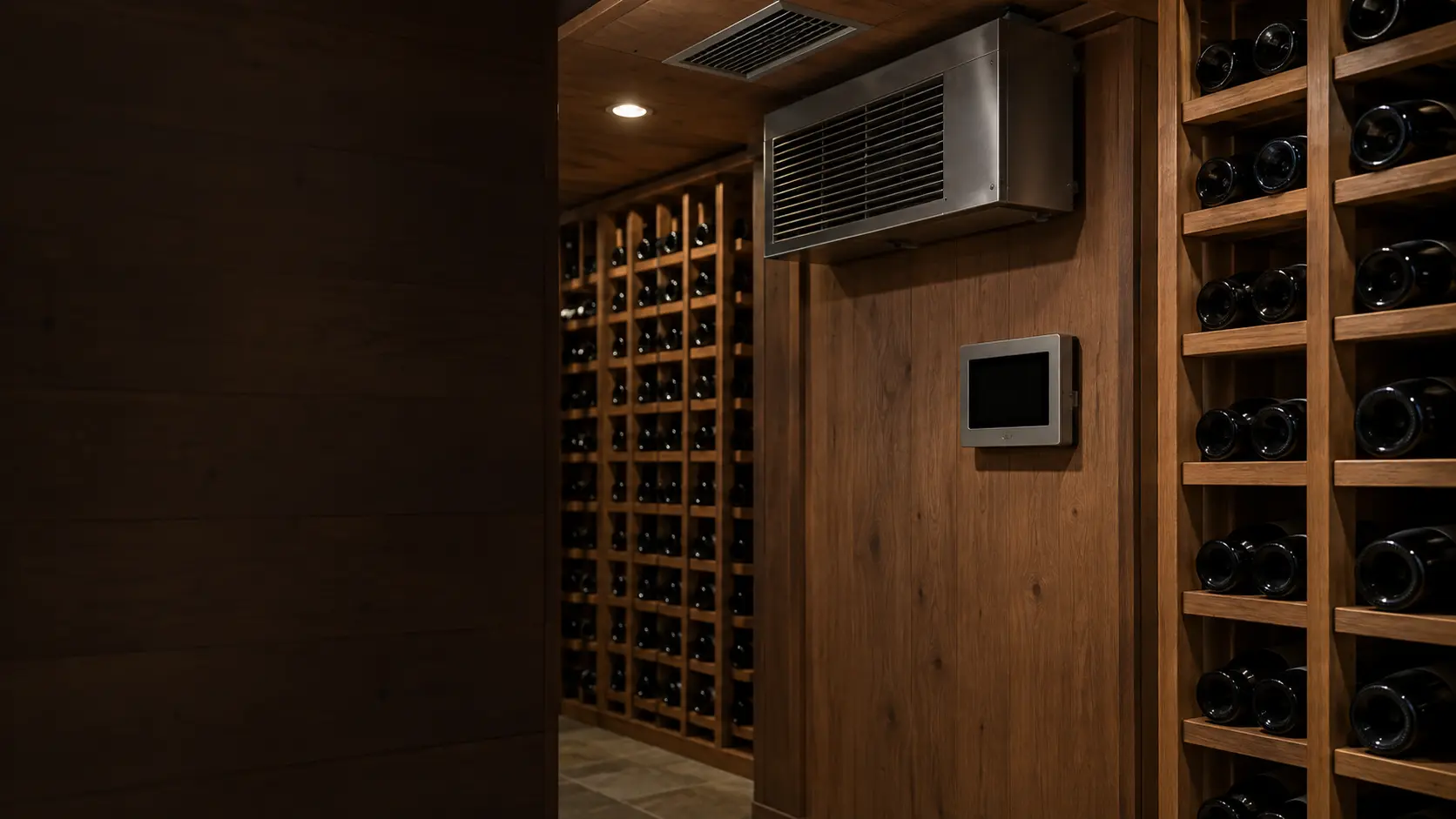
A wine cellar controller display shows one temperature, and it may be air at the unit's intake, a probe in a water bottle, or the set point itself.
The short answerFind the cooling unit model plate before the visit
A wine cellar cooling unit model number is printed on a plate on the unit's housing, not on the controller.
When reading
is not enough.
If the checks in these guides did not settle it, the visit picks up from there, stop by stop.
What repairs cost- 01The room and the unit, both measured
- 02The cause and the figure, before any work
- 03Common cellar parts in the van
- 04The cellar heading back to 55°F
The problems
these answer.
Each has a page of its own, with the causes in the order worth checking.
All 17 problems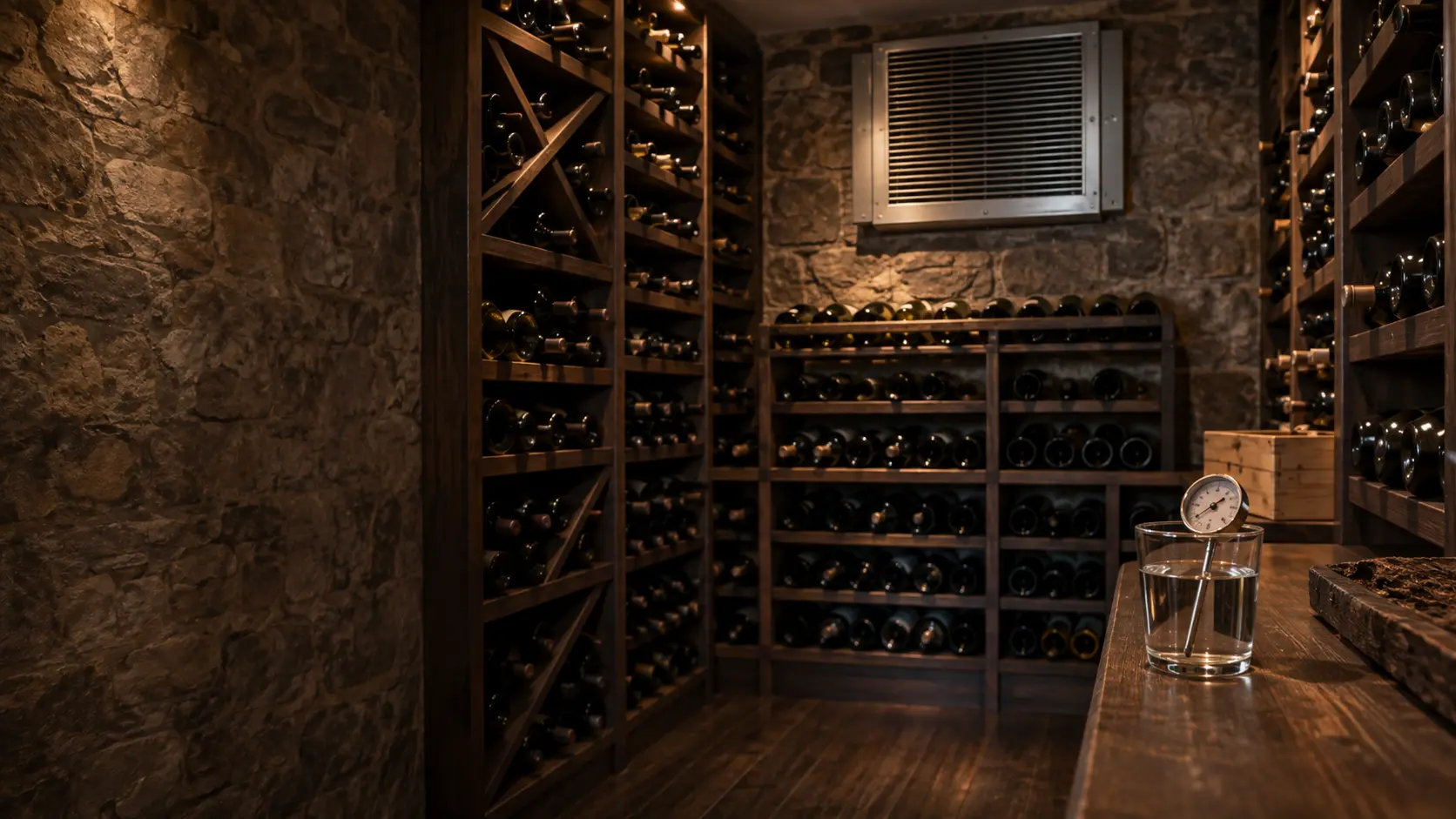


Questions about
troubleshooting.
What do I need on hand for these checks?
Is it safe to do the checks with bottles in the cellar?
The display shows letters I do not recognize. Where do I start?
How do I know when to stop checking and call?
The other
sections.
Split by what you are trying to find out rather than by which part of the appliance it concerns.
All guides
Maintenance and prevention
The collection, power and water


Installation and setup
Start from your question
The four questions most visits start with, each with the guide that answers it.
18 guidesWhere to start Where to startBack to your everyday
Let’s get your wine cellar cooling unit working again.
Three short steps online, or one call. Tell us what you are seeing and pick a window that works.