

The bottles first, then the wiring and the floor
The collection, power and water
guides.
How to look after the collection when the power goes out or the cellar warms, which bottles to move and where, and what to do about water from the unit near wiring or a scorched smell.
Mon–Sat, 8am–8pm
- Three guides
- Read before you book
- Says where to stop
Book a visit
Three short steps, about a minute.
or call (844) 398-5977
Loading appointment form…
The appointment form couldn’t load. Please try again.
The collection, power and water,
guide by guide.
On its own, a cellar cooling unit seldom hurts anyone. The hazards are in its surroundings: a receptacle mounted under a wall unit, condensate lines routed past cable, a portable generator hauled out in a storm, and years of collecting sitting on the racks. These guides deal with those situations, where acting in the wrong order does more harm than whatever broke.
All 18 guides
The bottles first, then the wiring and the floor.
They are organized by event, not by component. The outage guide walks through a dark cellar and the hours after the grid comes back. The water guide handles condensate reaching a socket, a light switch or a wall-mounted controller. The bottle guide weighs whether to empty a warming cellar at all, which bottles to take, where they should wait and how to refill the racks without adding a second round of warming and cooling.
Every figure is tied to a named source beneath the section that uses it. Wine's tolerance for heat and cold comes from Purdue Extension; grid, generator and flood advice from Ready.gov; the job of a GFCI from CPSC; restart delays, drain tubes and wiring rules from Breezaire's, WhisperKool's and CellarCool's own documents. Perishable food gets one paragraph, since cheese and platters do land in cellars, and it follows the stricter FDA figure: food that spends 2 hours or more above 40°F goes in the trash.
Start here, before any booking, when there is standing water under the unit, a breaker that will not stay on, a hot or scorched smell, or a cellar thermometer rising through the low seventies. A cellar that is simply slow to cool can wait for a technician; those four signs call for action first.
Not sure where to start?The short answerProtecting the Cellar During an Outage: Door Shut, Breaker Off, Thermometer Outside
During a wine cellar power outage, leave the cellar closed, watch a thermometer from the hallway, and cut the cooling unit's breaker so the returning surge does not hit it.
The short answerWater From the Cellar Unit Near Wiring: Circuit Off First, Then Trace the Drain
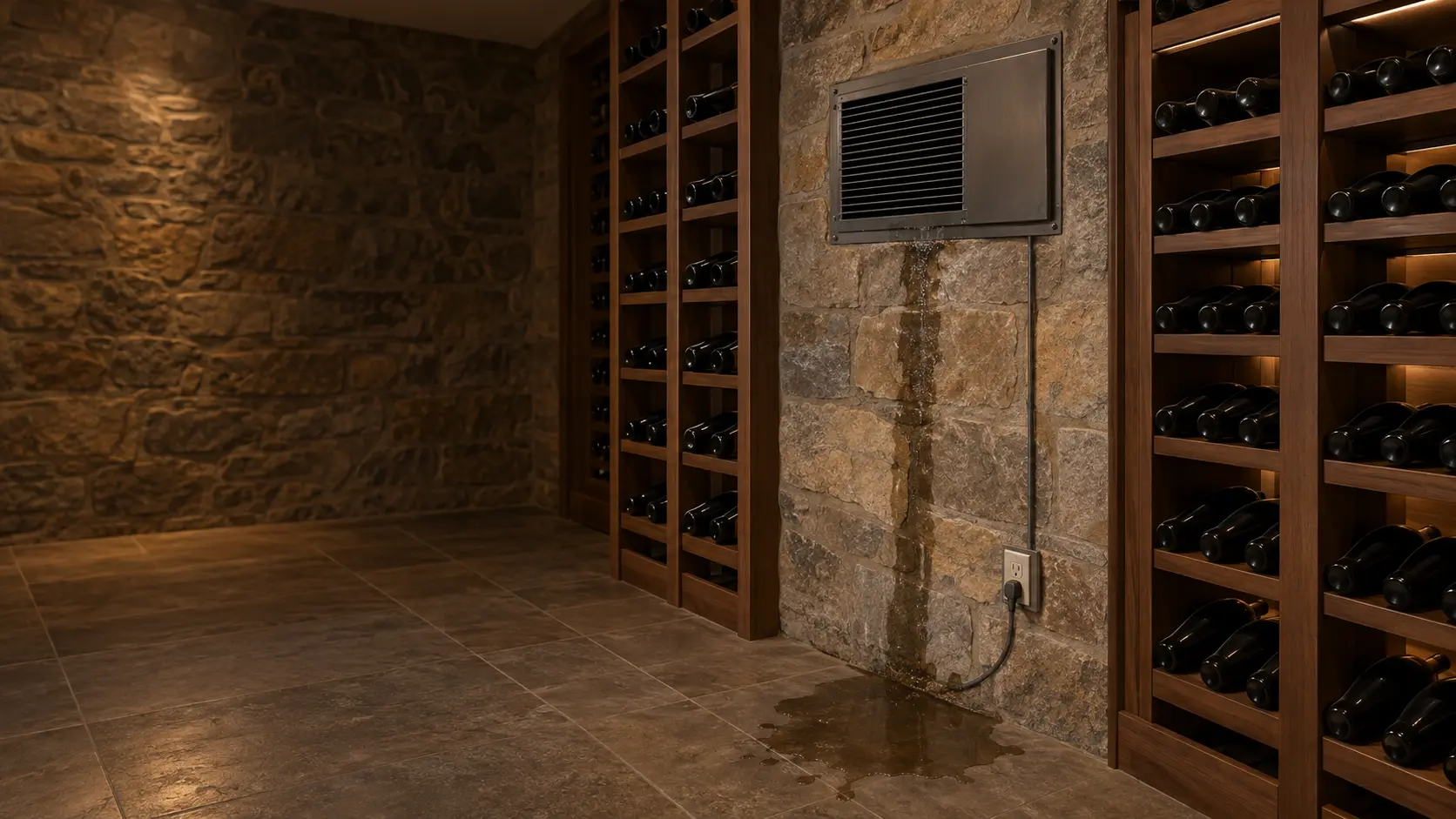
A cellar cooling unit leaking water is a shock risk before it is a repair.
The short answerMoving Bottles When the Cellar Warms: What Leaves First and Where It Waits
Moving wine bottles is worth the effort only when the cellar is climbing toward 75°F or parts are weeks away.
When reading
is not enough.
If the checks in these guides did not settle it, the visit picks up from there, stop by stop.
What repairs cost- 01The room and the unit, both measured
- 02The cause and the figure, before any work
- 03Common cellar parts in the van
- 04The cellar heading back to 55°F
The problems
these answer.
Each has a page of its own, with the causes in the order worth checking.
All 17 problems


Questions about
the collection, power and water.
My cellar unit quit during a heat wave. What comes first?
Can I step into the cellar to look at a puddle under the unit?
Is the cellar a good place to keep cheese or cured meat for a party?
At what point should bottles be carried out of a warming cellar?
The other
sections.
Split by what you are trying to find out rather than by which part of the appliance it concerns.
All guides
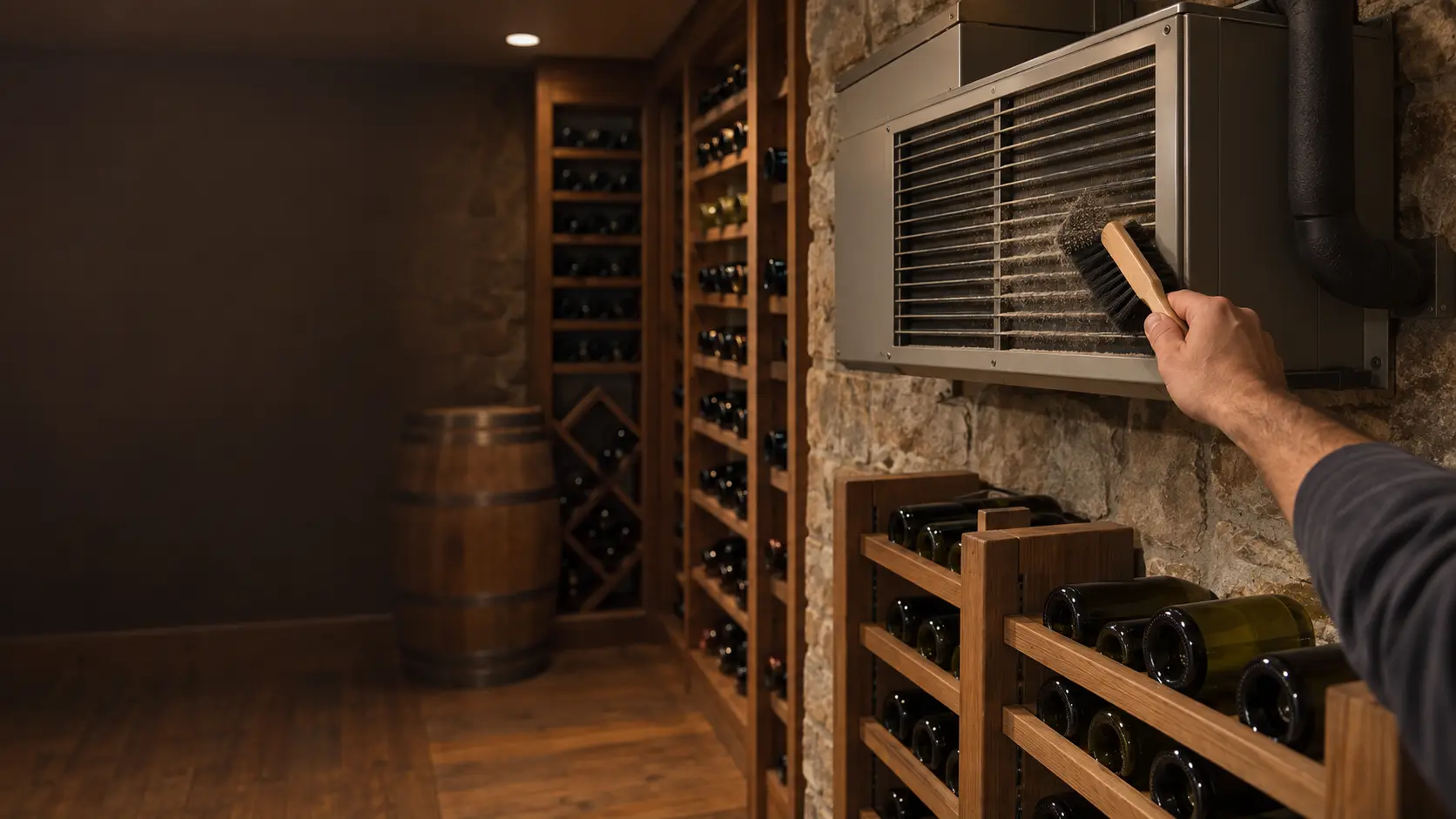
Maintenance and prevention


Installation and setup
Start from your question
The four questions most visits start with, each with the guide that answers it.
18 guidesWhere to start Where to startBack to your everyday
Let’s get your wine cellar cooling unit working again.
Three short steps online, or one call. Tell us what you are seeing and pick a window that works.