
What is the real difference between a cabinet and a cellar?
In the wine cabinet vs wine cellar question, a cabinet is a finished appliance with its own cooling built in, and a cellar is a room whose cooling you design, install and look after.
A wine cabinet
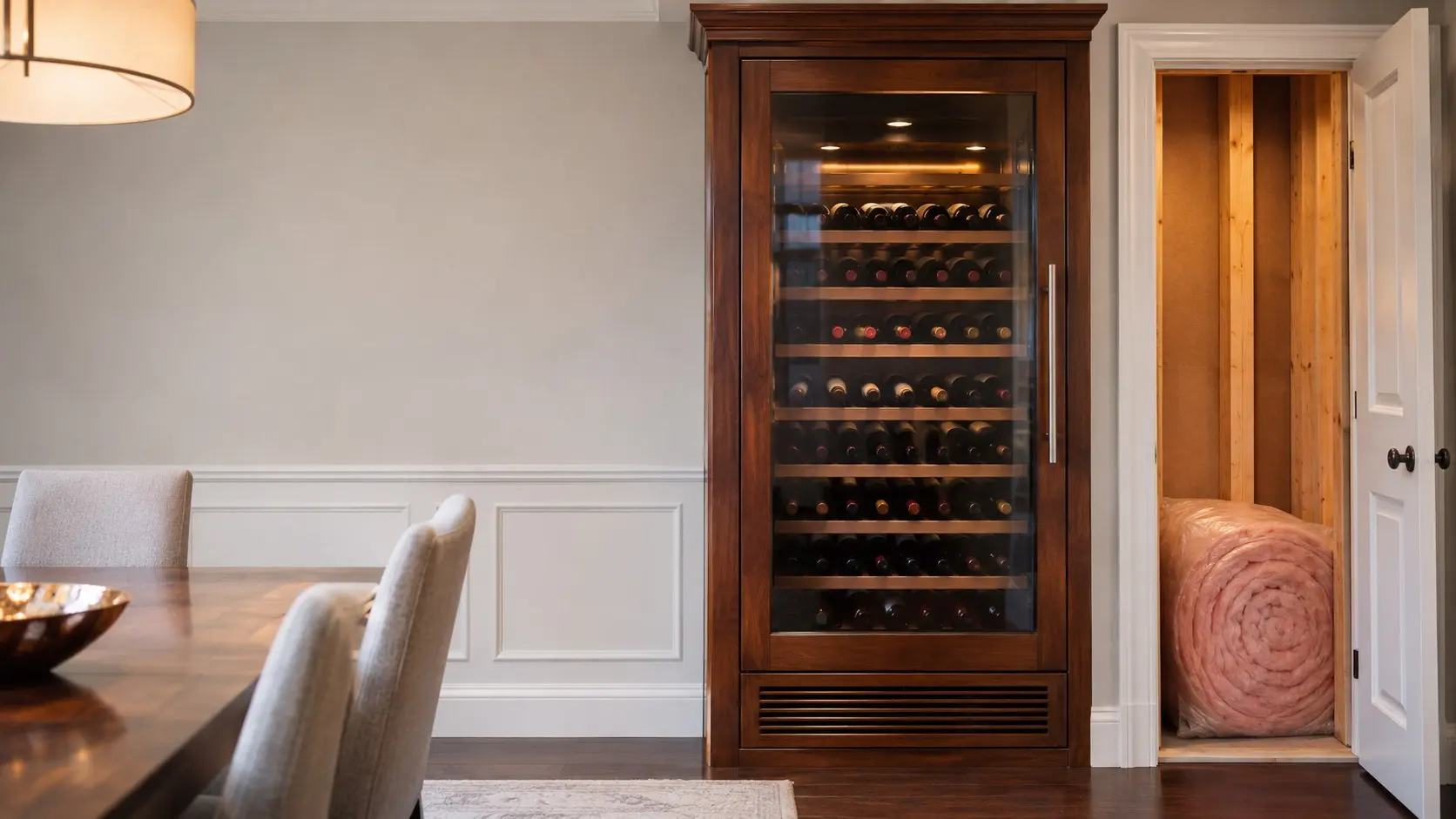
A cabinet comes sealed, insulated and cooled in one piece, with the sensor, controller and racks fitted. You plug it in, set a temperature and it holds that temperature in an ordinary room. If the cooling fails, the whole unit is one repair or one replacement.
A wine cellar
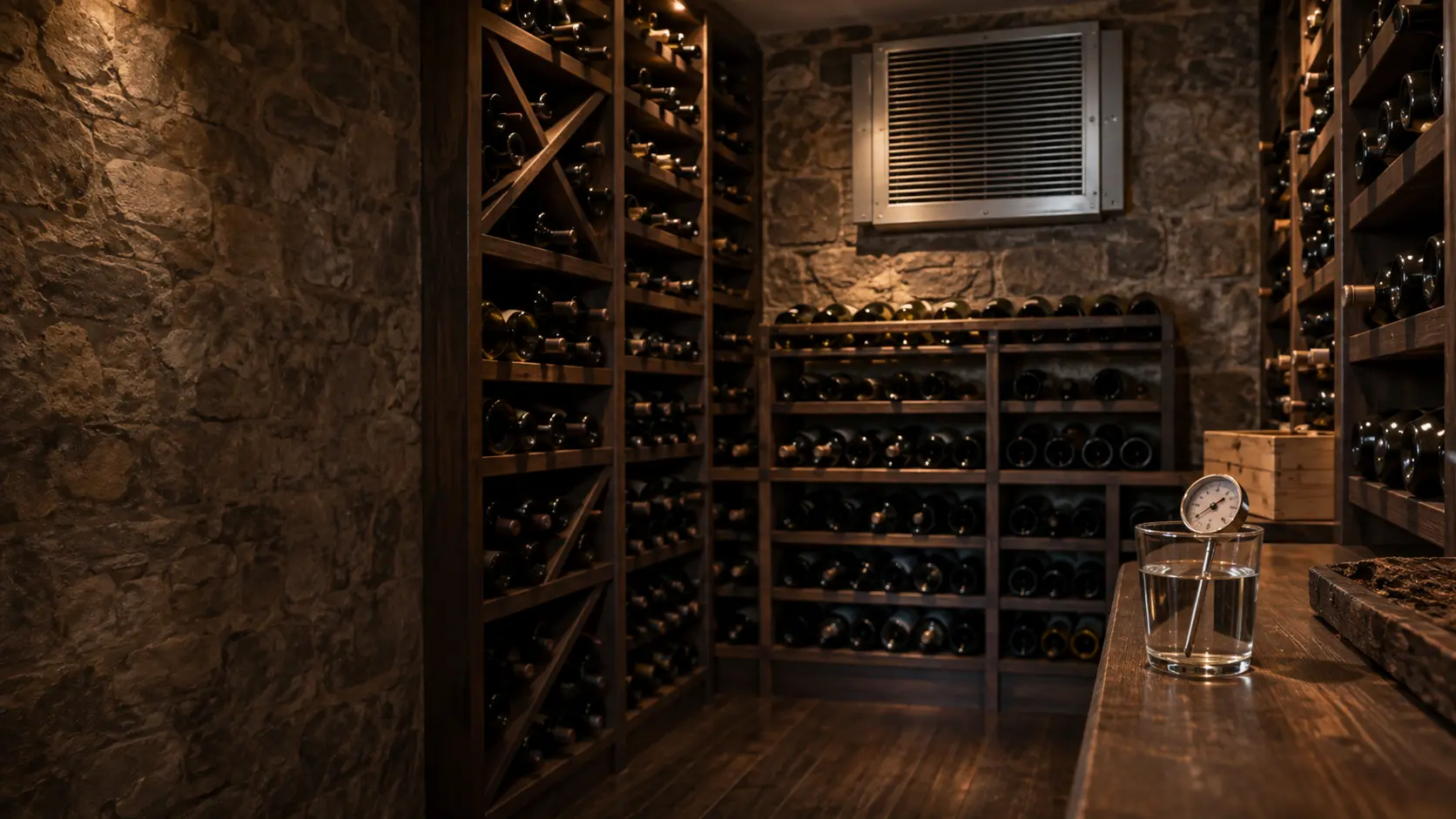
A cellar is a closet, a basement corner or a purpose-built room that is insulated, vapor sealed and given a cooling unit. Walls, door, floor and ceiling do the work an appliance's cabinet does, and the cooling unit is a separate part. Our guide to vapor barrier and insulation for a cellar explains why the shell matters as much as the unit.
When does a room start to make sense?
A room makes sense when the collection no longer fits in one or two cabinets, when you have a space that can be sealed, and when you accept the upkeep.
- You hold more wine than several cabinets could store, and expect it to grow.
- You have a closet, basement corner or alcove with solid walls and a door that can seal.
- You want to store cases, large formats or unusual bottle sizes that cabinet racks cannot take.
- You can place the cooling unit where its exhaust heat has somewhere to go.
What a cabinet handles well
Dozens to a modest number of bottles, in a house with no spare room, are well served by a cabinet or two. A dual-zone cabinet can split storage and serving temperatures. A cabinet is also movable, which matters for renters and for homes you may sell.
What pushes you to a room
Bottle count alone is a blunt tool, since "large" depends on your sense of how fast you drink and buy. A better test is whether you are already running out of cabinet space in a way that you will not fix by drinking more. If so, price the room, not the third cabinet.
What does a cellar demand of the house?
A cellar demands an envelope that holds temperature and humidity, a cooling unit with a place to reject heat, a drain for condensate, and power.
The shell
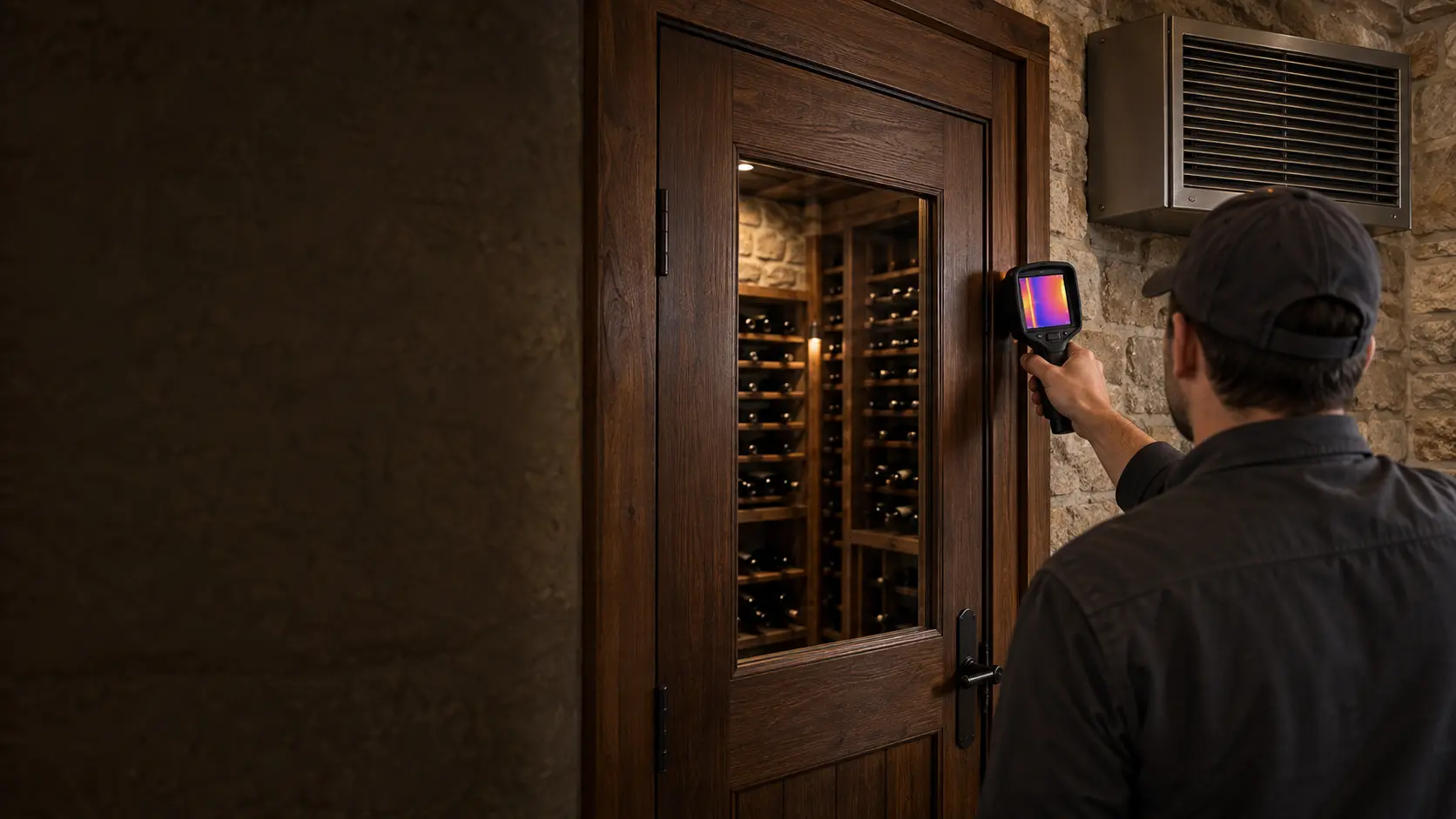
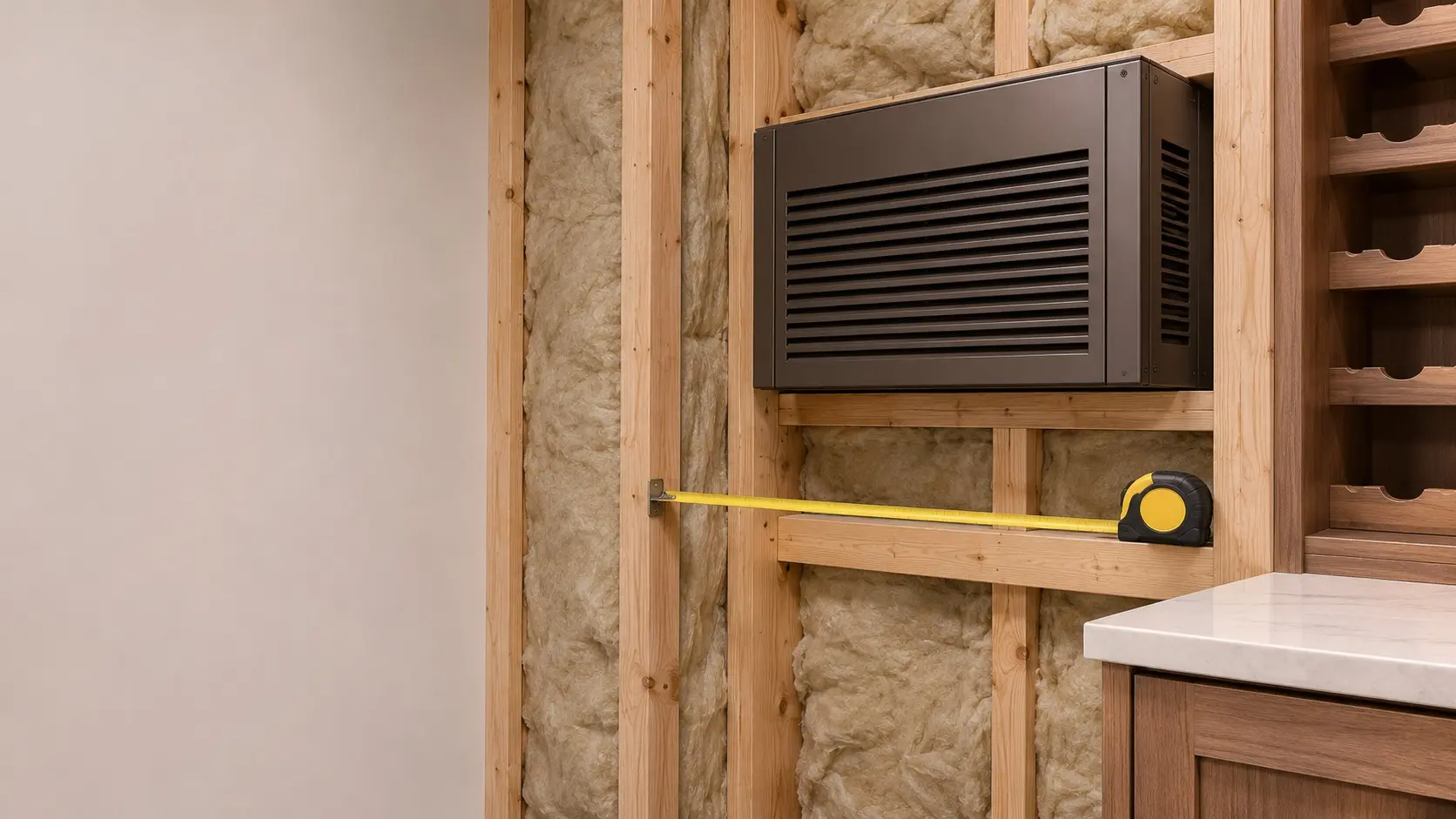
The room needs insulation in the walls and ceiling, a vapor barrier on the warm side, a sealed door with weatherstripping and a floor that does not leak heat. Glass walls and ordinary interior doors add load. A cellar door that seals shows the weak point most rooms have.
The cooling unit
The unit is chosen for the room's heat load. Through-wall, ducted and split types each need a different arrangement, and through-wall, ducted or split system compares them, with sizing a cellar cooling unit covering the numbers. A unit that rejects its heat into a closed space with no outlet fails to keep up, as where the exhaust heat goes explains.
Condensate and power
A cooling unit produces water that has to go to a drain or a pump, and it needs its own circuit. Both are trades beyond the owner. The cellar cooling load and room check service looks at the room's load before a unit is chosen.
What does each mean for upkeep and cost over time?
A cabinet means small, occasional care and a whole-appliance fix or swap; a cellar means more parts to maintain and a longer list of what can go wrong.
| Item | Cabinet | Cellar |
|---|---|---|
| Cooling | Built in | Separate unit |
| Shell | Factory-made | Your walls, door, vapor barrier |
| Routine care | Dust the condenser, check the seal | Clean coils and filters, clear the drain, check the door |
| If it fails | Repair or replace one appliance | Repair the unit; check the room too |
| Moving house | Takes it with you | Stays, may add or not add value |
Cellar upkeep
A cooling unit's filters and coils need regular cleaning, the condensate line needs to stay clear, and the door seal needs a look every year. A yearly cellar cooling check is the short list, and a unit that is past saving is covered in repair or replace a cellar cooling unit.
Cabinet upkeep
Dust the condenser grille, keep clearance on the sides the manual names, and replace a hardened gasket. That is mostly it.
So which should you choose?
Choose a cabinet when the count fits one or two units, the house is not yours to alter or you may move; choose a room when the collection is large, the space is suitable and you accept the system's upkeep.
Before you commit to a room, test the space. These argue against it:
- walls that swing from cold in winter to warm in summer
- no ready place for the unit's exhaust heat
- a room next to a boiler or a hot appliance
- a door that cannot be made to seal
If a room is already built and struggling, a diagnostic visit will show whether the unit or the room is the part not doing its job.