
Cellar Evaporator and Condenser Fan Repair
Restoring the two fans a cellar unit depends on: the one that moves cellar air across the cold coil and the one that throws the heat away.
Mon–Sat, 8am–8pm
- Low to moderate cost band
- 5 steps on the visit
- 6 problems it answers
Book a visit
Three short steps, about a minute.
or call (844) 398-5977
Loading appointment form…
The appointment form couldn’t load. Please try again.
What the cellar evaporator and condenser fan repair
involves.
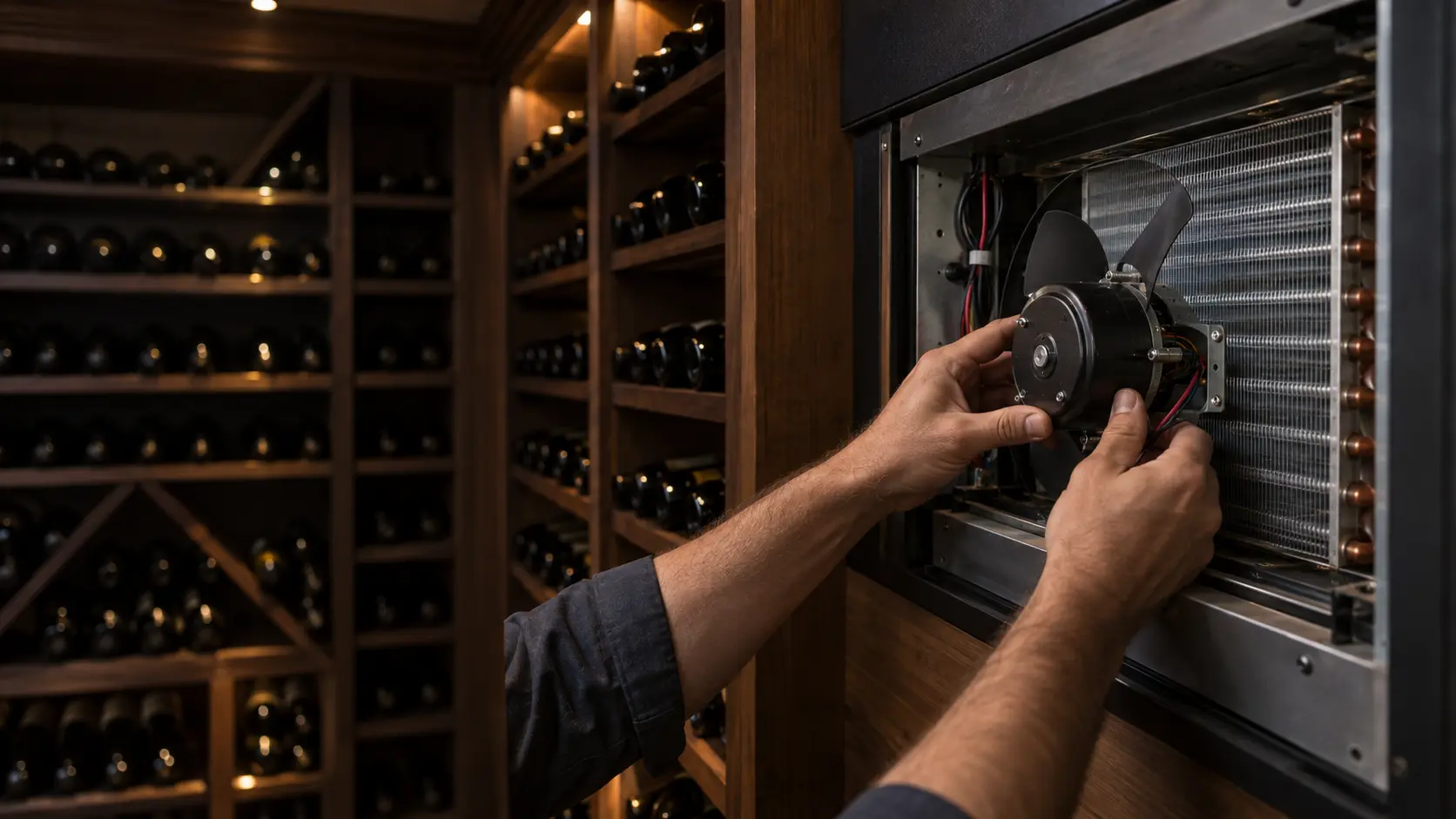
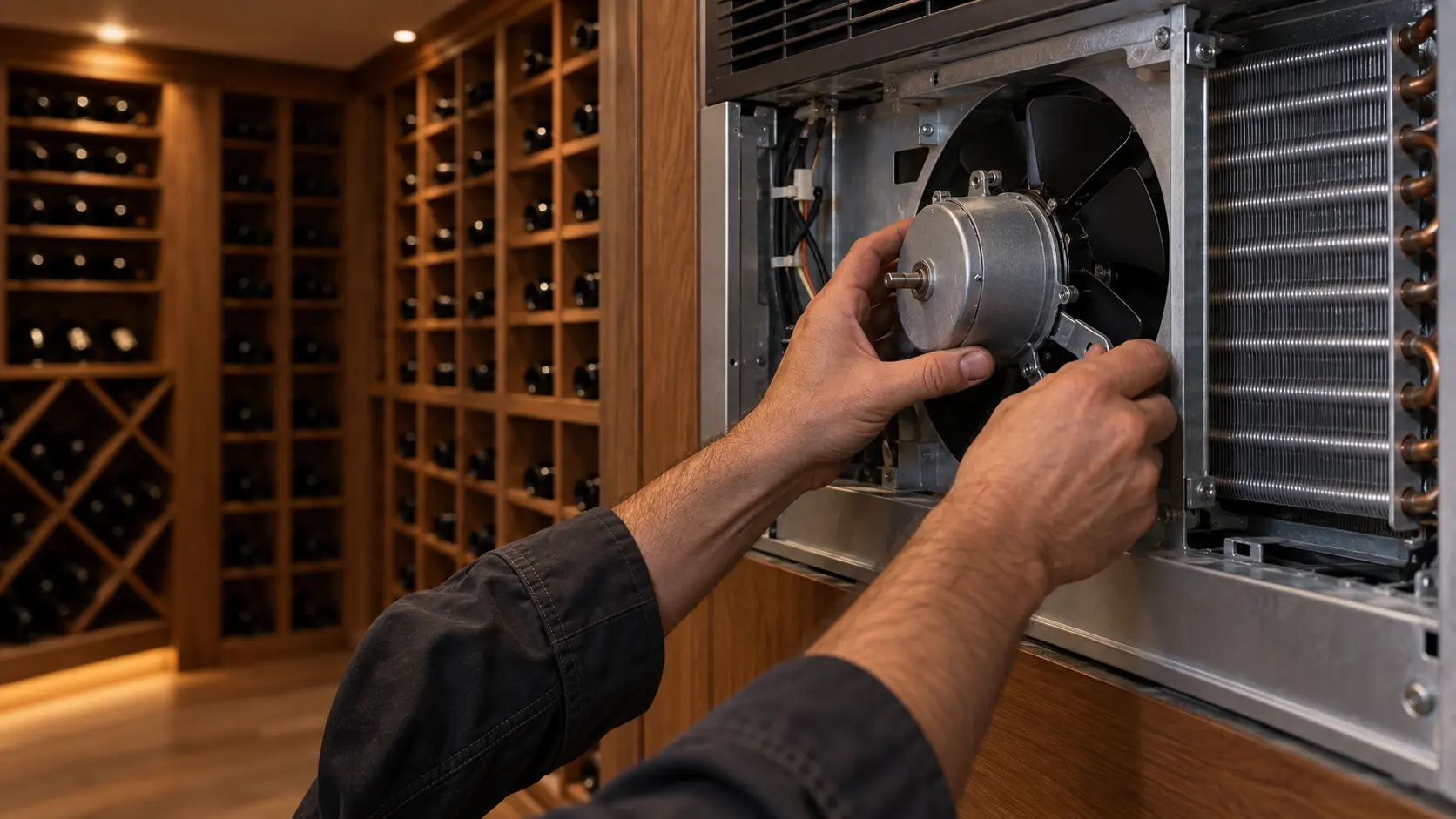
A cellar cooling unit has two air paths and a fan for each. The evaporator fan pulls cellar air through the cold coil and sends it back across the racks; the condenser fan pushes the heat the unit collected into the exhaust room, the attic or the outdoors. Many units keep the evaporator fan running all the time so the air stays even from floor to ceiling, which puts years of hours on its bearings. When it slows, the coil gets too little air, the room warms at the top and the coil may begin to ice. When the condenser fan slows or stops, heat builds on the exhaust side, pressures climb and the compressor trips off on its overload, often with a hot smell from the case. The technician checks each fan's speed and current, the capacitor on motors that use one, the blade or wheel for grime, cracks and wobble, and the fan's wiring and relay on the control board. Fans are replaced with the part made for the model, balanced, and tested with the unit running through a full cycle.
How the visit goesWhat it usually costsLow to moderate · Evaporator or condenser fan motor, blade or capacitor
A fan motor and its blade or capacitor are modest parts on most units. Reaching the cellar-side fan on a ceiling unit, or an outdoor fan on a roof or a tight pad, adds a little time.
Answers 6 problemsCellar Cooling Unit Fan Not Running
Cellar Cooling Unit Loud or Vibrating · Cellar Cooling Unit Exhaust Overheating · Cellar Cooling Evaporator Coil Icing Up · Wine Cellar Too Warm · Burning Smell From a Cellar Cooling Unit
Comes up most onThrough-the-wall cellar cooling unit
Ducted cellar cooling unit · Split-system cellar cooling · Ceiling-mounted cellar cooling
Codes that lead hereHA2 · COH
CellarPro HA2: the condenser is running too hot.
Cellar evaporator and condenser fan repair,
step by step.
Run the unit through a cycle, confirm both air paths, and tell you what wore out and why.
Watch and listen to each fan through a full cycle, and feel the air at the cellar grille and at the exhaust side.
Measure each motor's speed, current and capacitor, and check the blade or wheel for dirt, cracks and wobble.
Check the fan relay and wiring on the controller, and whether the fans run when the controller calls for them.
Replace the motor, blade or capacitor with the parts made for the unit, and clean the coil it serves.
Run the unit through a cycle, confirm both air paths, and tell you what wore out and why.
The problems
it answers.
6 of them, from cellar cooling unit fan not running to burning smell from a cellar cooling unit.
All problems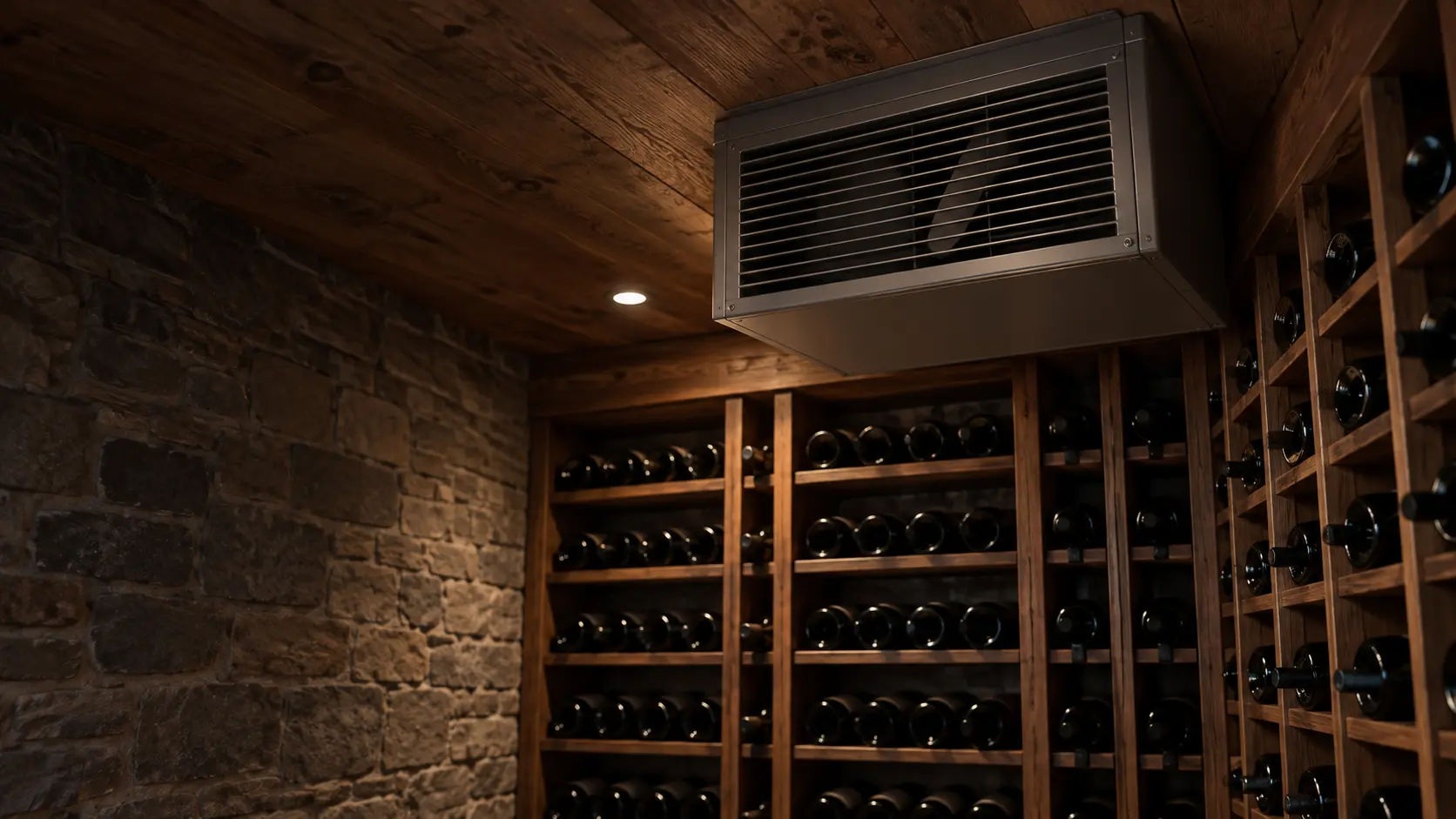
Cellar Cooling Unit Fan Not Running
4 causes, cheapest first
Before you call
Tell us this when you book
- Whether the noise or the silence comes from the cellar side, the exhaust side, or the outdoor unit
- Whether you feel air at the cellar grille when the unit is running
- Any squeal, grinding, ticking or a hot smell from the unit
- Where the exhaust side vents and whether anything has been stored against it
It also answers
Low to moderate,
on the site's scale.
A fan motor and its blade or capacitor are modest parts on most units. Reaching the cellar-side fan on a ceiling unit, or an outdoor fan on a roof or a tight pad, adds a little time.
Read the full cost guide| Repair | Relative cost |
|---|---|
| Start capacitor, contactor, compressor or sealed-system restriction | |
| Leak search, joint or coil repair and a weighed charge | |
| Evaporator or condenser fan motor, blade or capacitor | low to moderate |
| Air or coil probe, display, transformer or control board | |
| Drain line, drain pan or condensate pump | |
| Thawing an iced coil and correcting its cause | |
| Line set section, insulation or control cable | |
| Humidifier module, humidity probe or settings | |
| Cooling load and room survey |
Where it
comes up most.
Most bookings: Through-the-wall cellar cooling unit, Ducted cellar cooling unit, Split-system cellar cooling, Ceiling-mounted cellar cooling.
All wine cellar cooling unit typesCodes that lead here
Often the same visit


The makes
we see it on.
7 makes on this site, and the cellar evaporator and condenser fan repair on any of them. Each mark opens that make's own page.
All 7 brandsCellar evaporator and condenser fan repair,
where we come out.
The cellar, the climate and the building all change how the cellar evaporator and condenser fan repair goes. These notes are about that, metro by metro.
All service areasTampa BayFL · 31 areas
A Tampa Bay closet cellar leaves little room around its unit, and a weak evaporator fan lets the coil ice while a weak condenser fan leaves the compressor running hot, so the repair tests both motors and clears the dust and lint on the exhaust side.
OrlandoFL · 30 areas
Orlando wine rooms that open onto a busy game room or a pool deck pull dust and pet hair into the exhaust side, and a condenser fan pushing air through a matted coil runs hot and loud, so the repair cleans the coil and replaces a motor with worn bearings.
Miami / South FloridaFL · 47 areas
In a South Florida condo the cellar unit's fan often blows into a small utility closet, and when that closet fills with the unit's own warm air the motor runs hot for years, so the repair replaces the motor and asks whether the closet needs a louvered door or a duct.
New York MetroNY · 75 areas
New York cellar units set into a basement wall often exhaust toward a boiler room or a laundry, and the heat and lint there wear the condenser fan early, so the repair replaces the motor or the blade and looks hard at the air the unit breathes.
HoustonTX · 36 areas
A Houston cellar unit exhausting into an attached garage breathes air above 100 degrees in summer, and its condenser fan runs every minute the compressor does, so a fan that squeals or stalls is replaced and the owner learns whether that garage is past the unit's rating.
ChicagoIL · 50 areas
In a Chicagoland basement the evaporator fan works against damp air in summer and dry furnace air in winter, and a fan that slows lets the cellar stratify, cold at the floor and warm at the top racks, so the repair measures airflow before and after the motor is changed.
Los AngelesCA · 95 areas
A Los Angeles ducted unit in an attic or a mechanical room moves air through long runs to the cellar, and a supply or return fan that weakens leaves the room warm while the unit keeps running, so the repair measures airflow at the grilles and checks the ducts for a crushed section.
San DiegoCA · 31 areas
Inland San Diego County, where summer afternoons run far hotter than at the coast, keeps a cellar unit's condenser fan turning almost without pause, and a motor with dry bearings slows until the compressor trips, so the repair replaces the motor and checks the blade for balance.
San Francisco Bay AreaCA · 74 areas
A Bay Area cellar built under a house often ducts its exhaust out through a crawl space, and a fan pushing against a long or kinked duct overheats and slows, so the repair checks the duct run as closely as the motor.

Questions about
the cellar evaporator and condenser fan repair.
Should the fan in my wine cellar run all the time?
The exhaust side of my cellar unit smells hot. Is that a fan?
Can a cellar unit fan be cleaned instead of replaced?
Back to your everyday
Ready to book the cellar evaporator and condenser fan repair?
Have these to hand: whether the noise or the silence comes from the cellar side, the exhaust side, or the outdoor unit, whether you feel air at the cellar grille when the unit is running, any squeal, grinding, ticking or a hot smell from the unit, where the exhaust side vents and whether anything has been stored against it.