
Cellar Coil Icing and Defrost Repair
Stopping ice from forming on the cellar coil by finding what starves it, whether airflow, charge, controls or humid air coming into the room.
Mon–Sat, 8am–8pm
- Low to moderate cost band
- 5 steps on the visit
- 6 problems it answers
Book a visit
Three short steps, about a minute.
or call (844) 398-5977
Loading appointment form…
The appointment form couldn’t load. Please try again.
What the cellar coil icing and defrost repair
involves.
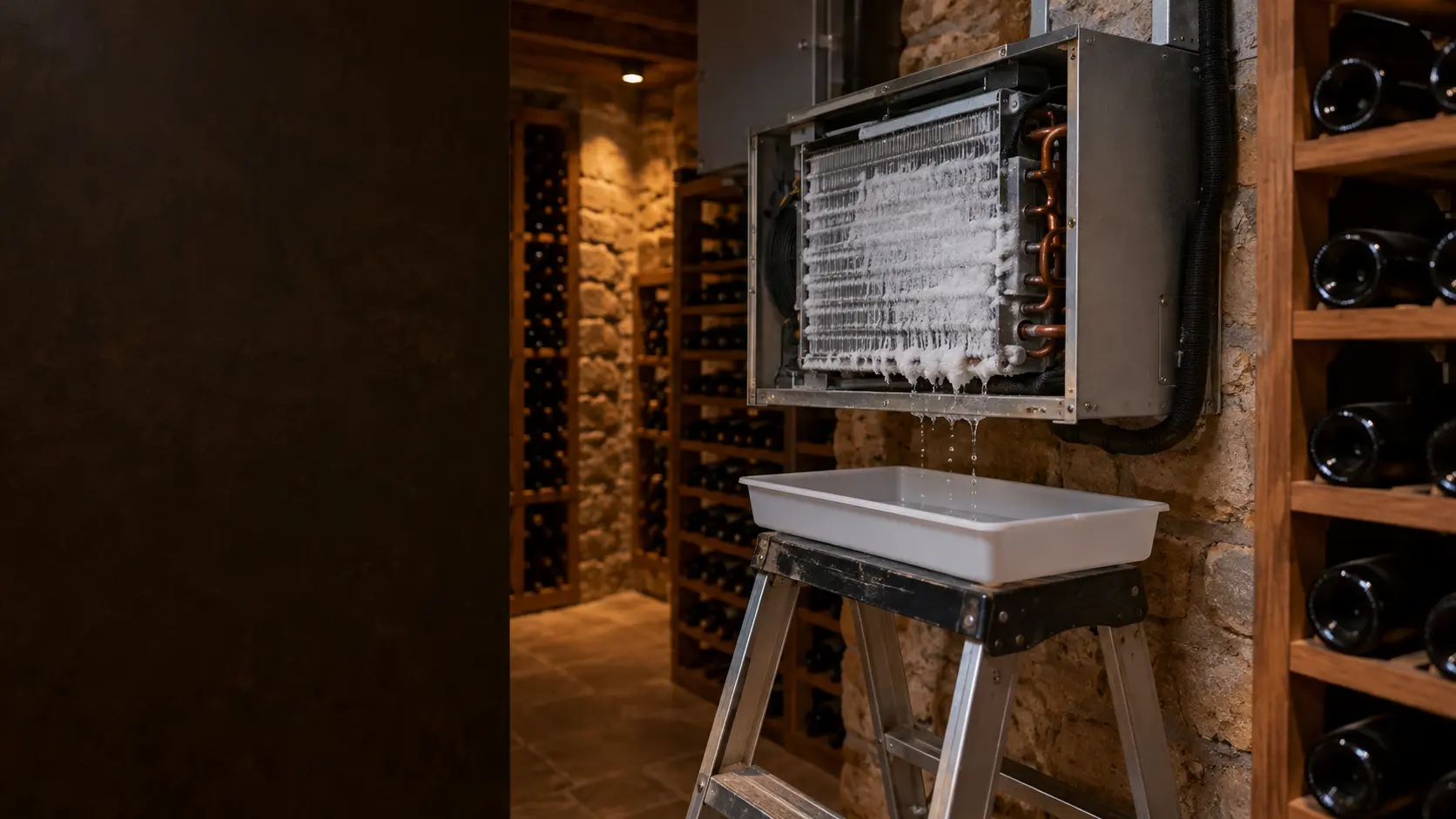
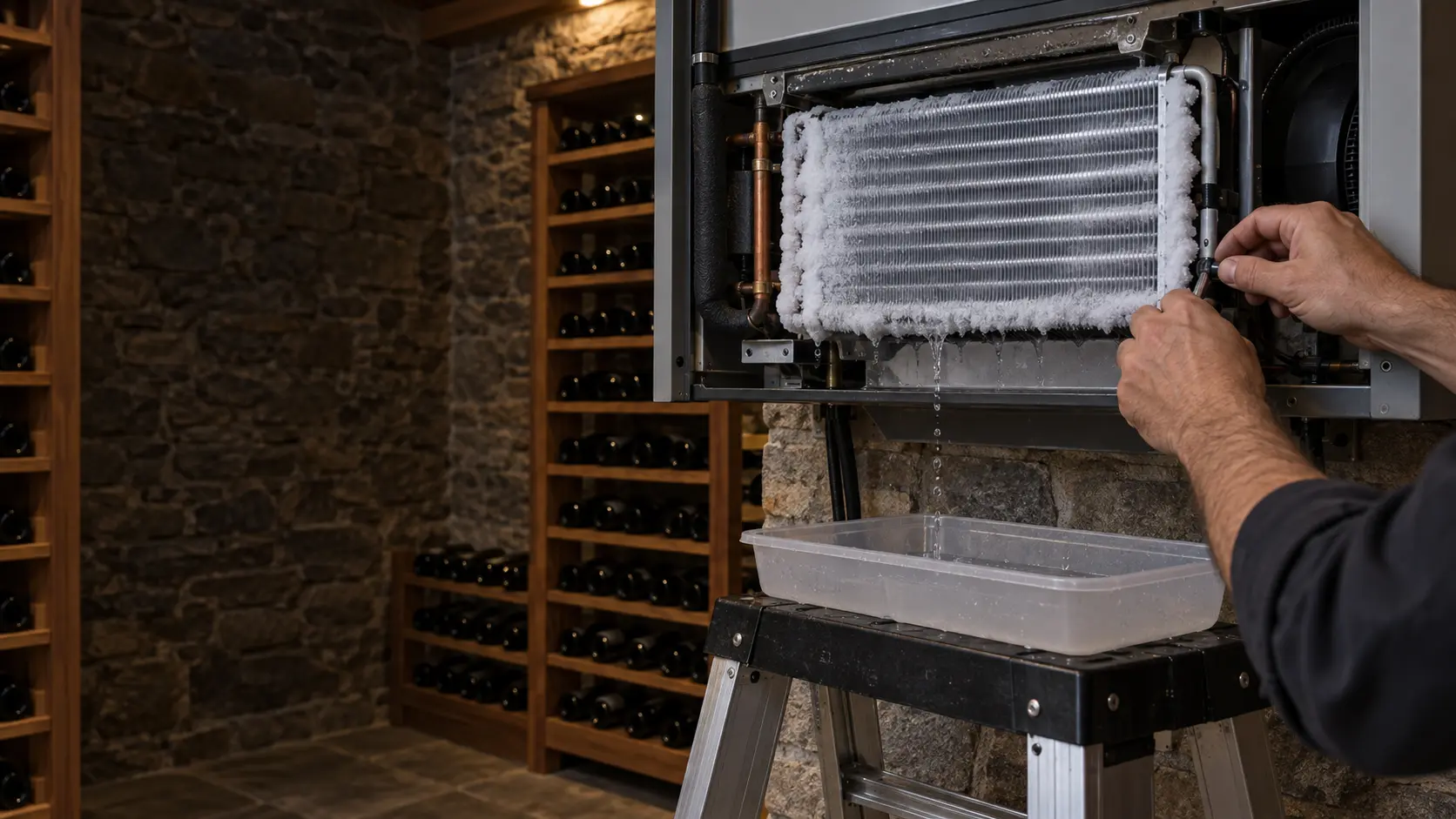
A cellar coil runs only a few degrees above freezing, so small changes push it over. Once a thin layer of ice forms, less air passes through the fins, the coil gets colder still, and within a day it can be a solid block with the cellar warming beside it. Most units defrost on their own by stopping the compressor and letting the fan run, controlled by a coil probe or a timer. When ice keeps coming back, the cause is almost always one of four things: too little air across the coil, from a slow fan, a dirty coil or a blocked return; too little refrigerant; a controller or coil probe that ends defrost too soon or lets the compressor run too long; or a room that takes in so much humid air that the coil loads with water faster than it can shed it. The technician thaws the coil gently, never with a sharp tool, and then checks each of those in turn. The drain gets attention too, because a thaw sends a lot of water at once, and a partly blocked line overflows exactly then.
How the visit goesWhat it usually costsLow to moderate · Thawing an iced coil and correcting its cause
The thaw and a setting or probe change stay low. When the cause turns out to be a fan or a leak, that repair is priced on its own row.
Answers 6 problemsCellar Cooling Evaporator Coil Icing Up
Wine Cellar Too Warm · Cellar Cooling Unit Leaking Water · Cellar Cooling Unit Fan Not Running · Wine Cellar Humidity Too Low · Cellar Cooling Unit Running Constantly
Comes up most onSplit-system cellar cooling
Through-the-wall cellar cooling unit · Ducted cellar cooling unit · Ceiling-mounted cellar cooling
Codes that lead hereAd2 · Ad2 · Ad3
CellarCool Ad2: the coil was still frozen when defrost timed out.
Cellar coil icing and defrost repair,
step by step.
Run the unit through a cooling and defrost cycle, and explain what to watch for so it does not ice again.
Look at where and how the ice has formed, then thaw the coil with the compressor off and the fan running, catching the water.
Check the fan, the coil fins and the return path for anything that cuts the air across the coil.
Test the coil probe and the defrost settings in the controller, and read the charge on the sealed side.
Correct the cause: a fan, a probe, a setting, a clean coil or a leak repair, and clear the drain for the thaw water.
Run the unit through a cooling and defrost cycle, and explain what to watch for so it does not ice again.
The problems
it answers.
6 of them, from cellar cooling evaporator coil icing up to cellar cooling unit running constantly.
All problems
Cellar Cooling Evaporator Coil Icing Up
5 causes, cheapest first
Before you call
Tell us this when you book
- Whether the ice covers the whole coil or only part of it, and whether it has happened before
- Whether the cellar door or any window is left open, or the room was recently opened up
- What the set point is, and whether it was lowered recently
- Whether water poured out when the ice last melted
It also answers
Low to moderate,
on the site's scale.
The thaw and a setting or probe change stay low. When the cause turns out to be a fan or a leak, that repair is priced on its own row.
Read the full cost guideWhere it
comes up most.
Most bookings: Split-system cellar cooling, Through-the-wall cellar cooling unit, Ducted cellar cooling unit, Ceiling-mounted cellar cooling.
All wine cellar cooling unit types


The makes
we see it on.
7 makes on this site, and the cellar coil icing and defrost repair on any of them. Each mark opens that make's own page.
All 7 brandsCellar coil icing and defrost repair,
where we come out.
The cellar, the climate and the building all change how the cellar coil icing and defrost repair goes. These notes are about that, metro by metro.
All service areasTampa BayFL · 31 areas
When a Tampa Bay cellar door is opened often in muggy weather, the evaporator takes in more moisture than it can shed, and a coil already short of airflow turns to ice, so the repair melts the ice, finds the cause and checks the defrost cycle where the model has one.
OrlandoFL · 30 areas
Guests in an Orlando rental who prop the wine room door open let humid air flood the evaporator, which ices and stops cooling, so the repair clears the coil, checks the door closer and seal and tests the defrost timing.
Miami / South FloridaFL · 47 areas
Condo owners in South Florida sometimes run a cellar well below 55 while they are away to protect the collection, and a coil working that cold in humid air ices over, so the repair restores the setpoint and checks the defrost heater or the off-cycle defrost the unit relies on.
New York MetroNY · 75 areas
A New York basement cellar cooled through a mild winter against a cold wall can ice its coil if the unit runs below the room temperature it is rated for, and the repair checks the defrost settings, the refrigerant charge and whether the unit should run at all in January.
HoustonTX · 36 areas
In Houston an evaporator crusted with ice is often the sign of a cellar whose vapor barrier leaks humid air in through the walls, so the repair clears the ice and then tests the room for air leaks, since a new part alone would ice again by August.
ChicagoIL · 50 areas
Chicagoland cellar units with outdoor split condensers can run low head pressure in winter, which drops the evaporator below freezing and ices it, so the repair checks the head-pressure control and the defrost cycle rather than only melting the coil.
Los AngelesCA · 95 areas
A Los Angeles ducted cellar unit with a clogged return filter starves the coil of air, and the coil ices even in a dry climate, so the repair replaces the filter, clears the coil and checks that no one closed a supply grille in the cellar.
San DiegoCA · 31 areas
A small unit installed years ago for a mild San Diego room may start icing once a remodel adds glass or a larger door, since the coil now runs longer and colder, so the repair clears the ice and checks whether the room still matches the unit.
San Francisco Bay AreaCA · 74 areas
Bay Area cellars in cool basements call for so little cooling in winter that a unit set too low runs in short bursts and ices without a full defrost, and the repair checks the defrost setting and the fan delay after the compressor stops.

Questions about
the cellar coil icing and defrost repair.
Can I chip the ice off my cellar unit's coil?
Why does my cellar coil ice up only in summer?
Does setting the cellar colder cause icing?
Back to your everyday
Ready to book the cellar coil icing and defrost repair?
Have these to hand: whether the ice covers the whole coil or only part of it, and whether it has happened before, whether the cellar door or any window is left open, or the room was recently opened up, what the set point is, and whether it was lowered recently, whether water poured out when the ice last melted.