

Split-System Cellar Cooling Repair
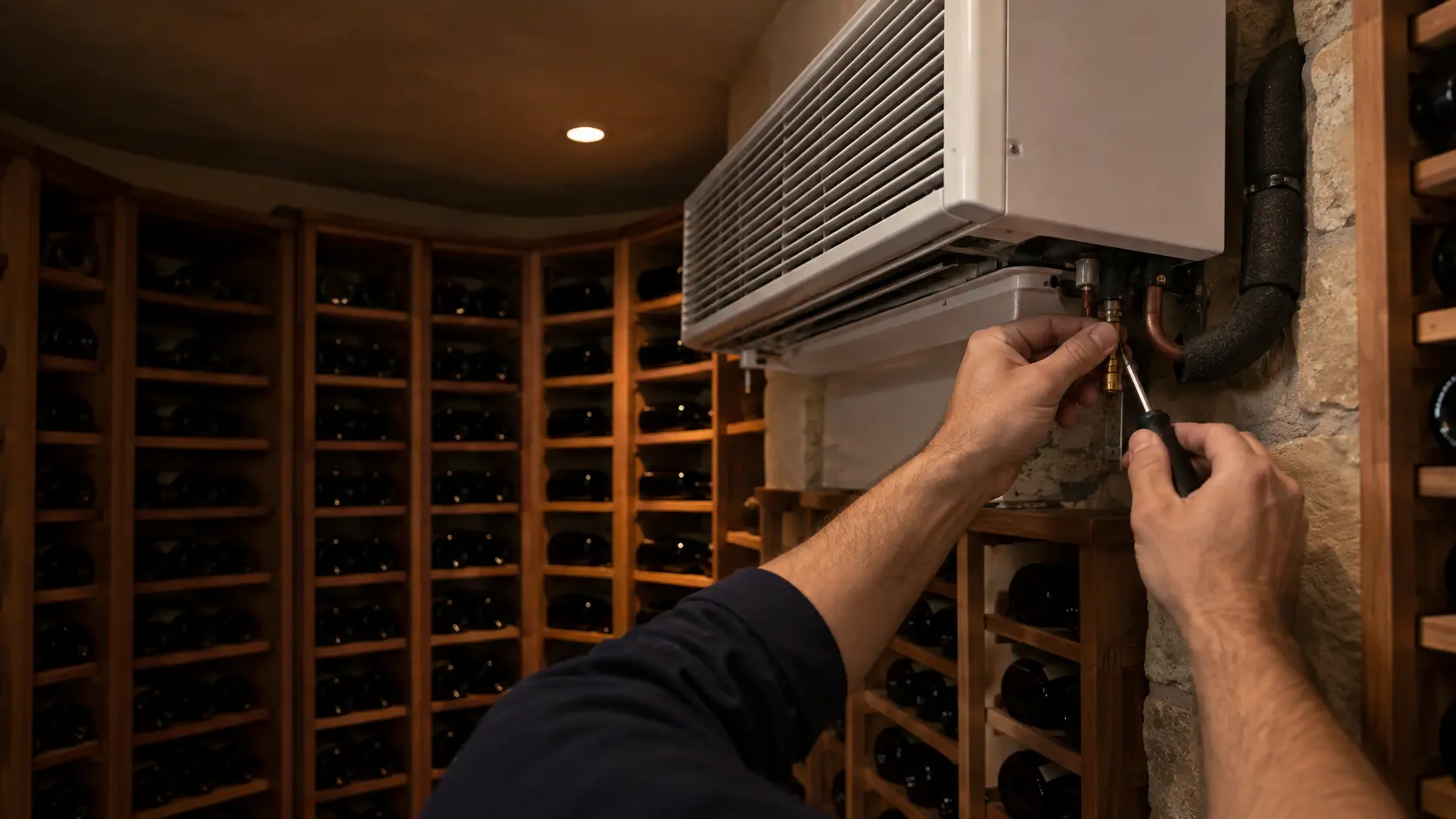
An evaporator inside or beside the cellar and a condensing unit outside or in another room, joined by an insulated copper line set and charged on site.
Mon–Sat, 8am–8pm
- 4 things that fail on it
- 6 makes build it
- 6 problems it shows
Book a visit
Three short steps, about a minute.
or call (844) 398-5977
Loading appointment form…
The appointment form couldn’t load. Please try again.
Is yours
a split system?
A split system divides the cooling unit into two halves. The evaporator, with its coil, fan and drain, hangs on a cellar wall or sits ducted just outside the room; the condensing unit, with the compressor and the condenser, sits outdoors on a pad, on a roof or in a garage where its heat and noise do no harm. A pair of copper lines, the line set, carries refrigerant between them, and a low-voltage cable carries the control signal. That layout gives the quietest cellar and the most freedom in design, but it adds joints that were brazed on site, a charge that was weighed in by whoever installed it, and an expansion valve that meters refrigerant into the coil. A slow leak at a flare or a brazed joint, a line set crushed by a landscaper, or a condenser choked by leaves and cottonwood fluff can all look like a cellar that has simply grown warm. Diagnosis on a split system means reading pressures and temperatures on both ends, not just looking at the fan.
 What fails on a split-system cellar cooling
How to tell
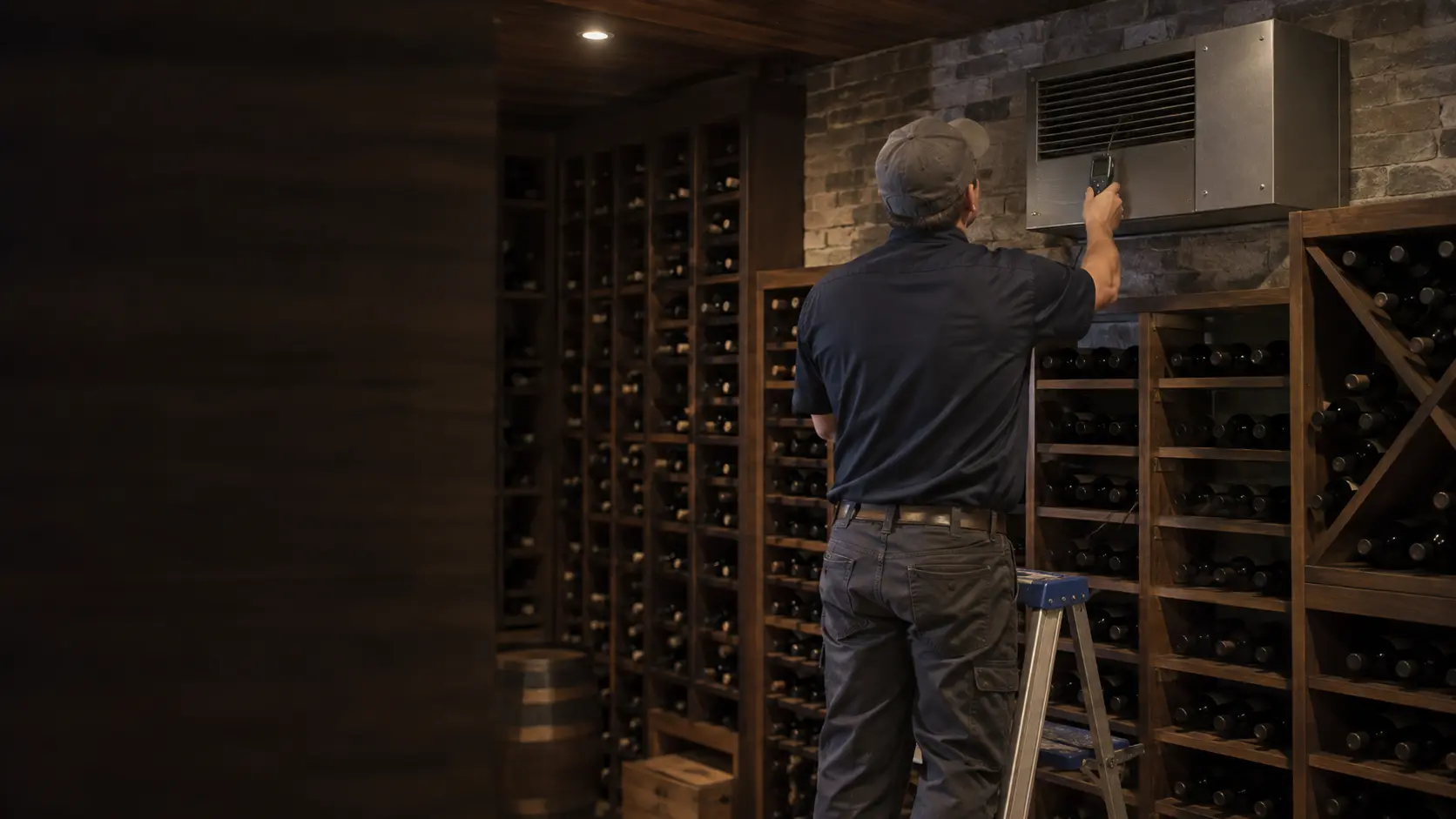
Inside the cellar a slim evaporator hangs on a wall or a grille sits in the ceiling, and you hear only a fan when it runs.
Outside, or in a garage or utility room, a small condensing unit with its own fan and service valves sits on a pad or a wall bracket.
Two insulated copper lines and a thin control wire run between the two, through a wall, a crawl space or a ceiling.
The system was installed by a refrigeration contractor who brazed the lines and charged it on site, and the paperwork shows two model numbers.
Not yours?Through-the-wall cellar cooling unitDucted cellar cooling unitCeiling-mounted cellar cooling
What fails
on this design.
On a split-system cellar cooling: a slow refrigerant leak on the line set, a condenser that gets the weather, the expansion valve and the charge, control wiring between two boxes.
The problems it showsA slow refrigerant leak on the line set
Every joint made on site is a place a leak can start, and vibration works on them over years. The cellar warms a little more each summer, the evaporator may frost in patches, and topping it off without finding the leak only buys a season.
A condenser that gets the weather
An outdoor condenser collects leaves, grass clippings and seed fluff, and a unit set in full afternoon sun or boxed in by shrubs struggles to shed heat. High head pressure trips the safety switch, and the system cycles on and off in the heat of the day.
The expansion valve and the charge
A cellar evaporator runs close to freezing, so a small error in charge or a sticking valve moves it into icing or into starving. The symptoms are ice on half the coil, a line that frosts back toward the outdoor unit or a room that never pulls down.
Control wiring between two boxes
The thermostat in the cellar tells the condensing unit when to run through a thin cable. A nicked wire, a loose terminal or a contactor worn at its points can leave the indoor fan spinning while the outdoor unit never starts.
Getting at it,
and whether to.
Both halves get checked, so the condensing unit outside or in the garage needs clear access, including any gate code or a pet kept inside.
What repairs costOn the visit
- Inside, the technician needs to reach the evaporator with a ladder and see where its drain goes; clear the racks or cases directly below it.
- Any paperwork from the installer helps a great deal: the line length, the charge and the model numbers of both units.
- If the outdoor unit is humming without its fan turning, or a breaker keeps tripping, switch it off at its disconnect or the panel and wait for the visit.
Repair or replace
A split system is built into the house, with lines through walls and ceilings, so repairing a fan, a contactor, a valve or even a leak nearly always wins over tearing it out. The honest exception is an older system that has lost its charge more than once or uses a refrigerant that is now scarce and costly; there a new condensing unit, or a new system on the old line set where the maker allows it, is put beside the repair so you can weigh them.
Book a visit for a split-system cellar coolingThe problems
it shows.
On a split-system cellar cooling, most often wine cellar too warm.
All problems
Wine Cellar Too Warm
6 causes, cheapest first

Cellar Cooling Unit Short Cycling
5 causes, cheapest first

Cellar Cooling Evaporator Coil Icing Up
5 causes, cheapest first
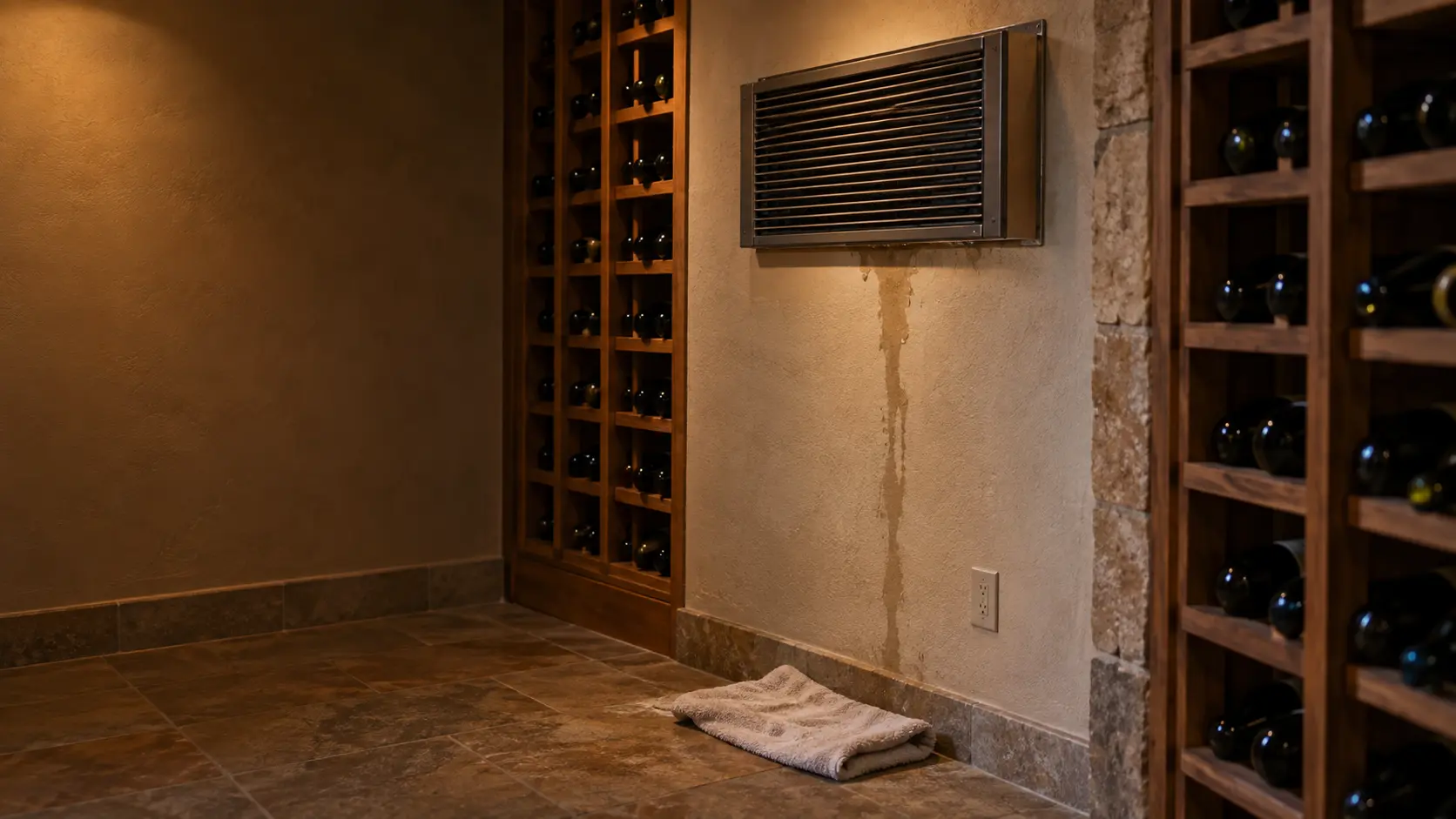
Cellar Cooling Unit Leaking Water
6 causes, cheapest first
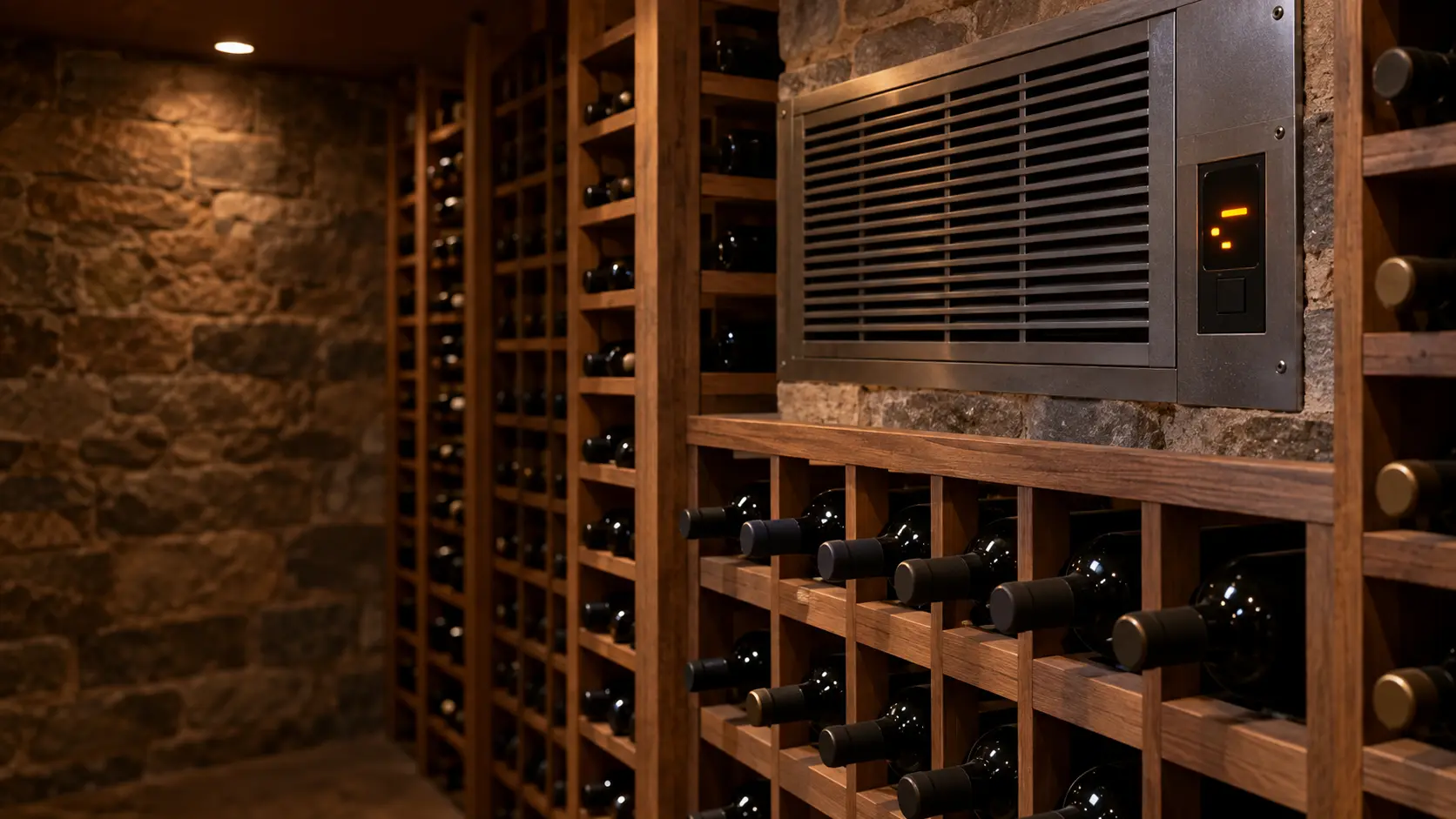
Cellar Cooling Unit Error Code
8 causes, cheapest first
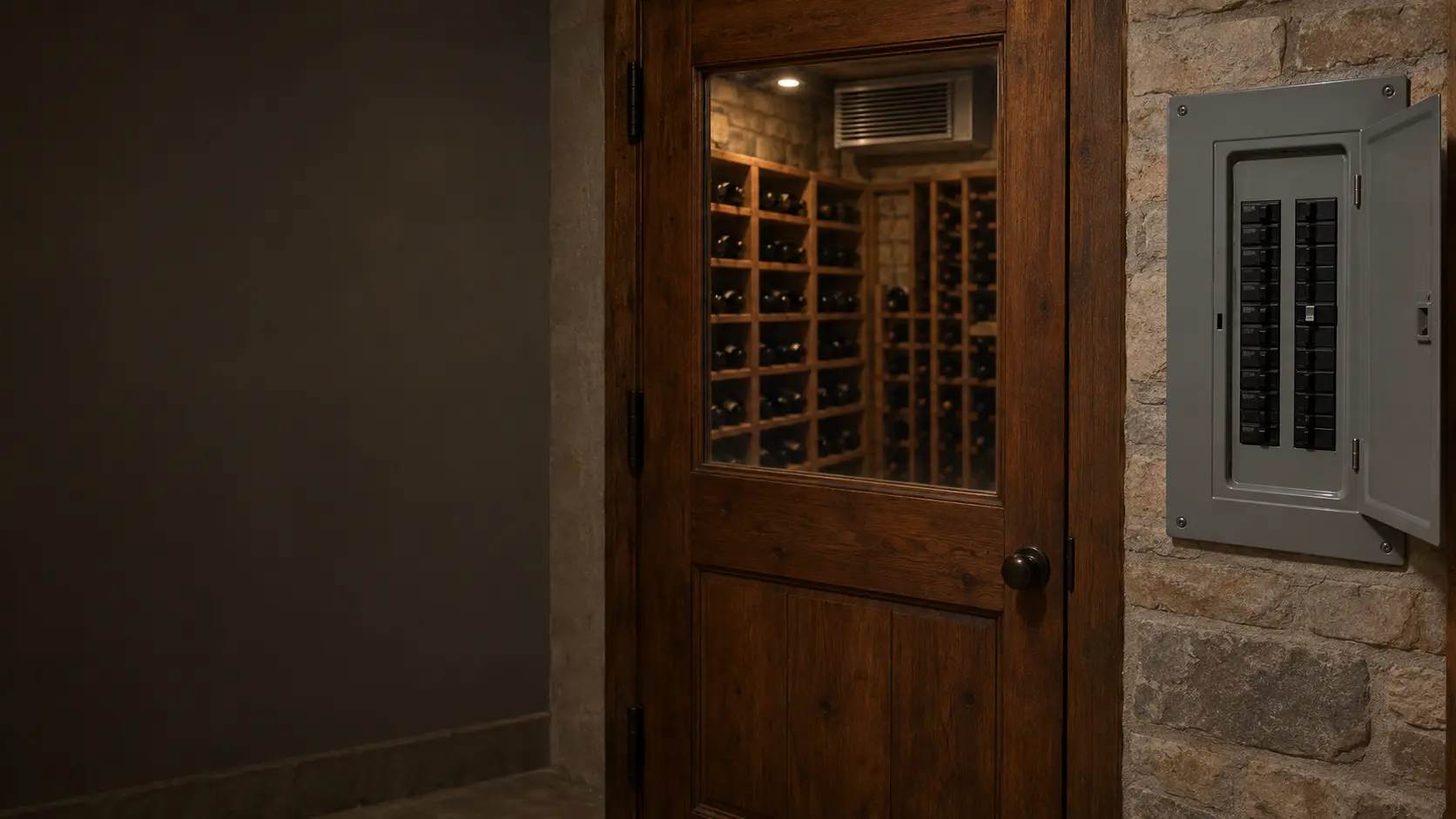
Cellar Cooling Unit Tripping the Breaker
5 causes, cheapest first
Who builds
a split system.
6 of the makes on this site build a split-system cellar cooling. Each mark opens that make's own page.
All 7 brandsSplit-system cellar cooling repair,
where we come out.
9 metros, each with its own page.
All service areasTampa BayFL · 31 areas
Miami / South FloridaFL · 47 areas
New York MetroNY · 75 areas
HoustonTX · 36 areas
ChicagoIL · 50 areas
Los AngelesCA · 95 areas
San DiegoCA · 31 areas

Questions about
split-system cellar coolings.
Can any HVAC company work on a split cellar system?
My outdoor cellar condenser runs, but the cellar is warm. Why?
How far can the condenser sit from the wine cellar?
Should the cellar condensing unit be covered in winter?
Back to your everyday
Is it a split-system cellar cooling?
Say so when you book — it changes what the technician brings and how the visit is planned.