

Cellar Cooling Unit Leaking Water
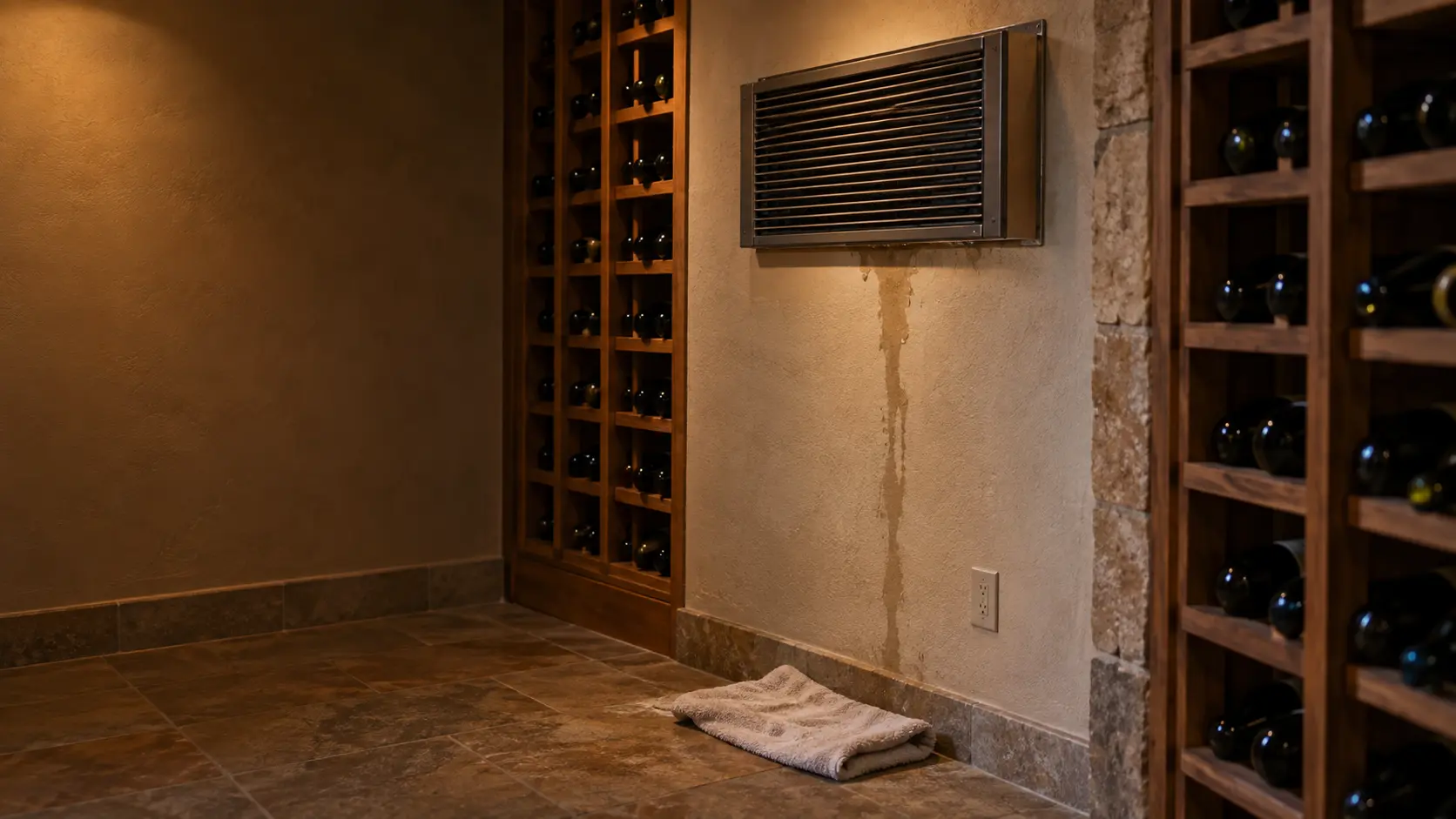
A cellar cooling unit leaking water leaves a dark stain spreading down the wall under the unit, drips landing on the top row of bottles, a wet patch on the floor of the next room, or water where a ceiling unit meets the drywall.
Mon–Sat, 8am–8pm
- The collection is exposed
- 5 questions that narrow it
- 6 causes, cheapest first
Book a visit
Three short steps, about a minute.
or call (844) 398-5977
Loading appointment form…
The appointment form couldn’t load. Please try again.
Collection first: cellar door shut, water near power left alone, breaker off from a dry panel
Water running near an outlet, a cord or a ceiling light is urgent on its own: stay clear, turn the circuit off from a dry panel, and book a visit. With the unit off, keep the cellar door shut so the room holds its cool for as long as it can.
What it
usually means.
A cellar unit pulls moisture out of the room air as it cools, and that water collects on the cold coil and drips into a tray. From there it leaves by a condensate line to a drain, runs to the hot side where some units evaporate it, or is lifted by a small pump. When the tray outlet clogs with slime or dust, the line kinks or loses its slope, the pump stops, or the unit is mounted tilting toward the cellar, the water finds another way out, usually down the wall or through the ceiling. A room that is too humid, from a gap in the vapor barrier or a door without a seal, makes far more water than the drain was meant to carry. The wall under a through-the-wall unit often hides an outlet or the unit's own cord, and a ceiling unit sits above lights and wiring, which is why water here is treated as urgent before the wine is even in question.
 The 6 causes, cheapest first
Answer these first
Where exactly does the water appear: on the cellar side under the unit, on the exhaust side, from the ceiling, or at the end of a drain line?
Is there an outlet, a junction box or a light fixture anywhere near the wet area?
Does the unit have a drain line or a small pump you can see, and does the pump hum or stay silent?
Is the coil behind the grille coated with ice, and does the dripping get worse when the unit goes quiet?
Is the water clear, or brown and smelling of mildew?
Check these
before you book.
Cellar cooling unit leaking water: 5 checks, and none of them costs anything.
Keep the cellar door shut, and if the room passes about 70°F while the unit is off, move the most valuable bottles to the coolest dark place in the house; shift any bottles directly under the drip to a dry rack.
If water is near an outlet, a cord or a light fixture, stay clear of it and switch the unit's circuit off only from a dry spot at the panel; never unplug it standing in water.
Put a towel or a shallow pan under the drip and note how fast it fills, so we know whether this is a trickle or a flood.
Also worth checking
- Look for the drain line or pump and note where it runs, and whether the pump hums when its reservoir is full.
- Tell us the make, the model number and whether it is a through-the-wall, ducted, split or ceiling unit.
The causes,
cheapest first.
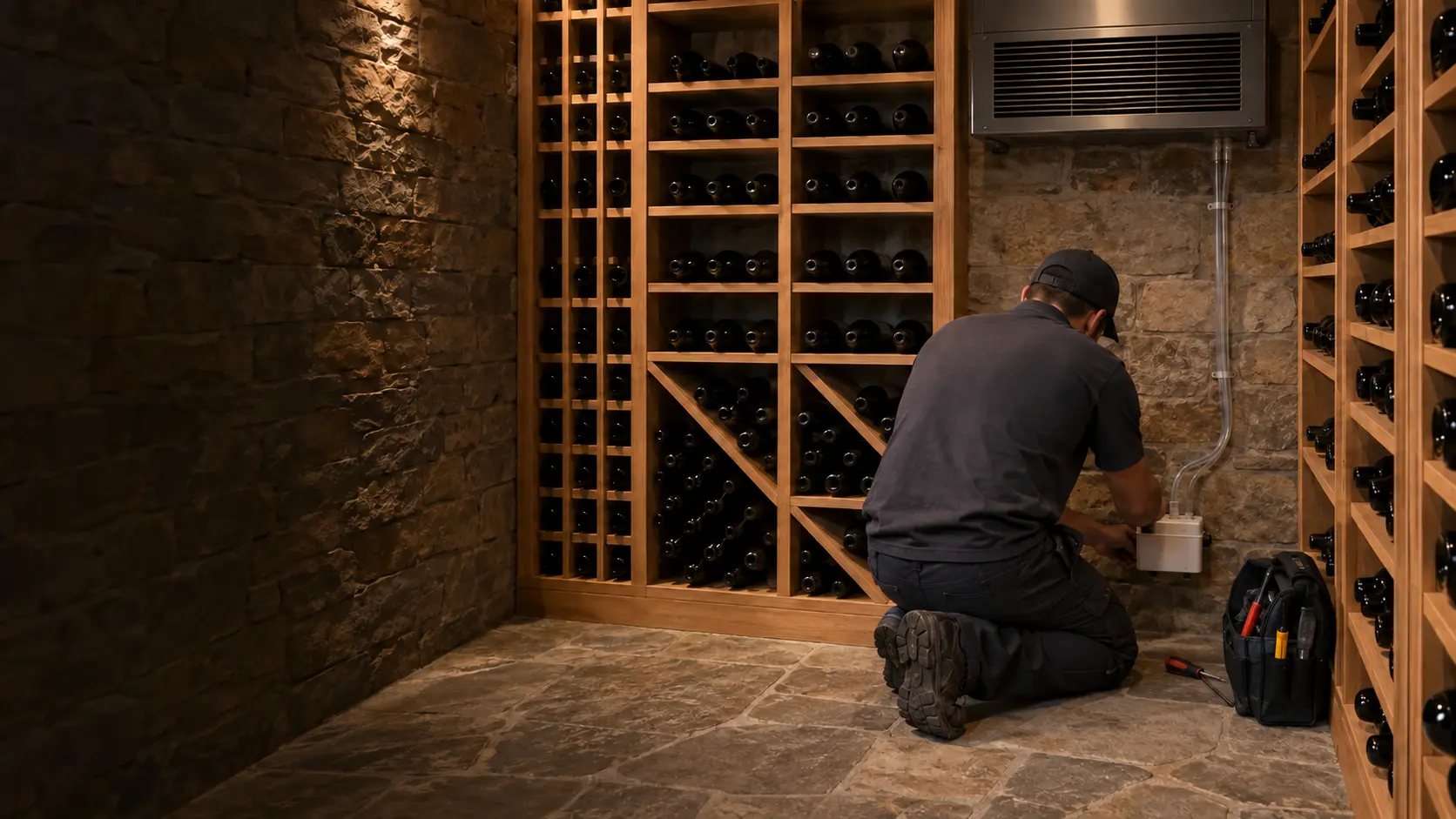
6 things cellar cooling unit leaking water turns out to be, from condensate tray or outlet clogged to room too humid from a gap in the vapor barrier.
The cost guide-
01 low
Condensate tray or outlet clogged
A film of slime or dust at the tray outlet is enough to back the water up until it spills over the edge and down the wall or into the ceiling cavity.
-
02 low to moderate
Drain line kinked, disconnected or flat
A line that sags, runs uphill or has slipped off its fitting inside the wall sends the water somewhere nobody can see until a stain shows through.
-
03 low to moderate
Condensate pump stopped
Where the water has to be lifted to reach a drain, a small pump does the lifting. A stuck float or a failed motor lets its reservoir overflow.
-
04 low
Unit tilted toward the cellar
A through-the-wall unit is meant to sit level or lean slightly toward its drain side. Mounted leaning the other way, the tray empties into the cellar instead of the line.
-
05 low to moderate
Ice on the coil melting all at once
When a coil ices over and then thaws, it releases more water in one go than the tray can pass. The ice is the real problem.
-
06 varies
Room too humid from a gap in the vapor barrier
Warm damp air leaking in through an unsealed wall, ceiling or door makes the unit wring out far more water than its drain was sized for.
What else
it could be.
Most often confused with cellar cooling evaporator coil icing up, then wine cellar humidity too high or mold.
All problemsCodes that come with it
E2CellarCool · Sensors and probesEACellarCool · HumidityAd2CellarCool · Coil icing and defrostEAWhisperKOOL · Humidity!2Wine Guardian · Humidity
Also related


The makes
it happens on.
7 makes on this site; cellar cooling unit leaking water can show up on any of them. Each mark opens that make's own page.
All 7 brandsCellar Cooling Unit Leaking Water,
where we come out.
9 metros, each with its own page.
All service areasTampa BayFL · 31 areas
Miami / South FloridaFL · 47 areas
New York MetroNY · 75 areas
HoustonTX · 36 areas
ChicagoIL · 50 areas
Los AngelesCA · 95 areas
San DiegoCA · 31 areas

Questions about
cellar cooling unit leaking water.
Why is my wine cellar unit dripping down the wall?
Is it safe to run the cellar unit while it leaks?
Does a leaking ceiling unit mean the drywall is ruined?
How much water should a cellar unit make on a normal day?
Back to your everyday
Still seeing cellar cooling unit leaking water?
Book with what you checked above — 5 answers save the technician the first part of the visit.