


Wine Cellar Humidity Too High or Mold
Wine cellar mold starts as a musty smell, then white or green fuzz on the rack posts, spotted labels and dark specks in the corners, usually with a hygrometer reading well above 70 %.
Mon–Sat, 8am–8pm
- 5 checks before you book
- 5 questions that narrow it
- 5 causes, cheapest first
Book a visit
Three short steps, about a minute.
or call (844) 398-5977
Loading appointment form…
The appointment form couldn’t load. Please try again.
What it
usually means.
A cellar is kept between roughly 50 and 70 % relative humidity. Above that, the wood of the racks, the labels and the drywall become food for mold. Most of the moisture comes from outside the room: warm humid air seeping through a wall or ceiling with no vapor barrier, a door without a seal, or a slab that wicks ground water. The cooling unit is supposed to take some of it out, but a unit that is oversized cools the room so fast that it shuts off before it has dried the air, and one whose drain backs up can pour water right back in. Poor air movement leaves still, damp corners even when the average reading is fine. The fix is often in the room as much as in the machine, and mold on the structure should be cleaned properly, not just wiped from the bottles.
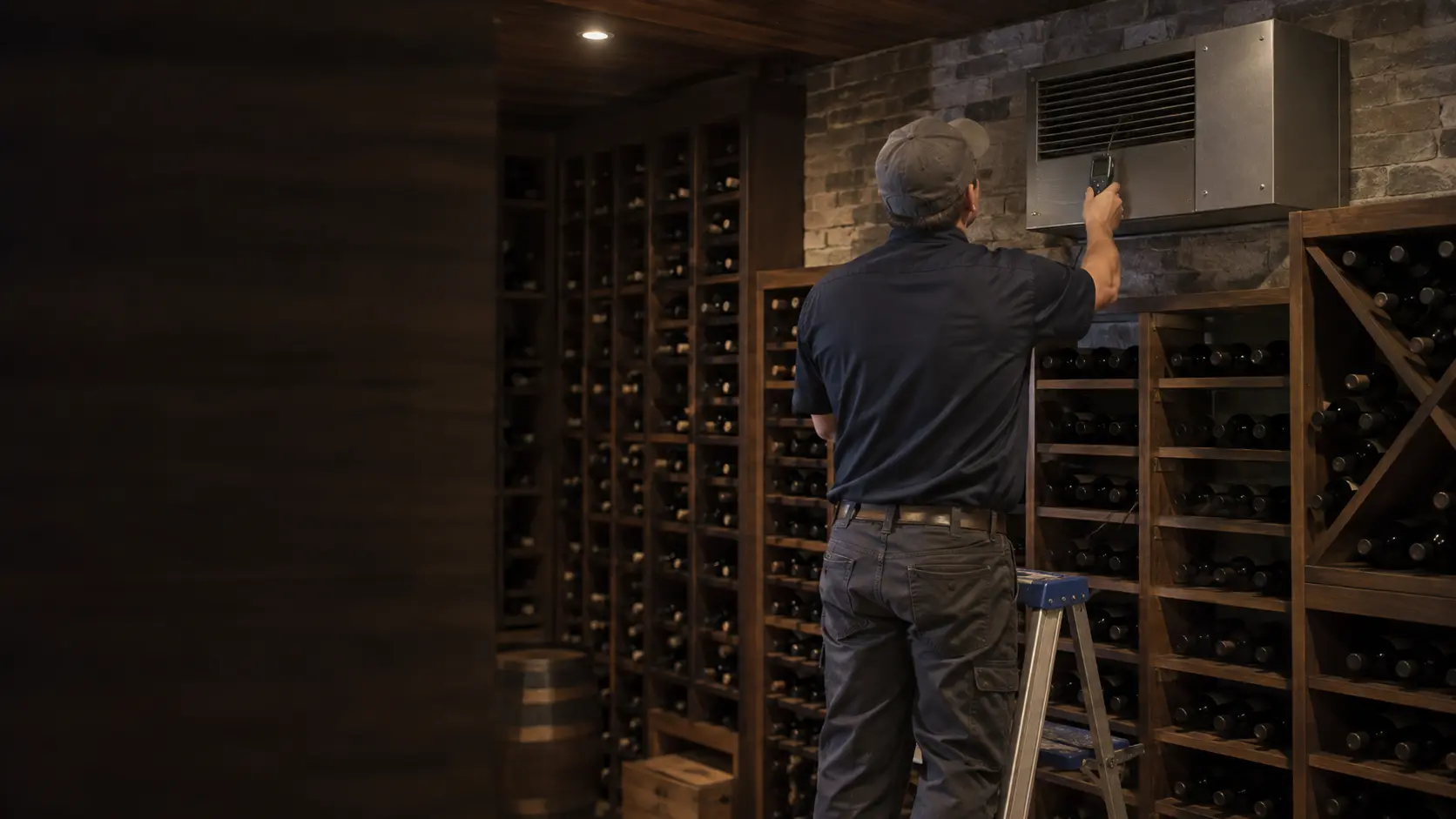 The 5 causes, cheapest first
Answer these first
What does a hygrometer on a middle rack read, and is it worse in summer?
Where does the mold grow: on rack posts, on the walls, on labels, or around the unit's grille?
Was the cellar built with a vapor barrier on the warm side of the insulation, and is there any glass wall?
Does the unit run in short bursts and switch off, or run long cycles?
Is there any sign of water from the unit's drain or from the slab?
Check these
before you book.
Wine cellar mold: 5 checks, and none of them costs anything.
Read a hygrometer on a middle rack for a few days and note the highest figure.
Photograph where the mold grows, so we can see whether it follows a wall, a corner or the unit's air path.
Check the unit's drain for water pooling on the cellar side.
Also worth checking
- Move bottles with valuable labels away from the dampest wall for now.
- Tell us the make, the model number and, if you know it, how the cellar walls were built.
How soon does it need a visit?
Not an emergency, but it will not fix itself. Book within a week or two, and sooner if mold is spreading on the structure rather than on a few labels.
The causes,
cheapest first.
5 things wine cellar humidity too high or mold turns out to be, from condensate backing up into the room to oversized unit short-cycling.
The cost guide-
01 low
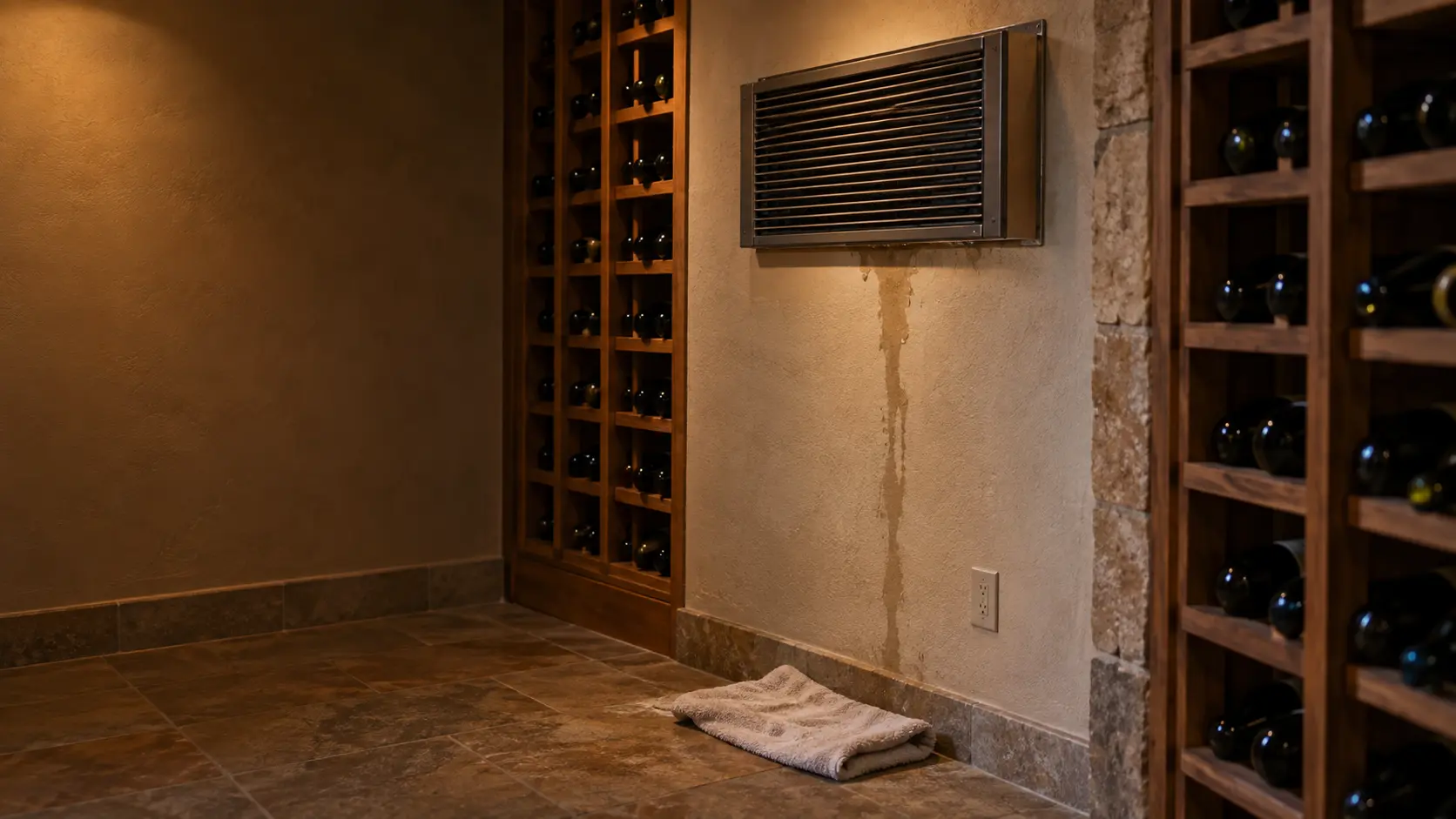
Condensate backing up into the room
A blocked tray or line spills the water the unit collected back into the cellar, feeding the damp it was meant to remove.
-
02 low to moderate
Humidity control set too high or stuck
On systems with humidity control, a humidifier that will not stop or a humidity sensor reading low keeps adding water the room does not need.
-
03 low to moderate
Still air in corners
A slow cellar-side fan, or racking that blocks the unit's supply, leaves pockets of damp still air where mold starts first.
-
04 varies
Missing or broken vapor barrier
Without a continuous barrier on the warm side of the walls and ceiling, humid air migrates into the cold room and condenses in the insulation and on the surfaces. It is the most common root cause and is found with a room check.
-
05 varies
Oversized unit short-cycling
A unit much larger than the room needs reaches the set point in minutes and stops before it has pulled much water out. The room stays cold and damp.
-
What it costs
Every repair on the site's cost scale, side by side
Open the cost guide
What else
it could be.
Most often confused with condensation on wine cellar walls or glass, then cellar cooling unit short cycling.
All problems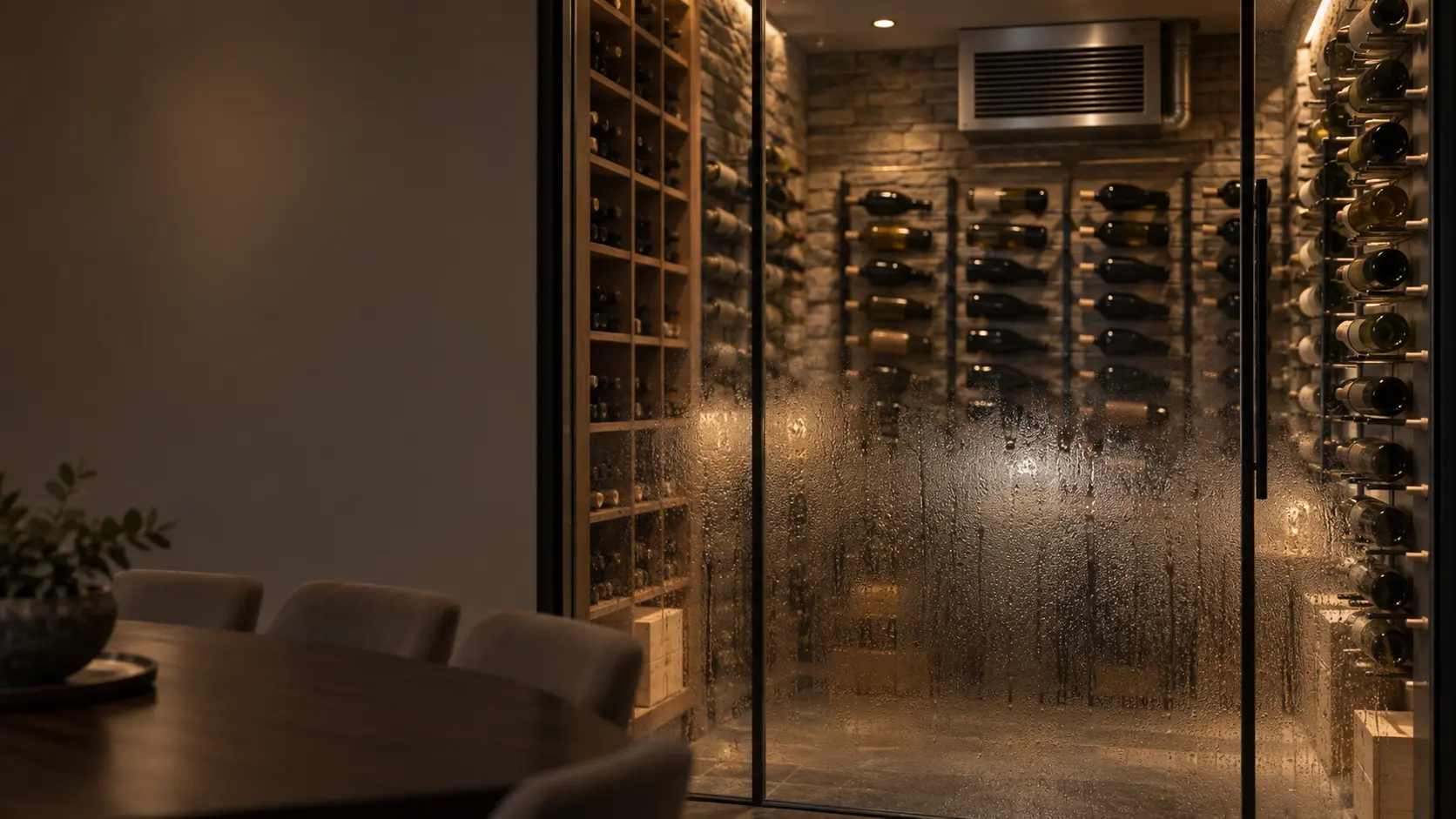

The makes
it happens on.
7 makes on this site; wine cellar humidity too high or mold can show up on any of them. Each mark opens that make's own page.
All 7 brandsWine Cellar Humidity Too High or Mold,
where we come out.
9 metros, each with its own page.
All service areasTampa BayFL · 31 areas
Miami / South FloridaFL · 47 areas
New York MetroNY · 75 areas
HoustonTX · 36 areas
ChicagoIL · 50 areas
Los AngelesCA · 95 areas
San DiegoCA · 31 areas

Questions about
wine cellar humidity too high or mold.
Does mold on the labels hurt the wine?
Why is my cellar damp when the cooling unit is new and large?
Can I run a dehumidifier in the wine cellar?
How do you find a gap in a cellar's vapor barrier?
Back to your everyday
Still seeing wine cellar humidity too high or mold?
Book with what you checked above — 5 answers save the technician the first part of the visit.