
Wine Cellar Cooling Diagnostic Visit
A visit that reads the cellar, the room the heat goes to and the cooling unit itself, and ends with one named cause, whether it is a part or the room.
Mon–Sat, 8am–8pm
- Price before any work
- 5 steps on the visit
- 6 problems it answers
Book a visit
Three short steps, about a minute.
or call (844) 398-5977
Loading appointment form…
The appointment form couldn’t load. Please try again.
What the wine cellar cooling diagnostic visit
involves.
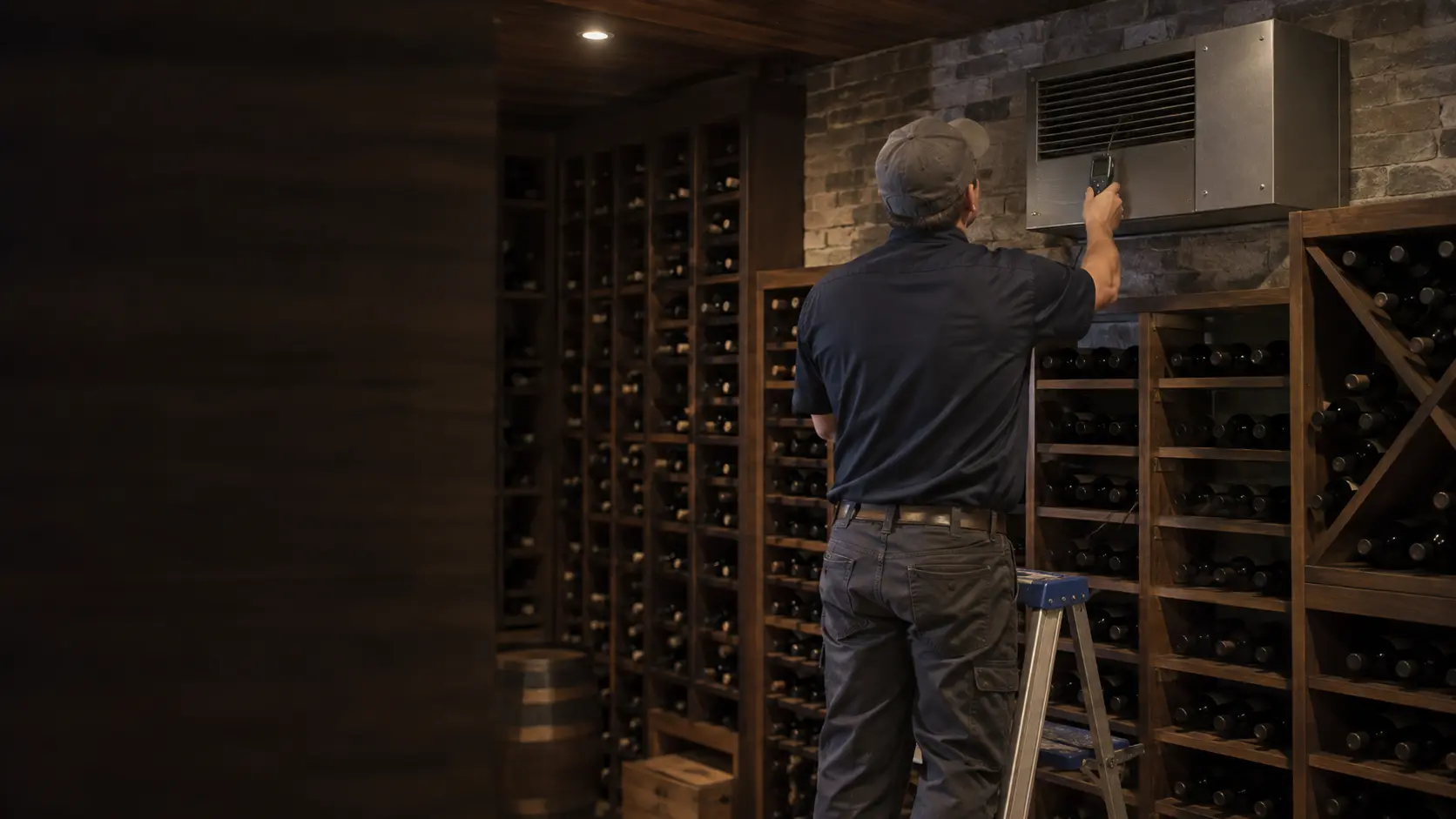
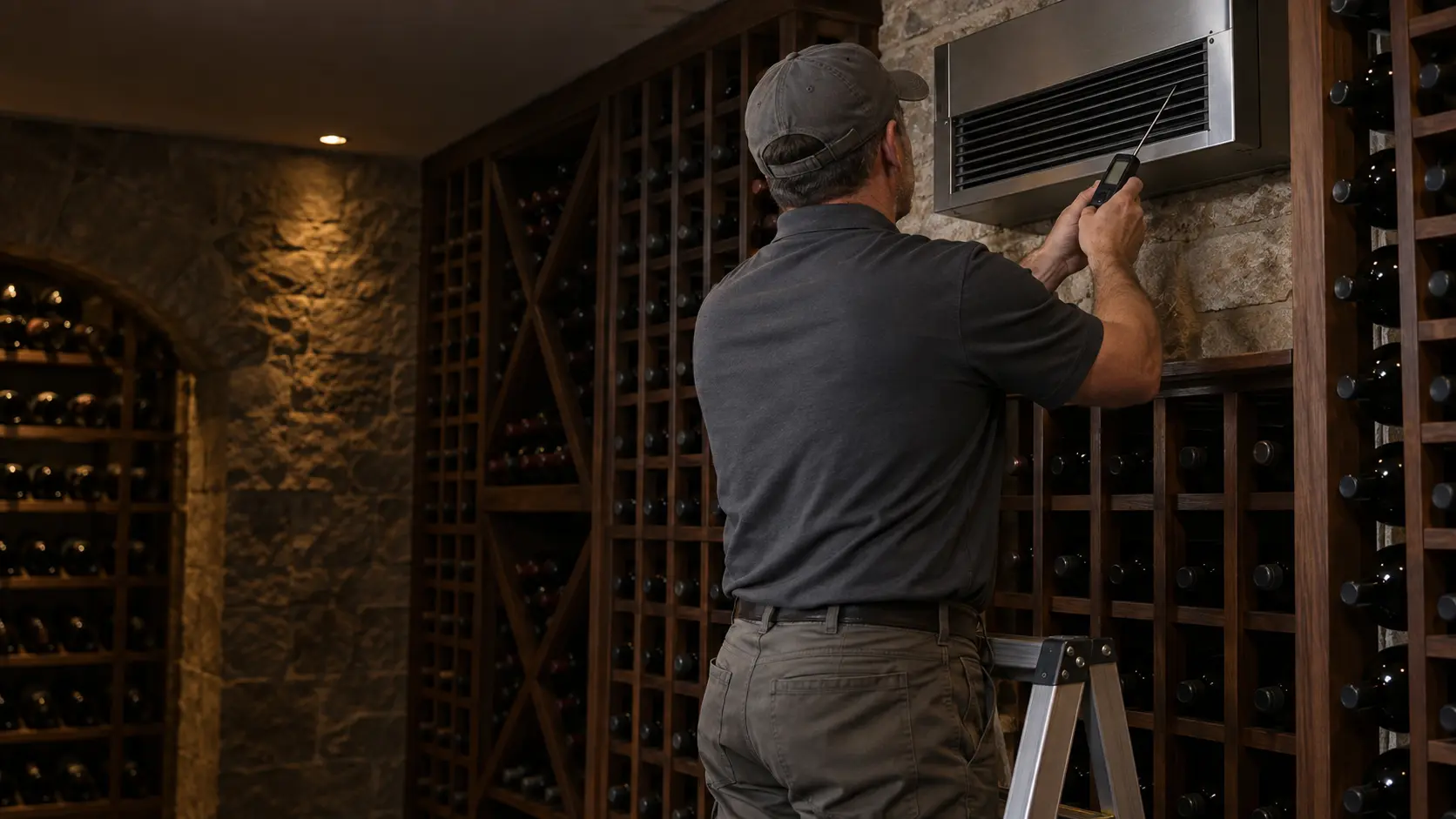
A cellar that will not hold 55°F can have a failing machine, a machine that was never big enough, or a room that leaks heat and moisture faster than any unit can remove them. The diagnostic visit sorts those three apart. It begins with numbers: the cellar's air and a bottle-height probe, the humidity, the temperature of the space that receives the exhaust, and on a split system the outdoor air at the condensing unit. Then the room itself is looked over: the door and its seal, any glass, the ceiling above, the walls you can reach and the gap around the unit's sleeve or grilles. Only then do the covers come off, for the fans, the coil, the drain, the controller and its probes, and the compressor and pressures on the sealed side. On a ducted or ceiling unit the path of the air and water is traced to its end. You finish with a named cause, a repair and its band, or a plain explanation of what the room needs, plus how to protect the collection until the work is done.
How the visit goesWhat it costsA cellar gets its price after the room and the unit are measured
The steps on this page rank cellar cooling jobs against one another; they are not a quote for yours.
Answers 6 problemsWine Cellar Too Warm
Cellar Cooling Unit Running Constantly · Cellar Cooling Unit Not Turning On · Cellar Cooling Unit Error Code · Wine Cellar Humidity Too High or Mold · Cellar Cooling Unit Short Cycling
Comes up most onThrough-the-wall cellar cooling unit
Ducted cellar cooling unit · Split-system cellar cooling · Ceiling-mounted cellar cooling
Codes that lead hereE7 · E10 · E7 · E10
CellarCool E7: no signal between the keypad and the board.
Wine cellar cooling diagnostic visit,
step by step.
Tell you the cause, the repair and its band, whether the room needs work as well, and how the bottles are kept safe until it is done.
Hear what changed and when, and read the cellar air, a bottle-height probe, the humidity and the temperature where the unit sends its heat.
Walk the room: the door and its seal, glass panels, the ceiling, the sleeve or grilles and anything stacked against the unit's air path.
Open the unit and check the fans, the coil, the drain and the controller, reading any code and the probe values it reports.
Test the compressor and the sealed side, and on a split system read pressures and line temperatures at both ends.
Tell you the cause, the repair and its band, whether the room needs work as well, and how the bottles are kept safe until it is done.
The problems
it answers.
6 of them, from wine cellar too warm to cellar cooling unit short cycling.
All problems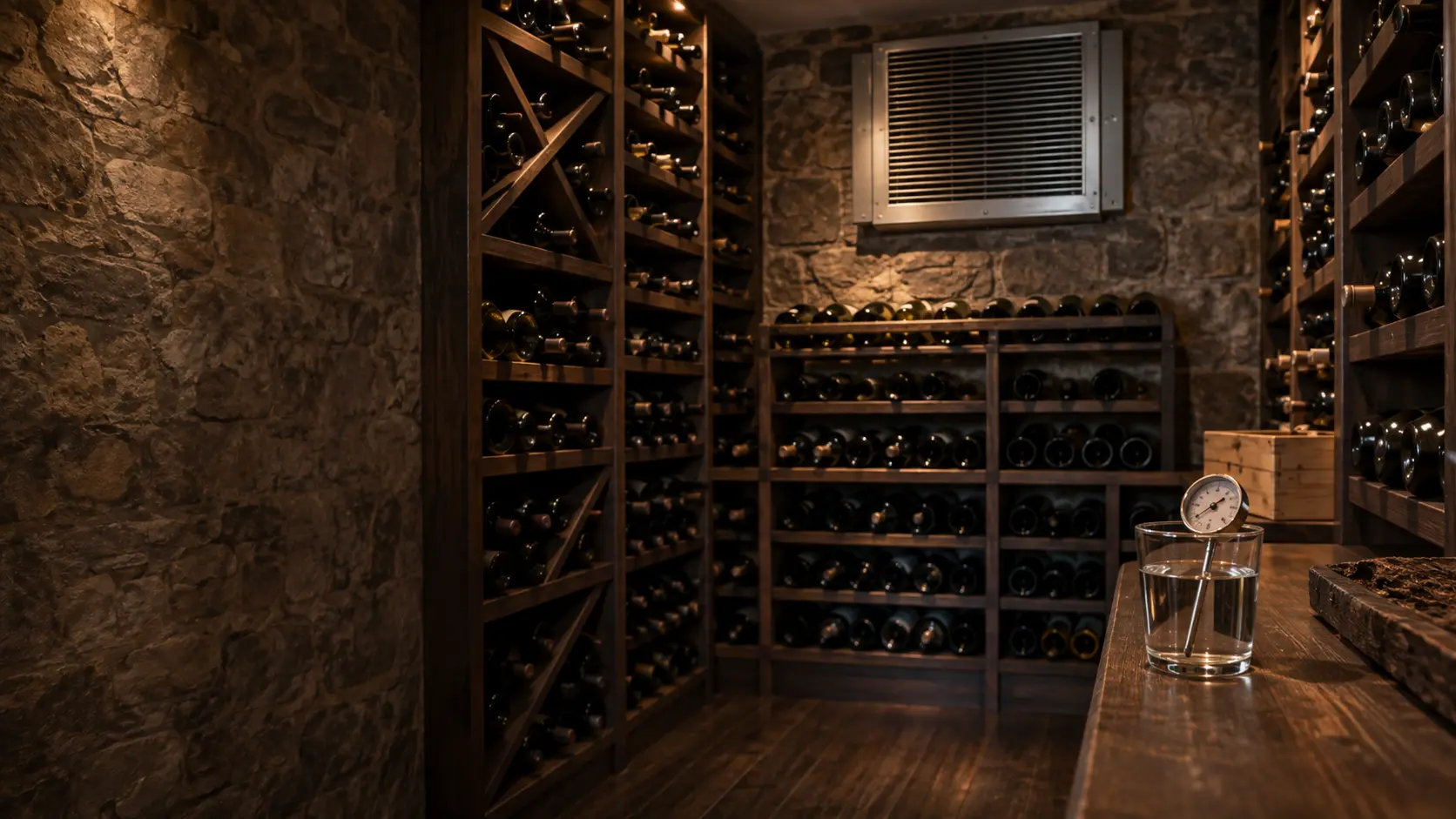
Wine Cellar Too Warm
6 causes, cheapest first
Before you call
Tell us this when you book
- Which kind of system you have, through-the-wall, ducted, split or ceiling-mounted, and where its heat goes
- What the cellar reads on the controller against a thermometer placed among the bottles, and the humidity if you have a gauge
- Any water on a wall, floor or ceiling, any smell, noise, tripped breaker, code or recent power outage
- The model and serial numbers from the unit's tag, and for a split system from the outdoor unit as well
It also answers
A price before
any work.
The steps on this page rank cellar cooling jobs against one another; they are not a quote for yours. A cellar that drifts from 55°F toward 65°F could have a dusty condenser, a slow fan, a drifted probe, a line set losing its insulation, an exhaust room that bakes in the afternoon, or a door that lets the house air in, and a phone call cannot tell them apart. So the price waits until the cellar, the exhaust side and the unit have been measured and the suspect part tested. You hear it before any panel comes off for the repair, and the decision stays yours.
Read the full cost guideWhere it
comes up most.
Most bookings: Through-the-wall cellar cooling unit, Ducted cellar cooling unit, Split-system cellar cooling, Ceiling-mounted cellar cooling.
All wine cellar cooling unit typesCodes that lead here
E7CellarCool · Power and controllerE7WhisperKOOL · Power and controller!4Wine Guardian · Power and controllerCAWine-Mate · Power and controller
Often the same visit


The makes
we see it on.
7 makes on this site, and the wine cellar cooling diagnostic visit on any of them. Each mark opens that make's own page.
All 7 brandsWine cellar cooling diagnostic visit,
where we come out.
The cellar, the climate and the building all change how the wine cellar cooling diagnostic visit goes. These notes are about that, metro by metro.
All service areasTampa BayFL · 31 areas
Tampa Bay houses have no basements, so a cellar here is a converted closet or an under-stair room inside the air-conditioned house, and the diagnostic reads the cellar, the room on the exhaust side and the unit's supply air together, since a cellar that warmed after Helene or Milton may have lost the house's cooling rather than its own.
OrlandoFL · 30 areas
Many Orlando cellars were built into custom and vacation houses behind a glass wall off the dining room, and the diagnostic measures how much heat that glass lets in on a summer afternoon before it blames the cooling unit for a cellar sitting at 62 degrees.
Miami / South FloridaFL · 47 areas
In a South Florida tower a wine room carved out of a condo has to put its exhaust heat somewhere the building allows, and the diagnostic starts by finding where that heat really goes, a utility closet, a ducted chase or a balcony, since a unit breathing its own warm air is the most common finding here.
New York MetroNY · 75 areas
A New York cellar is either a brownstone basement room with old masonry walls or a wine room built inside an apartment, and the diagnostic measures heat and humidity on both sides of the cellar wall, because a steam-heated basement in January and a sealed apartment in July load a cooling unit very differently.
HoustonTX · 36 areas
Houston's clay soil and high water table make true basements rare, so most cellars are ground-floor rooms against a garage or an exterior wall, and the diagnostic checks that wall's temperature and the vapor barrier behind it along with the unit's pressures and fans.
ChicagoIL · 50 areas
Chicagoland cellars usually sit in a basement that stays near 60 degrees much of the year, so a cooling unit that cannot pull that room down to 55 points squarely at the unit, and the diagnostic reads its pressures, its fans and its controller probe first.
Los AngelesCA · 95 areas
In Los Angeles a cellar may be dug into a hillside or built as a glass showpiece off a great room, and the diagnostic compares what the unit delivers with what the room demands, since glass, a west wall or an unsealed door can outrun a healthy unit in a Valley heat wave.
San DiegoCA · 31 areas
Near the San Diego coast a cellar can hold 55 with little help for months and then struggle when a Santa Ana wind brings desert heat, so the diagnostic judges the unit by a hot day's numbers rather than a mild morning's and looks at the exhaust side for salt on the coil.
San Francisco Bay AreaCA · 74 areas
Bay Area cellars run from a cool Victorian basement in San Francisco to a purpose-built room in a Peninsula remodel, and in the Hayward and San Andreas seismic zones the diagnostic also checks how the unit sits in its wall sleeve, since a unit shaken loose leaks air and water around its frame.

Questions about
the wine cellar cooling diagnostic visit.
Should I empty the wine cellar before the technician arrives?
My cellar climbed to the mid-60s over a weekend. Is the wine ruined?
Can the visit tell me if my cellar room is the real problem?
Is the diagnostic fee applied to the repair?
Back to your everyday
Ready to book the wine cellar cooling diagnostic visit?
Have these to hand: which kind of system you have, through-the-wall, ducted, split or ceiling-mounted, and where its heat goes, what the cellar reads on the controller against a thermometer placed among the bottles, and the humidity if you have a gauge, any water on a wall, floor or ceiling, any smell, noise, tripped breaker, code or recent power outage, the model and serial numbers from the unit's tag, and for a split system from the outdoor unit as well.