Why the door is the weakest wall in the room
Breezaire's enclosure rules ask for a door of minimum size, insulated to R-11 and closed against high-quality weatherstripping, with the bottom and the space behind the casing sealed as well. Most interior doors fail every one of those: they are hollow, they stop short of the floor, and their trim hides a gap between frame and stud.
WhisperKool adds the everyday part. Each time the door opens, warm, humid air from the house moves in and the unit has to remove both the heat and the water. A door that also leaks while it is closed turns that brief load into a constant one.
Source: Breezaire — Wine Cellar Dynamics and Construction Guide — Doors of minimum size, insulated to R-11, tightly sealed with high-quality weatherstripping, with the bottom and the space behind the frame molding sealed; cool air sinks and warm air rises; glass left out of sizing; low-wattage lighting on a timer; WhisperKool — Frequently Asked Questions — Opening the door lets in warm, humid air and adds load; glass raises heat load and usually needs a larger unit; condensation comes from humid air leaking in around doors or glass
What a door that seals is made of
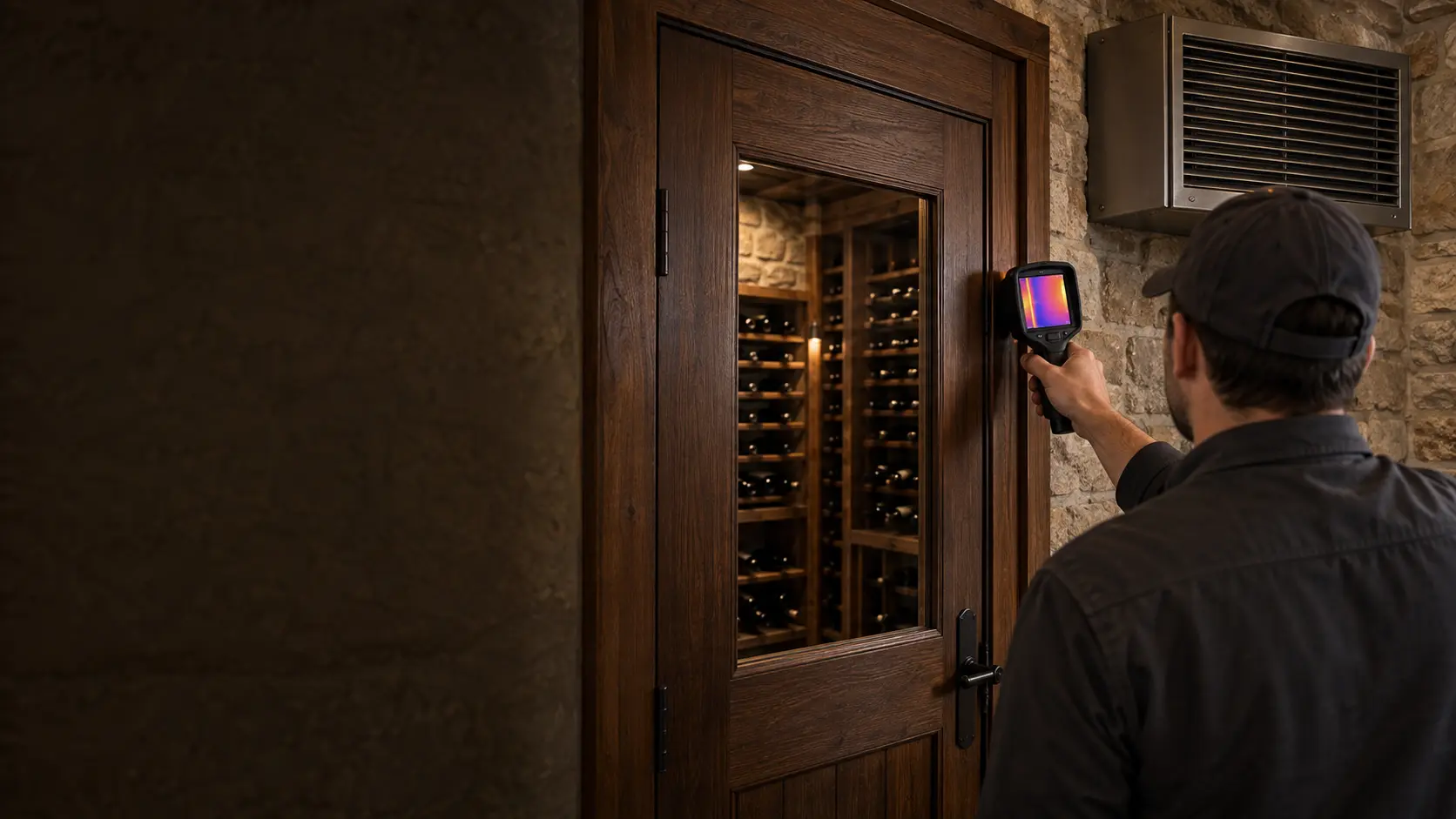
An exterior-grade door is the usual starting point, because it is built to separate two different climates: a solid or foam-filled slab, a frame with a built-in groove for compression weatherstripping, and a threshold the bottom can close against. A heavy wooden door with no seals fails the test despite its weight.
Hinges and latch matter too. A door that sags on its hinges opens a wedge at the top of the latch side, and a latch that does not pull the slab tight against the strip lets the seal barely touch.
- An insulated slab, not a hollow-core interior door.
- Compression weatherstripping on both sides and across the head.
- A bottom sweep or an automatic door bottom meeting a threshold.
- Trim sealed to the wall, with the gap behind the casing filled.
- A latch or closer that pulls the door firmly onto its seals.
The bottom edge
Cold air is heavy and pools low in a cellar, so a gap under the door works like a drain for it while drawing warm air in over the top. Breezaire calls out the bottom specifically. A sweep that drags on tile wears quickly; an automatic door bottom that drops when the door closes lasts longer on a hard floor.
Behind the casing
The space between the door frame and the rough opening is often left empty and hidden by trim. Breezaire asks for it to be sealed, and it is the part owners most often miss because nothing looks wrong from either side.
Glass doors
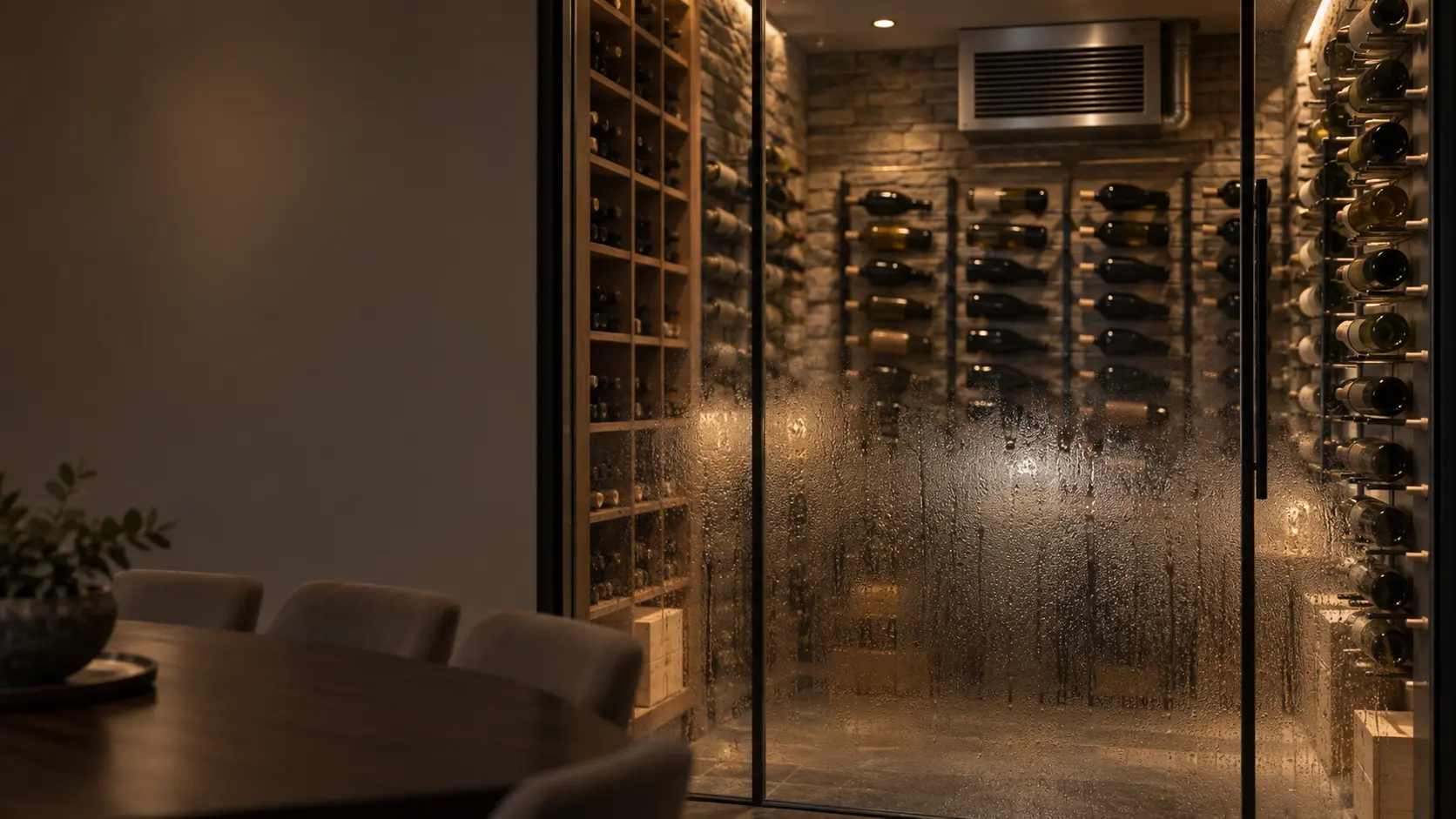
Breezaire leaves glass out of its sizing calculations entirely and advises against it in a cellar. WhisperKool accepts glass with planning, but says it raises the heat load enough that a glass cellar usually needs a larger unit and careful sealing, and it names air leaks around glass among the causes of condensation. Insulated glass in a frame that compresses a real weatherstrip is the minimum.

Three tests you can do this evening
None of these needs a tool. Do them on a warm, humid day if you can, when the difference between the house and the cellar is largest and a leak is easiest to feel.
- The paper test from Breezaire: close the door on a sheet of paper at several points along each side and the head; if it slides out without resistance, air passes there.
- The dark test, also from Breezaire: stand inside with the lights off for a few minutes and look for light around the frame and under the door.
- The back of the hand: on a warm, humid day, move it slowly along the closed door's edges from the house side and feel for cool air escaping.
Source: Breezaire — WKL Series Installation Instructions — Close the door on a piece of paper and look for light from inside the dark room to find leaks; a poorly sealed room makes the unit run constantly and overflow
What a leaky door does to the cooling unit
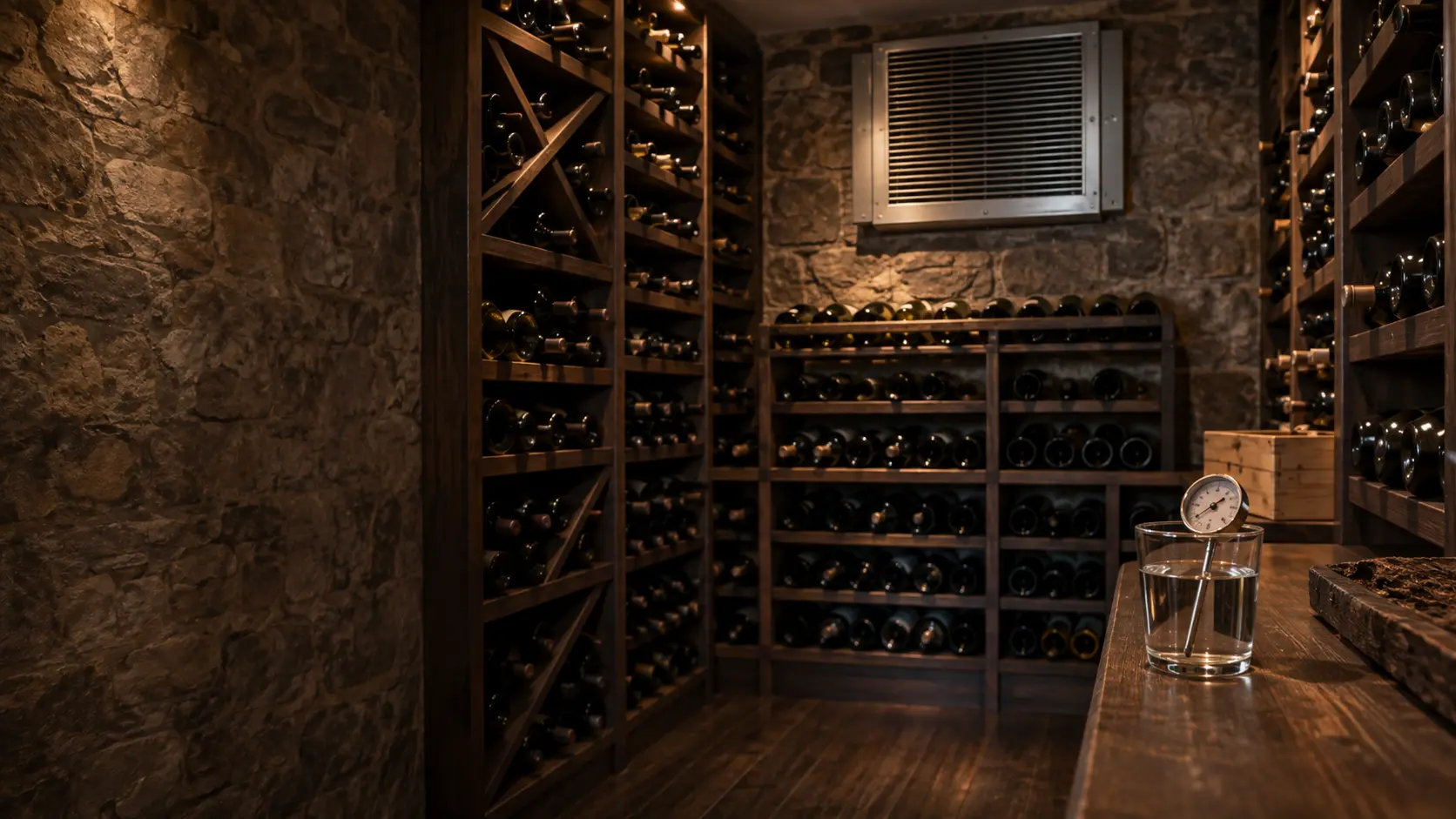
Breezaire's description of a poorly sealed room fits a bad door exactly: the unit runs almost all the time with only a slight drop in temperature, and water overflows from it. The water is humidity from the house, arriving through the gap and condensing on the cold coil.
The door itself often shows it too. WhisperKool connects condensation on cellar surfaces to warm, humid air getting in, and the first place to look is the frame and glass of the door, where cold cellar air meets house air through a seal that no longer closes.
Source: Breezaire — WKL Series Installation Instructions — Close the door on a piece of paper and look for light from inside the dark room to find leaks; a poorly sealed room makes the unit run constantly and overflow; WhisperKool — Frequently Asked Questions — Opening the door lets in warm, humid air and adds load; glass raises heat load and usually needs a larger unit; condensation comes from humid air leaking in around doors or glass
Habits that keep a good seal working
Close the door behind you even for a quick visit, and do not prop it open while restocking; carry cases in, close the door, unpack. Breezaire's advice to keep cellar lights on a timer belongs here as well, since a light left burning behind a closed door adds heat nobody sees.
Weatherstripping flattens and cracks with use. Look at it and redo the paper test twice a year, before the humid season and after it, and replace strips that stay flat after the door opens.
Source: Breezaire — Wine Cellar Dynamics and Construction Guide — Doors of minimum size, insulated to R-11, tightly sealed with high-quality weatherstripping, with the bottom and the space behind the frame molding sealed; cool air sinks and warm air rises; glass left out of sizing; low-wattage lighting on a timer