
The heat taken out of the cellar lands somewhere
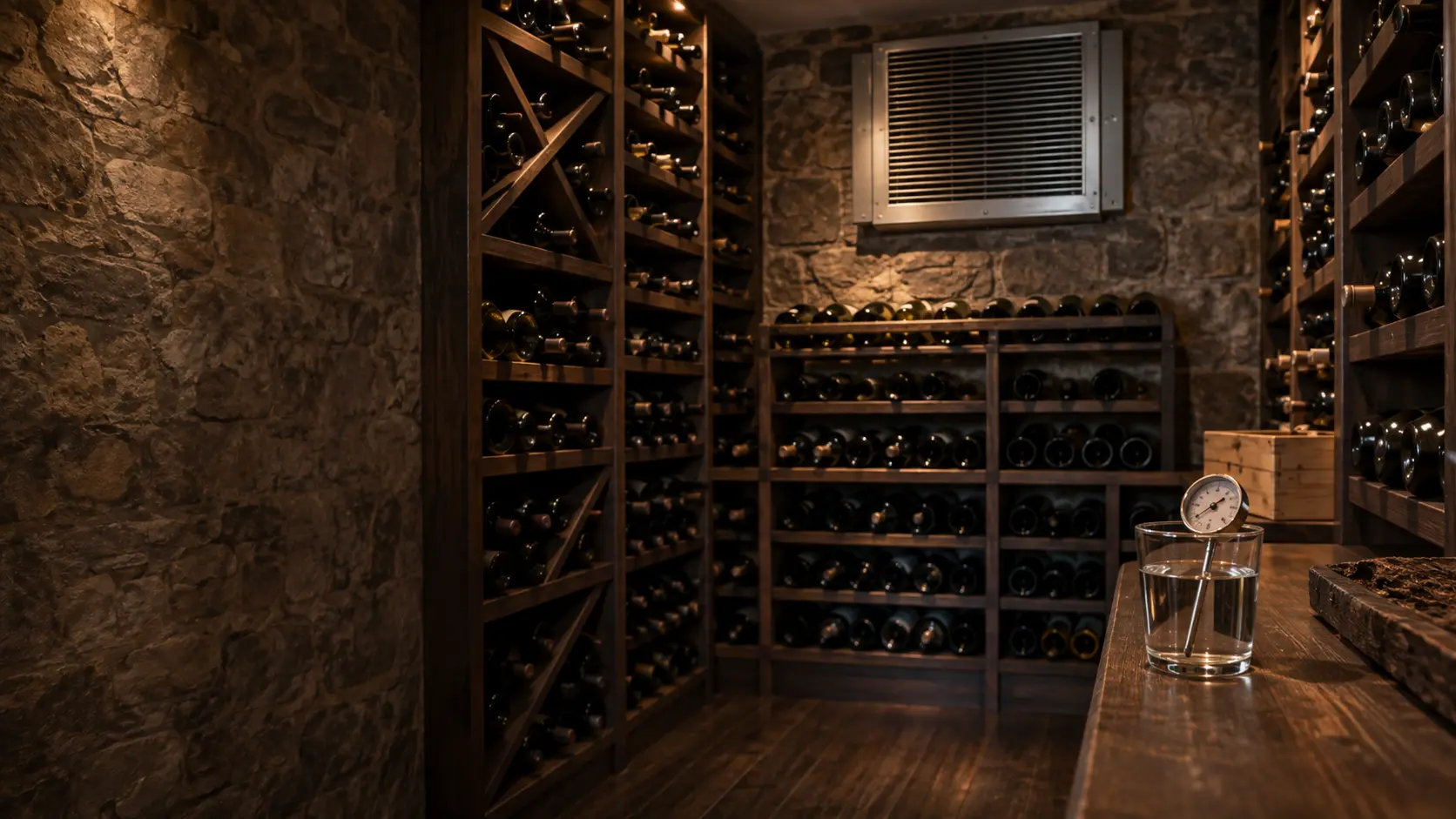
A cooling unit does not destroy heat; it moves it. The warm side of a self-contained unit blows out the heat from the cellar plus the heat of its own compressor and fans, and WhisperKool gives exhaust air temperatures of 90°F to 100°F as normal. Breezaire's instructions put it in one line: where the warm air goes matters just as much as where the unit sits inside the cellar.
That warm air has to be carried away by the room it lands in. If it is not, the unit starts drawing its own exhaust back across the condenser, the refrigerant cannot shed heat, and the cellar warms even though the machine is running flat out.
Source: WhisperKool — Frequently Asked Questions — Exhaust air commonly 90°F to 100°F; do not vent into a small room or closet; consider a high-ambient unit or split system above 78°F; ducted units up to 25 feet away; split and ducted systems installed by an HVAC-R technician; condenser filters; ducted and split systems are quieter; Breezaire — WKL Series Installation Instructions — Exhaust location matters as much as the cellar side; 3 feet unobstructed and a ventilated space; unsuitable exhaust spaces listed; reduced output above a 25°F difference; no ductwork; grille attached with no gap; shuts off near 75°F and restarts near 65°F; clean the condenser every 3 months; primer-only grille; consult the building inspector for fire-rated walls
What makes a good receiving room
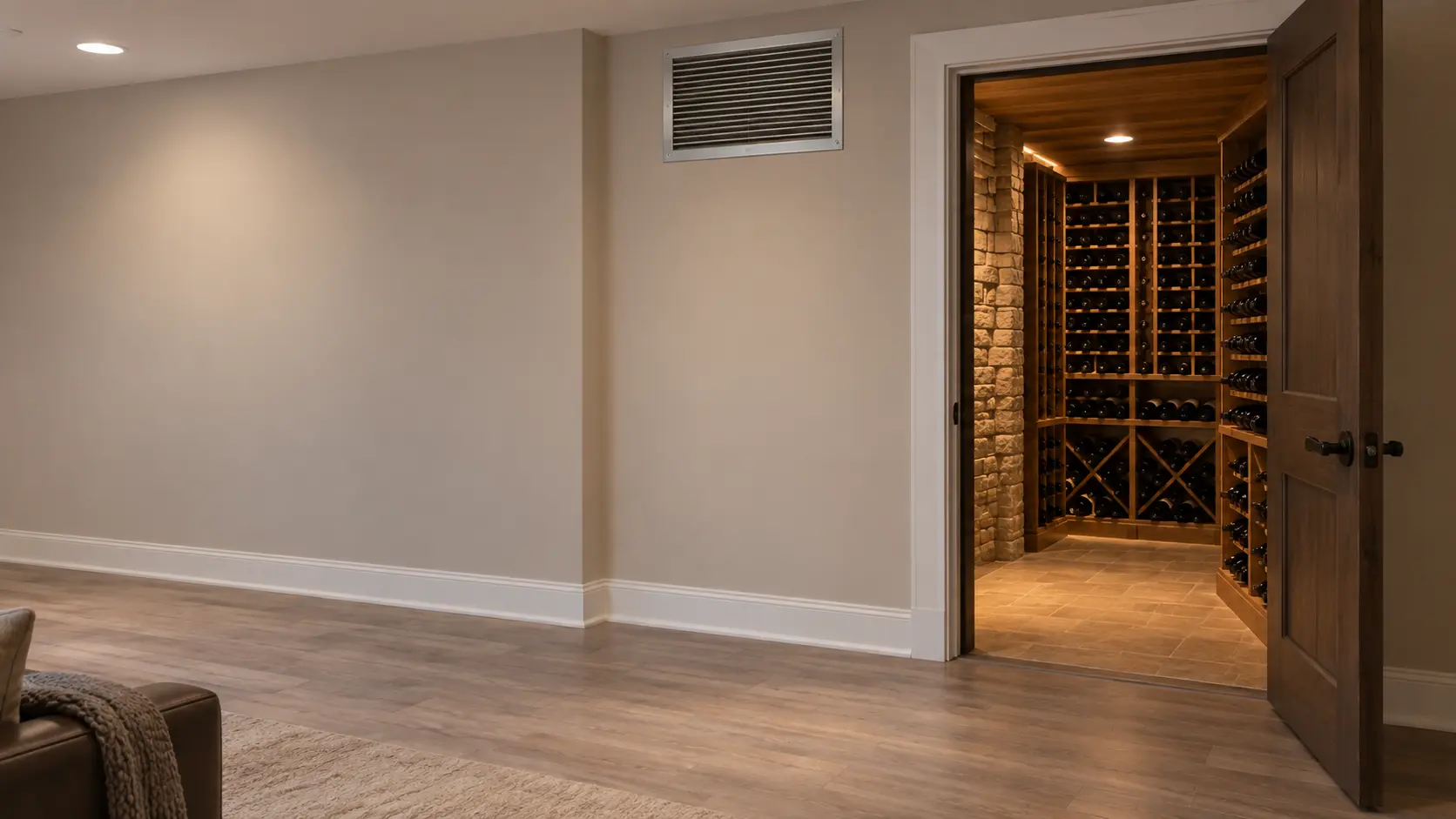
Breezaire asks for at least 3 feet of unobstructed space in front of the exhaust grille and a receiving area that is well ventilated. It names the spaces that fail: unventilated laundry rooms, closets, bathrooms, garages, crawl spaces, attics and humid basements. WhisperKool also advises against venting into a small room or closet and suggests ducting the exhaust to a larger space when the nearest one is too small.
Temperature matters as much as size. Breezaire notes that its units give less than their rated output once the surroundings run more than 25°F above the cellar, and WhisperKool recommends a high-ambient unit or a split system when the exhaust space stays at 78°F or warmer.
- Good: a large finished basement room or a family room that is air-conditioned.
- Workable with care: a mechanical room with its own ventilation and nothing stacked near the grille.
- Poor: a closet, a laundry room, a bathroom or a small storage room with the door shut.
- Wrong: an attic, a crawl space, an unventilated garage or a damp basement.
Source: WhisperKool — Frequently Asked Questions — Exhaust air commonly 90°F to 100°F; do not vent into a small room or closet; consider a high-ambient unit or split system above 78°F; ducted units up to 25 feet away; split and ducted systems installed by an HVAC-R technician; condenser filters; ducted and split systems are quieter; Breezaire — WKL Series Installation Instructions — Exhaust location matters as much as the cellar side; 3 feet unobstructed and a ventilated space; unsuitable exhaust spaces listed; reduced output above a 25°F difference; no ductwork; grille attached with no gap; shuts off near 75°F and restarts near 65°F; clean the condenser every 3 months; primer-only grille; consult the building inspector for fire-rated walls

How each kind of system disposes of its heat
The four kinds of cellar cooling differ mostly in where they put the warm side, which is why the receiving room is often what decides between them.
Through-the-wall units exhale into the next room
WhisperKool describes self-contained units that mount between wall studs, one end cooling the cellar and the other exhausting into the adjacent space. Breezaire's are not designed for ductwork on either side, and its instructions ask for the exhaust grille to be fastened directly against the warm side with no gap, because the unit does not work properly without it.
Ducted units send it farther
A fully ducted system moves supply and return air through ducts, and WhisperKool says the unit can typically sit up to 25 feet from the cellar. That lets the warm side live in a ventilated mechanical room while the cellar sees only two grilles.
Split systems put it outdoors
A split system keeps only the evaporator in or next to the cellar and sends the heat through a refrigerant line set to a condensing unit outdoors or in a garage. Setting one up means opening and charging a refrigerant circuit; EPA rules under Section 608 of the Clean Air Act require the technicians who do that work to hold certification, and WhisperKool requires split and ducted configurations to be installed by an HVAC-R technician.
What happens when the heat cannot escape
Breezaire warns that if airflow into or out of the warm side is blocked, the unit can end up heating the cellar instead of cooling it. Its Sentry III controller guards against this by switching the unit off when the cellar reaches about 75°F and holding it off until the room falls back to about 65°F or the power is cycled.
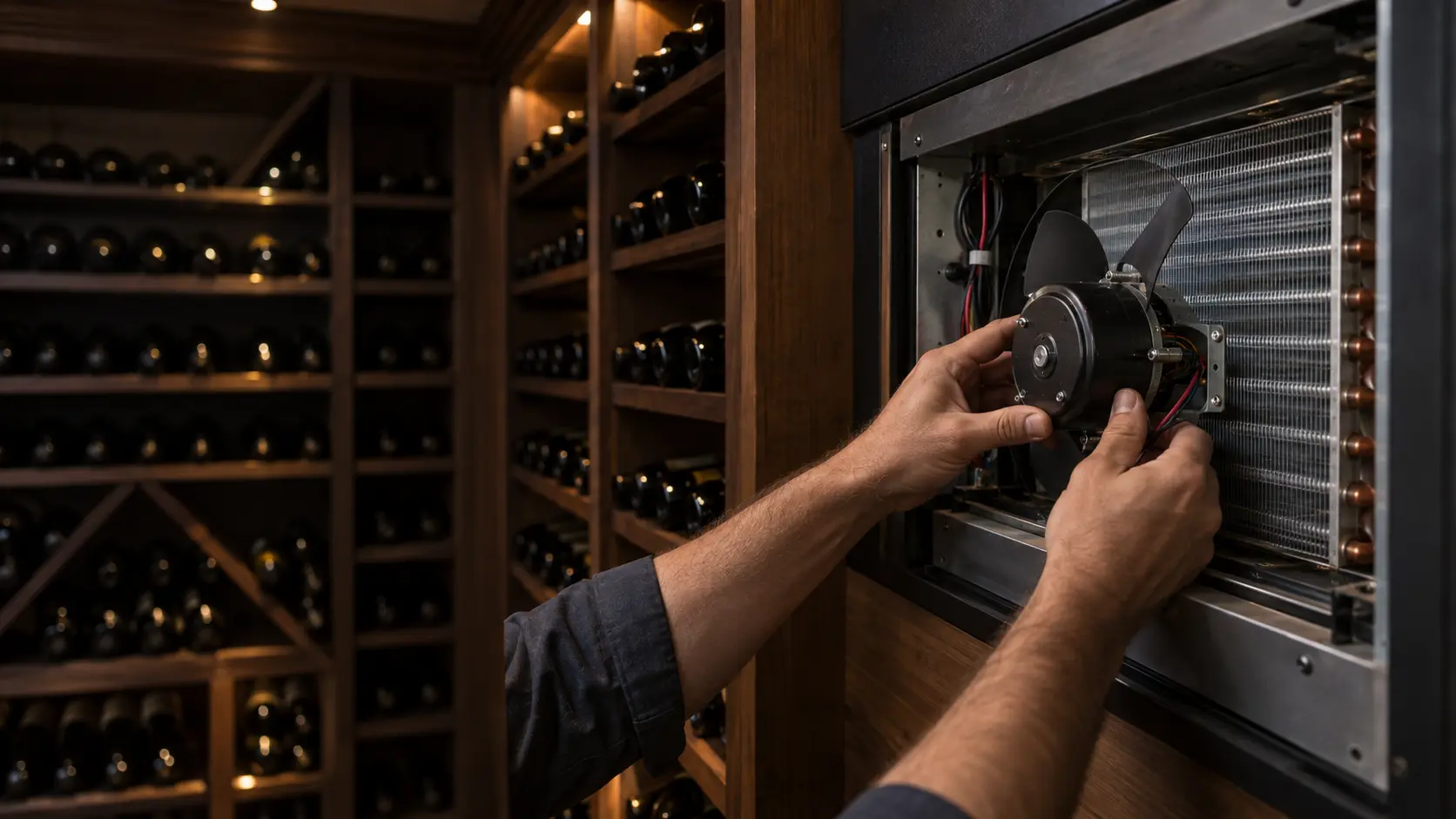
Dust does the same thing more slowly. Breezaire asks for the condenser coil behind the exhaust grille to be inspected and vacuumed every 3 months, and says a coil blocked badly enough to overheat the unit can end in a failure its coverage does not include. WhisperKool fits filters on some condenser coils for the same reason.
Source: WhisperKool — Frequently Asked Questions — Exhaust air commonly 90°F to 100°F; do not vent into a small room or closet; consider a high-ambient unit or split system above 78°F; ducted units up to 25 feet away; split and ducted systems installed by an HVAC-R technician; condenser filters; ducted and split systems are quieter; Breezaire — WKL Series Installation Instructions — Exhaust location matters as much as the cellar side; 3 feet unobstructed and a ventilated space; unsuitable exhaust spaces listed; reduced output above a 25°F difference; no ductwork; grille attached with no gap; shuts off near 75°F and restarts near 65°F; clean the condenser every 3 months; primer-only grille; consult the building inspector for fire-rated walls
Noise, warmth and the people in the next room
Breezaire reminds buyers that a cellar unit is a mechanical machine: it makes noise and it produces heat on the warm side. A home office or guest room on the exhaust side gets both, which is why WhisperKool points owners who care about quiet toward ducted and split systems.
Two building points come up often on this side of the wall. Breezaire's grille arrives in primer only and needs proper paint if it faces the weather, and its units should not go into a fire-rated wall without checking with the local building inspector first.
- Keep furniture, boxes and curtains at least 3 feet from the grille.
- Do not close the receiving room's door on a unit that has nowhere else to breathe.
- Paint an exterior-facing grille with a suitable outdoor coating.
- Ask the building inspector before cutting into a fire-rated wall.
Source: WhisperKool — Frequently Asked Questions — Exhaust air commonly 90°F to 100°F; do not vent into a small room or closet; consider a high-ambient unit or split system above 78°F; ducted units up to 25 feet away; split and ducted systems installed by an HVAC-R technician; condenser filters; ducted and split systems are quieter; Breezaire — WKL Series Installation Instructions — Exhaust location matters as much as the cellar side; 3 feet unobstructed and a ventilated space; unsuitable exhaust spaces listed; reduced output above a 25°F difference; no ductwork; grille attached with no gap; shuts off near 75°F and restarts near 65°F; clean the condenser every 3 months; primer-only grille; consult the building inspector for fire-rated walls