


The room, the opening, the door and where the heat goes
Installation and setup
guides.
What a cellar room needs before any cooling unit can hold it steady: insulation and a vapor barrier on the warm side, a door that seals, a place for the exhaust heat, and a drain for the water the coil pulls from the air.
Mon–Sat, 8am–8pm
- Three guides
- Read before you book
- Says where to stop
Book a visit
Three short steps, about a minute.
or call (844) 398-5977
Loading appointment form…
The appointment form couldn’t load. Please try again.
Installation and setup,
guide by guide.
Many of the visits this site books end at the walls rather than inside the unit. A cellar without a continuous vapor barrier, a door that never sealed or an exhaust grille breathing into a closet will make a sound machine look broken, and no part swap fixes it. This section covers the room the cooling unit was bought for.
All 18 guides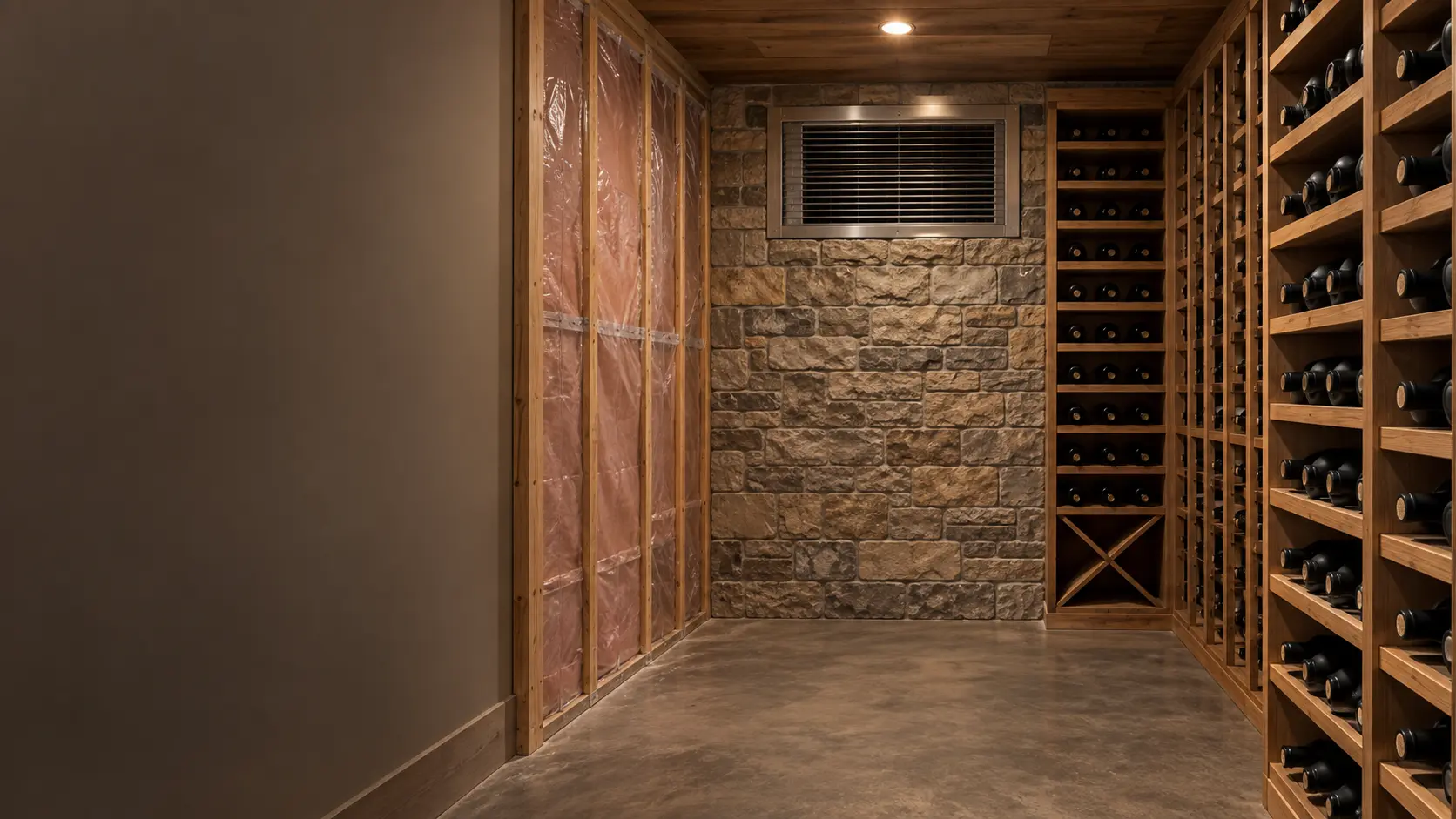
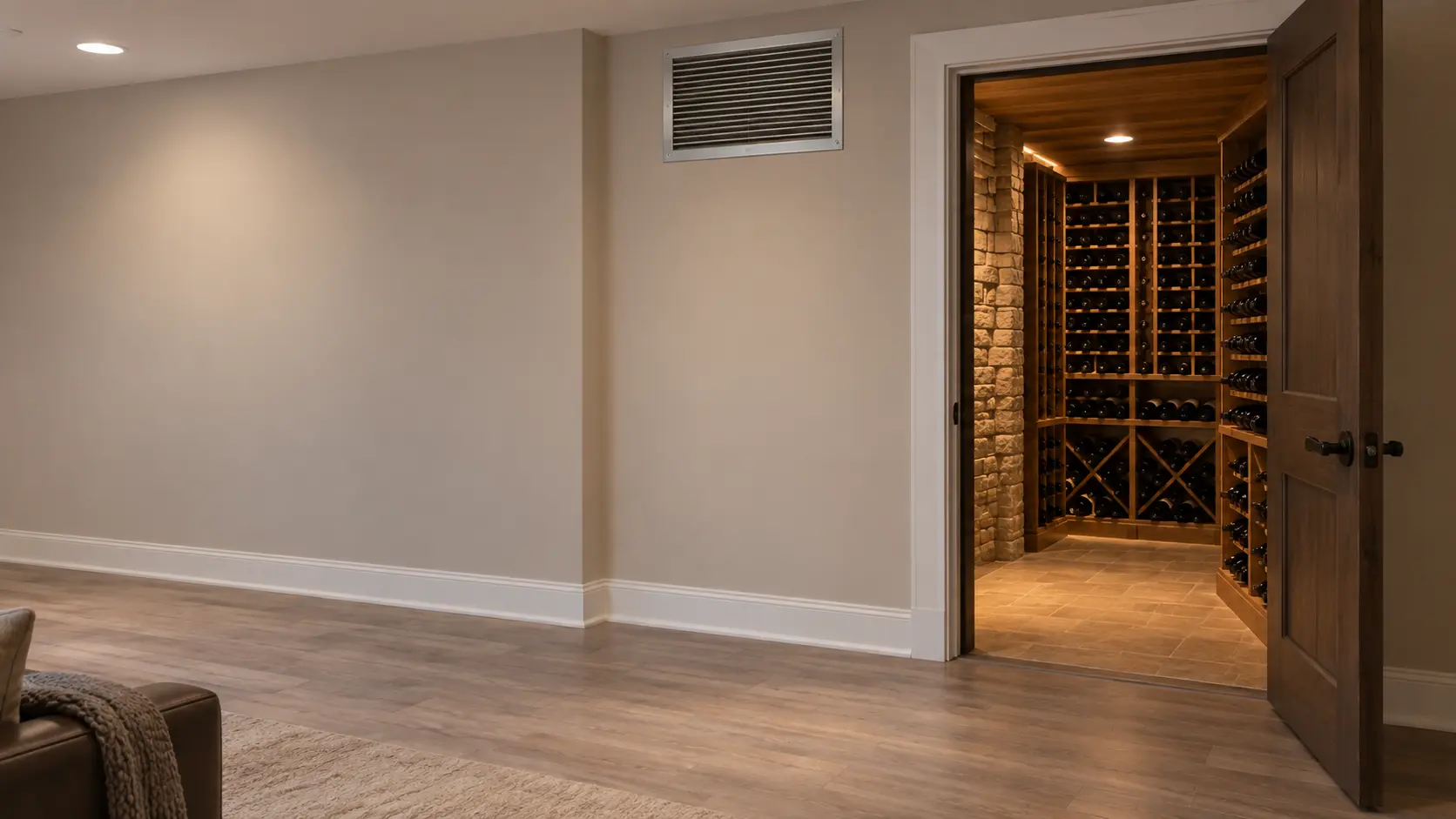

The room, the opening, the door and where the heat goes.
It is written for two readers. The first is planning a cellar, or finishing one, and wants to get the enclosure right before the racking goes up and the walls close. The second already owns a cellar whose unit runs without a break, drips in summer or trips its own heat protection, and wants to know whether the room is part of the reason before paying for a diagnosis.
The three guides follow the path heat and moisture take. The first covers insulation and the vapor barrier, the envelope that keeps humid house air out; the second covers where the unit's warm exhaust goes and what the receiving room has to cope with; the third covers the door, the one wall that opens every week and the one most often left unsealed.
The specifications quoted here are the makers' own, taken from Breezaire's and WhisperKool's installation instructions and published answers, with EPA's rules cited where a split system's refrigerant circuit is involved. Each figure sits under the section it supports. Where makers differ, as they do on the insulation required for interior walls, both numbers are given rather than an average of the two.
Not sure where to start?The short answerVapor Barrier and Insulation for a Cellar: The Envelope the Unit Depends On
A wine cellar vapor barrier belongs on the warm side of the insulation, on every wall, the floor and the ceiling, with every outlet, pipe and door frame sealed through it.
The short answerWhere the Exhaust Heat Goes: The Room Behind a Cellar Cooling Unit
Wine cellar cooling unit exhaust runs at roughly 90°F to 100°F by WhisperKool's figures, and it needs a large, ventilated space with at least 3 feet clear in front of the grille.
The short answerA Cellar Door That Seals: Weatherstripping, the Bottom Edge and Glass
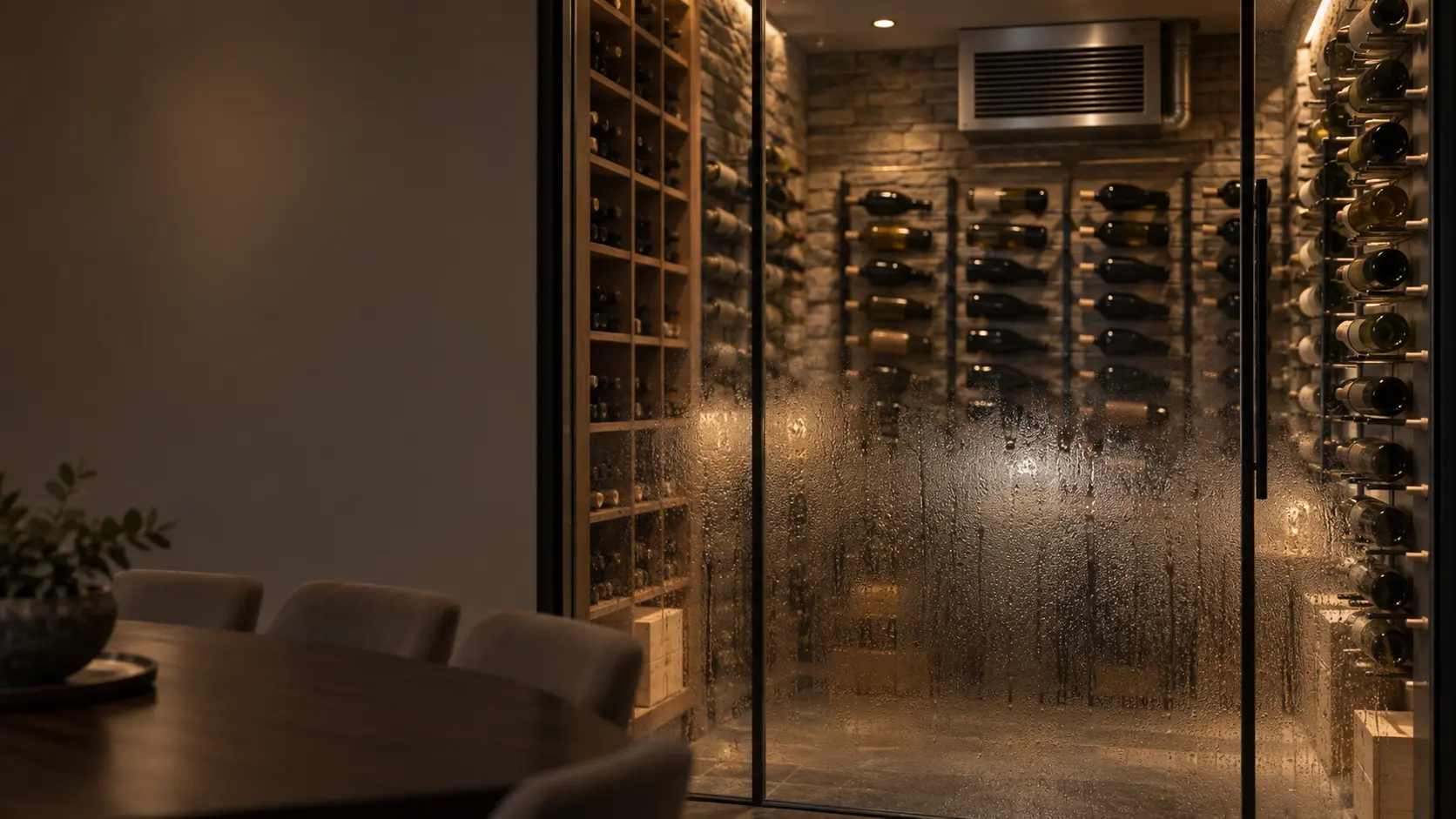
A good wine cellar door seal means an insulated door of the smallest practical size, high-quality weatherstripping on the sides and head, a sealed bottom edge and sealed trim behind the casing, as Breezaire specifies.
When reading
is not enough.
If the checks in these guides did not settle it, the visit picks up from there, stop by stop.
What repairs cost- 01The room and the unit, both measured
- 02The cause and the figure, before any work
- 03Common cellar parts in the van
- 04The cellar heading back to 55°F
The problems
these answer.
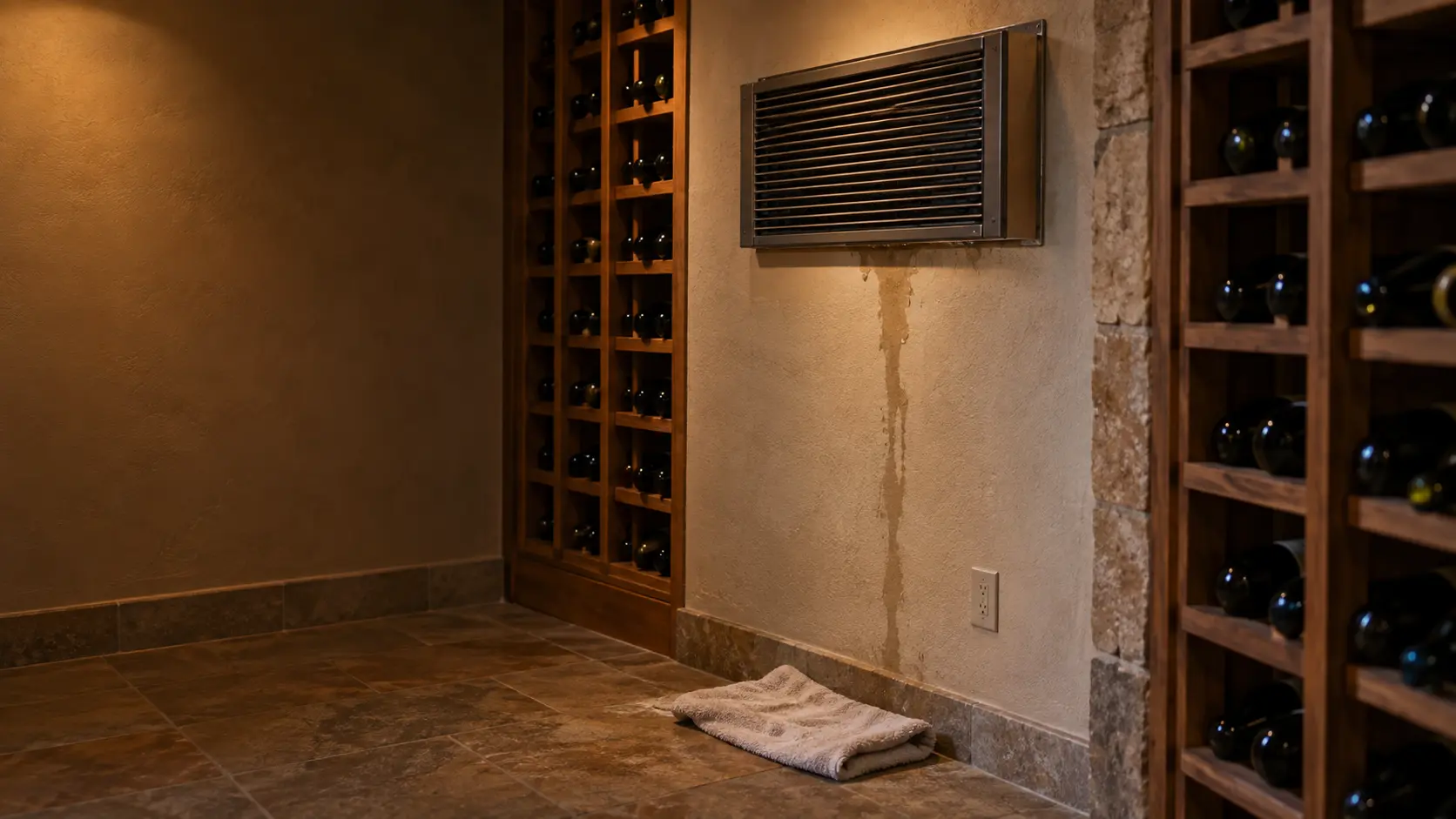
Each has a page of its own, with the causes in the order worth checking.
All 17 problems


Questions about
installation and setup.
Is it better to choose the cooling unit before or after building the cellar?
Can I install a through-the-wall unit myself?
Does the cellar unit need its own circuit?
How do I tell whether a problem is the room or the unit?
The other
sections.
Split by what you are trying to find out rather than by which part of the appliance it concerns.
All guides
Maintenance and prevention

The collection, power and water

Start from your question
The four questions most visits start with, each with the guide that answers it.
18 guidesWhere to start Where to startBack to your everyday
Let’s get your wine cellar cooling unit working again.
Three short steps online, or one call. Tell us what you are seeing and pick a window that works.