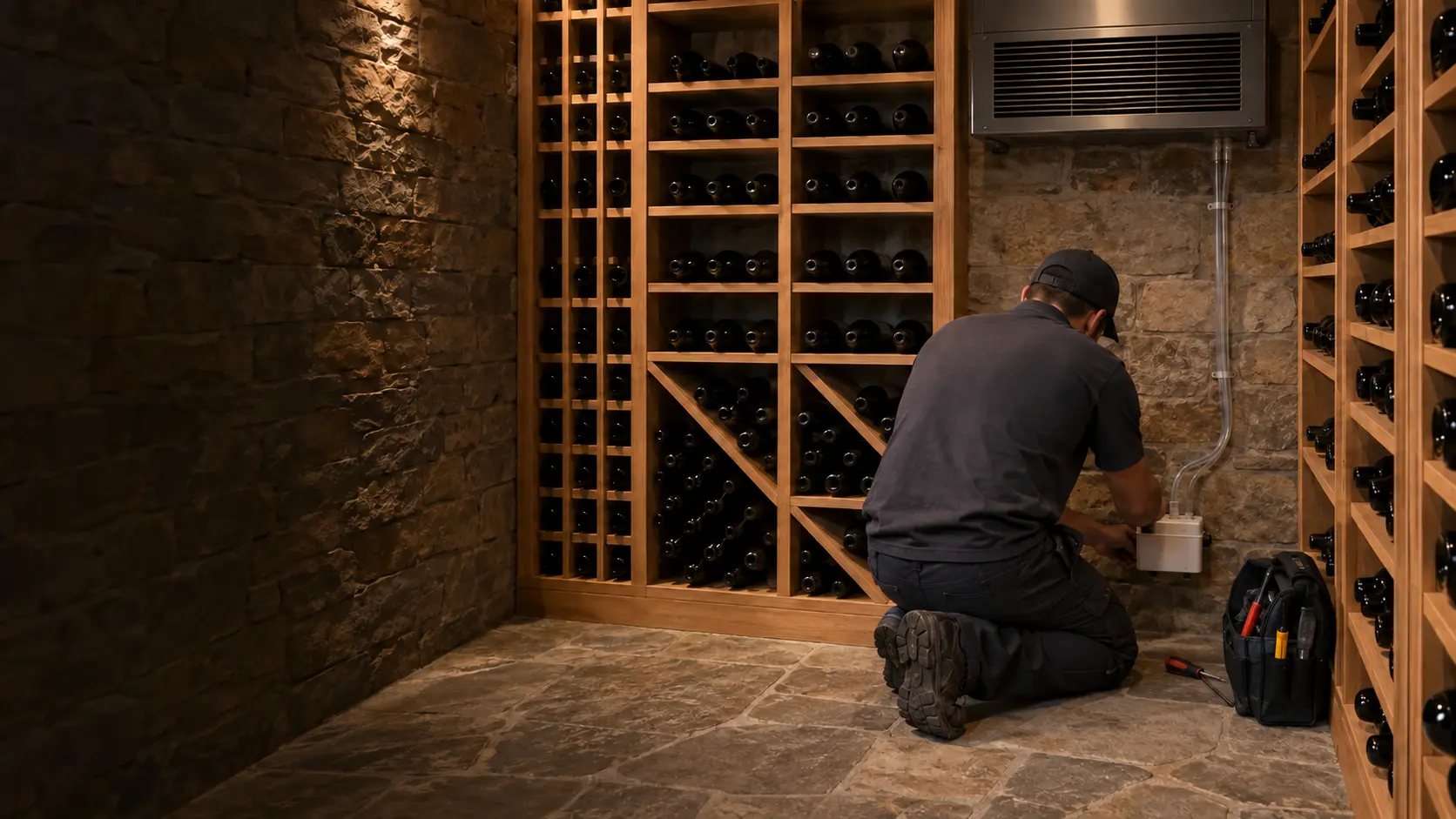
Where the water comes from
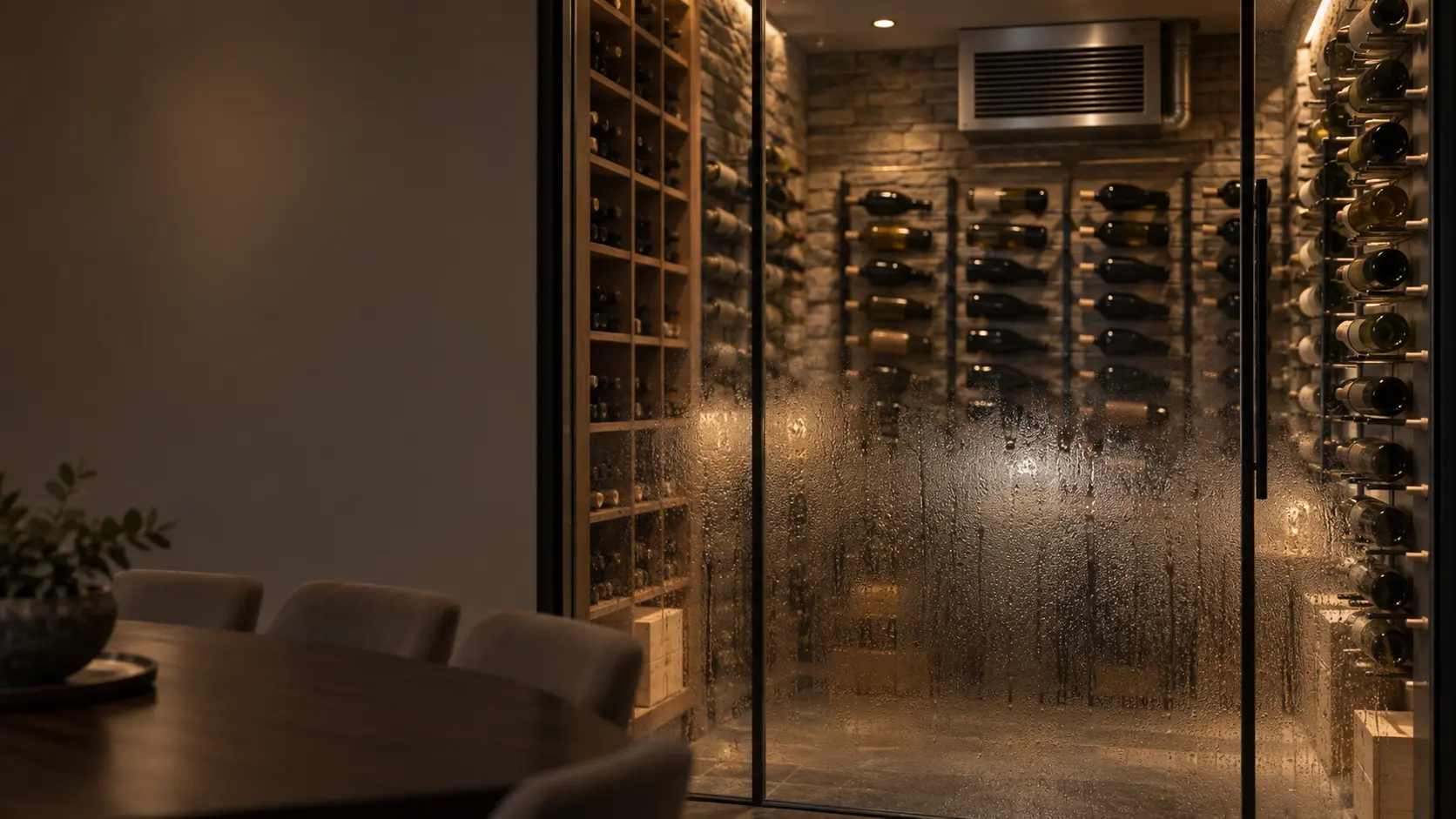
The evaporator coil runs colder than the dew point of the cellar air, so moisture condenses on its fins and runs down into a shallow pan. In a sealed cellar with a good vapor barrier the amount is modest. In a room that leaks, the unit keeps drying new humid air, and CellarPro warns that it can then turn into a dehumidifier producing buckets of water.
That is why a sudden increase in water is worth noticing on its own. A clogged line causes overflow, but so does a door that stopped sealing or a new gap in the room's barrier, and clearing the wine cellar condensate drain line will not cure either of those.
Source: CellarPro — 1800 Series owner's manual — Without a moisture barrier the unit becomes a dehumidifier producing buckets of water; the drain tube needs a primed trap that drops, rises and drops
How each type of unit gets rid of it
The route differs so much between layouts that the first step is to find out which one you have. Check the manual or look for a tube leaving the unit.
Through-the-wall units
Many let the water evaporate off the warm side and have no line at all. Where a drain fitting is added, CellarPro asks for a trap in the tube: it should drop, rise again to just below the fitting, then drop to a drain or bucket, and the loop must be primed with water. Without that trap the air pressure inside the unit holds the water back, the way a finger over a straw does.
Ducted units
Wine Guardian builds the trap into the unit, so it says not to add another. Its line should be 1/2 inch inside, fall 1/4 inch per foot, and end at an open floor drain or a condensate pump rather than tying straight into the sewer. The internal trap primes itself after the unit has run and cycled off, which shows as dripping at the end of the line.
Ceiling-mounted evaporators
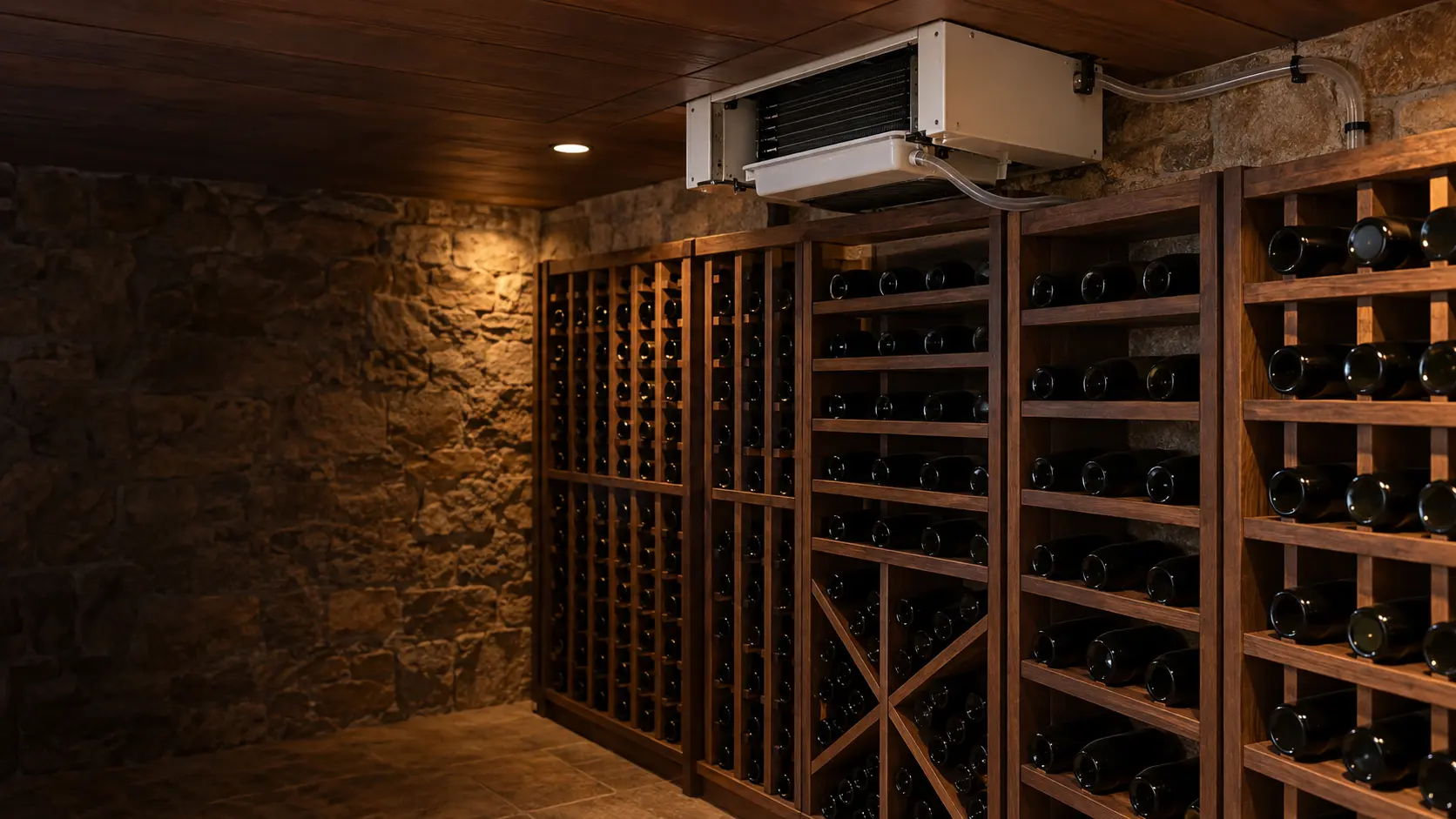
A small pump sits by the drain pan and pushes water up and out. WhisperKool caps the lift at 15 vertical feet, recommends a rigid line sloped toward its outlet with a capped tee near the connection for cleaning, and insists the end of the line hang above the water in any container, never below it.

How a drain line blocks
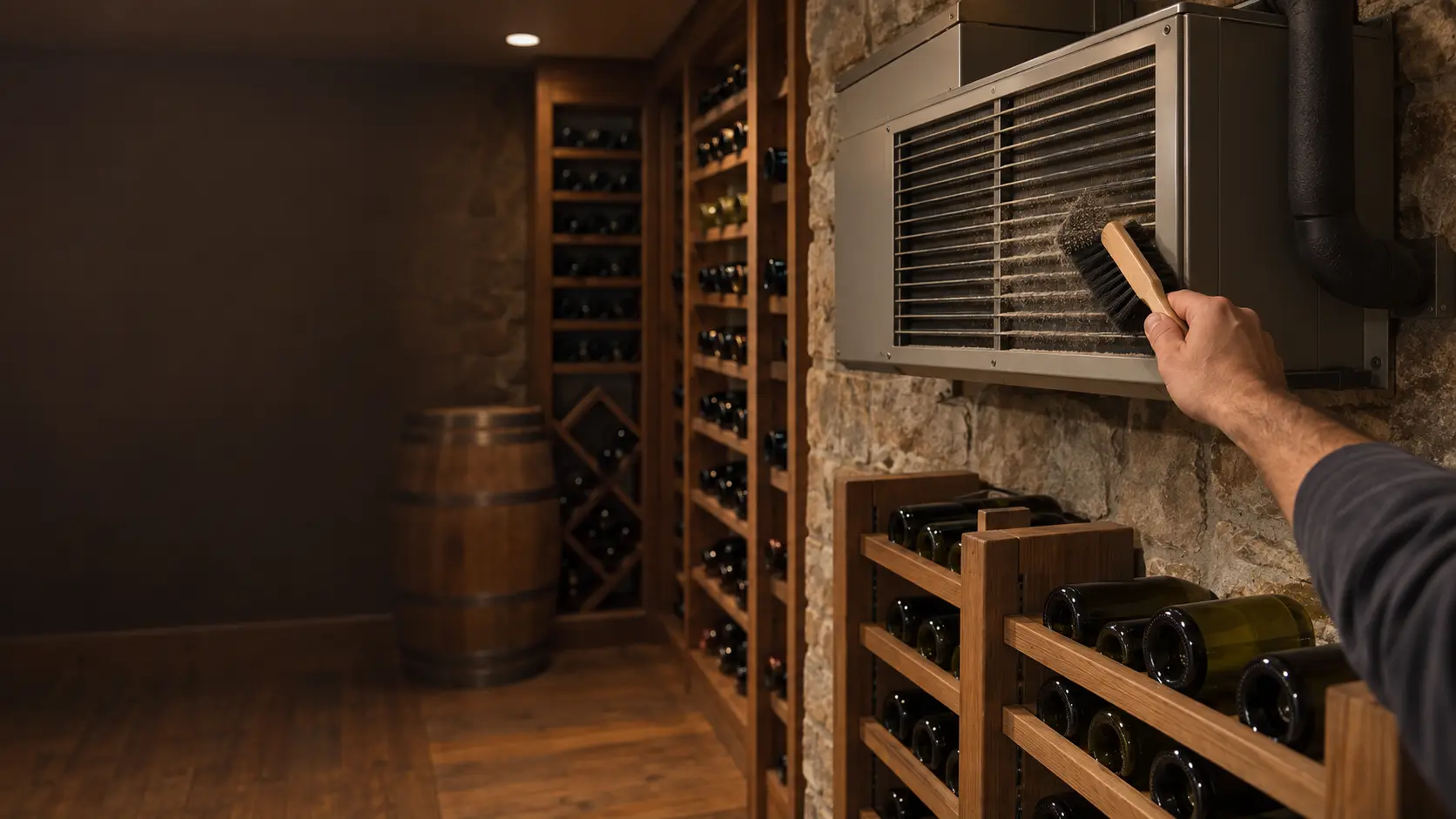
Cellar air carries dust from racks, cardboard cases and the room outside, and the coil catches some of it. That dust settles in the pan, where standing water lets a slippery film grow. WhisperKool's manual links standing water in drain pans to microbial and fungal growth and odors; EPA's mold guidance makes the same general point about air conditioning pans and asks that their drain lines be kept flowing.
A pump adds its own ways to stop: sludge in its reservoir, a stuck float, a kinked outlet tube. A gravity line more often sags where it was not supported, leaving a low spot that holds water and collects debris.
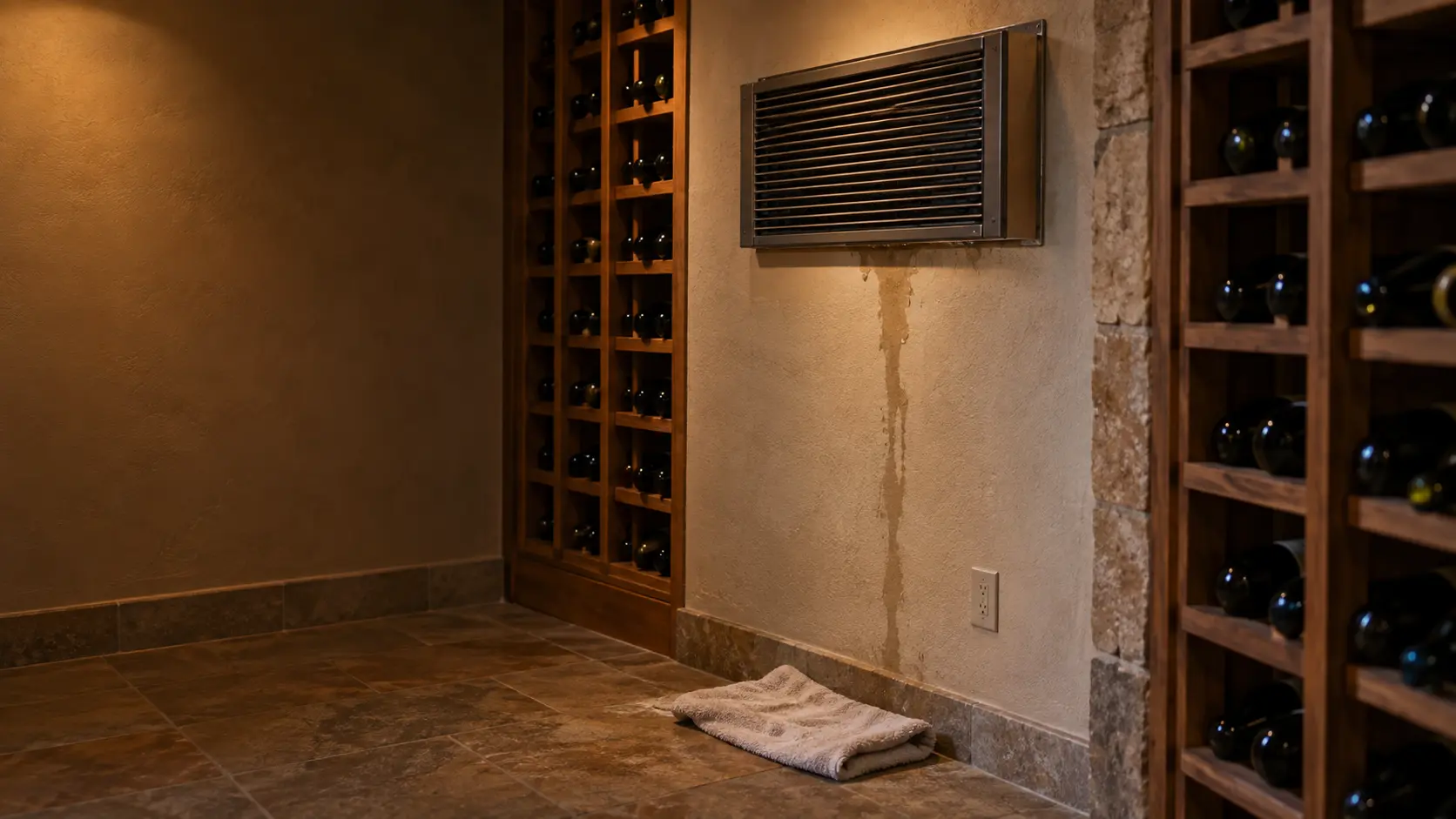
- Water dripping from the cellar grille or running down the wall below the unit.
- A stain spreading on the ceiling of the room under a ceiling-mounted evaporator.
- A pump that hums constantly or not at all.
- A musty smell near the unit even though the cellar looks dry.
Source: WhisperKool — Ceiling Mount H.E. owner's manual — Pump lift up to 15 vertical feet, rigid sloped line with capped tee, line end above the water; standing water promotes microbial growth; quarterly pan cleaning, pan tablet and yearly line blow-out; US EPA — A brief guide to mold, moisture and your home — Keep air conditioning drip pans clean and drain lines flowing; mold areas over about 10 square feet call for professional guidance
Flushing the pan and line
For a ducted unit, Wine Guardian's instructions are to switch it off and unplug it, remove the grille or duct on the evaporator inlet, lift the filter and look at the pan. If it is dirty, pour hot water mixed with a little diluted bleach along the pan until it drains clean. WhisperKool's ceiling units get the same treatment quarterly, with the pan removed and washed and the pump reservoir checked for sludge before the pan goes back.
Once a year, WhisperKool also asks for the external line to be blown out with air. A capped tee, where one was fitted, makes that easy: open the cap and push air or water through toward the outlet, never back toward the unit.
- Switch the unit off and unplug it or turn off its breaker before reaching into the pan.
- Use hot water with a small amount of bleach, never a drain opener meant for household plumbing.
- Refit the filter and grille, restore power and watch the outlet for water after the next cycle.
Source: Wine Guardian — Ducted split installation, operation and maintenance manual — 1/2-inch line, 1/4 inch per foot of pitch, no external trap, not tied into the sewer, self-priming internal trap; flush the pan with hot water and diluted bleach once a year; WhisperKool — Ceiling Mount H.E. owner's manual — Pump lift up to 15 vertical feet, rigid sloped line with capped tee, line end above the water; standing water promotes microbial growth; quarterly pan cleaning, pan tablet and yearly line blow-out