
Why a dusty coil warms the cellar
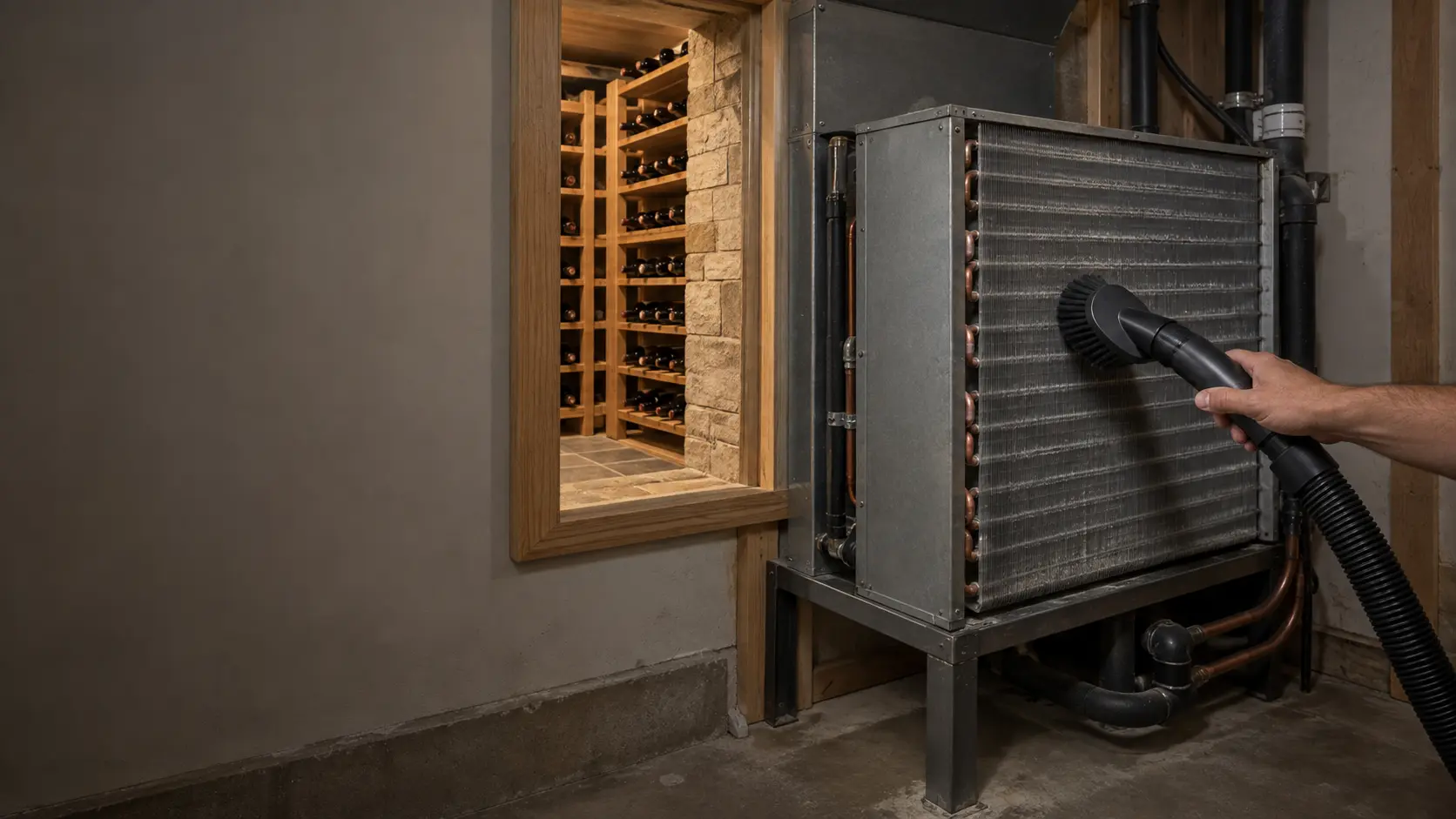
The condenser is a grid of thin aluminum fins wrapped around copper tubing, with a fan pulling room air through the gaps. All the heat taken out of the cellar, plus the heat of the compressor, has to leave through those gaps. When lint and dust fill them, the coil runs hotter, the pressure inside the system climbs and the unit delivers less cold for the same electricity.
Controllers watch for this. CellarPro's units show a condenser alarm when the coil stays above 140°F for two hours, and Wine Guardian fits a manual-reset high-pressure switch that stops the compressor; its manual names restricted condenser airflow as the most common reason that switch trips.
That makes cleaning a wine cellar condenser coil the cheapest repair that never gets called one. A coil brushed clean before summer lets the same compressor hold the same setting with shorter runs, and the owner who does it several times a year rarely meets the alarms described above.
Source: CellarPro — 1800 Series owner's manual — Condenser alarm above 140°F for two hours; 8 inches of rear clearance for cleaning; magnetic filter replaced every 3–9 months; no compressed air on coils; Wine Guardian — Ducted split installation, operation and maintenance manual — Manual-reset high-pressure switch, most often tripped by restricted airflow; washable filter behind the duct collar; monthly or quarterly filter checks, yearly coil vacuuming
Where the coil and filter sit on each type
Finding the coil is half the job. On every layout it faces the space that receives the exhaust heat, not the cellar.
- Through-the-wall: the back face of the unit, in the room behind the cellar.
- Ducted: the condenser inlet of the cabinet, usually under a duct collar or grille.
- Split: the fins of the outdoor or remote condensing unit, plus a filter on the in-cellar evaporator.
Through-the-wall units
The coil is on the back of the unit, in the room behind the cellar wall. CellarPro requires at least 8 inches of clear space there for exactly this purpose, and sells an optional filter that clips on with magnets and comes off without tools.
Ducted units
The condenser section has its own inlet, often behind a duct collar. Wine Guardian covers that coil with a reusable, washable filter: take off the collar, lift the filter out, rinse it in warm water, shake it dry and check the coil face behind it.
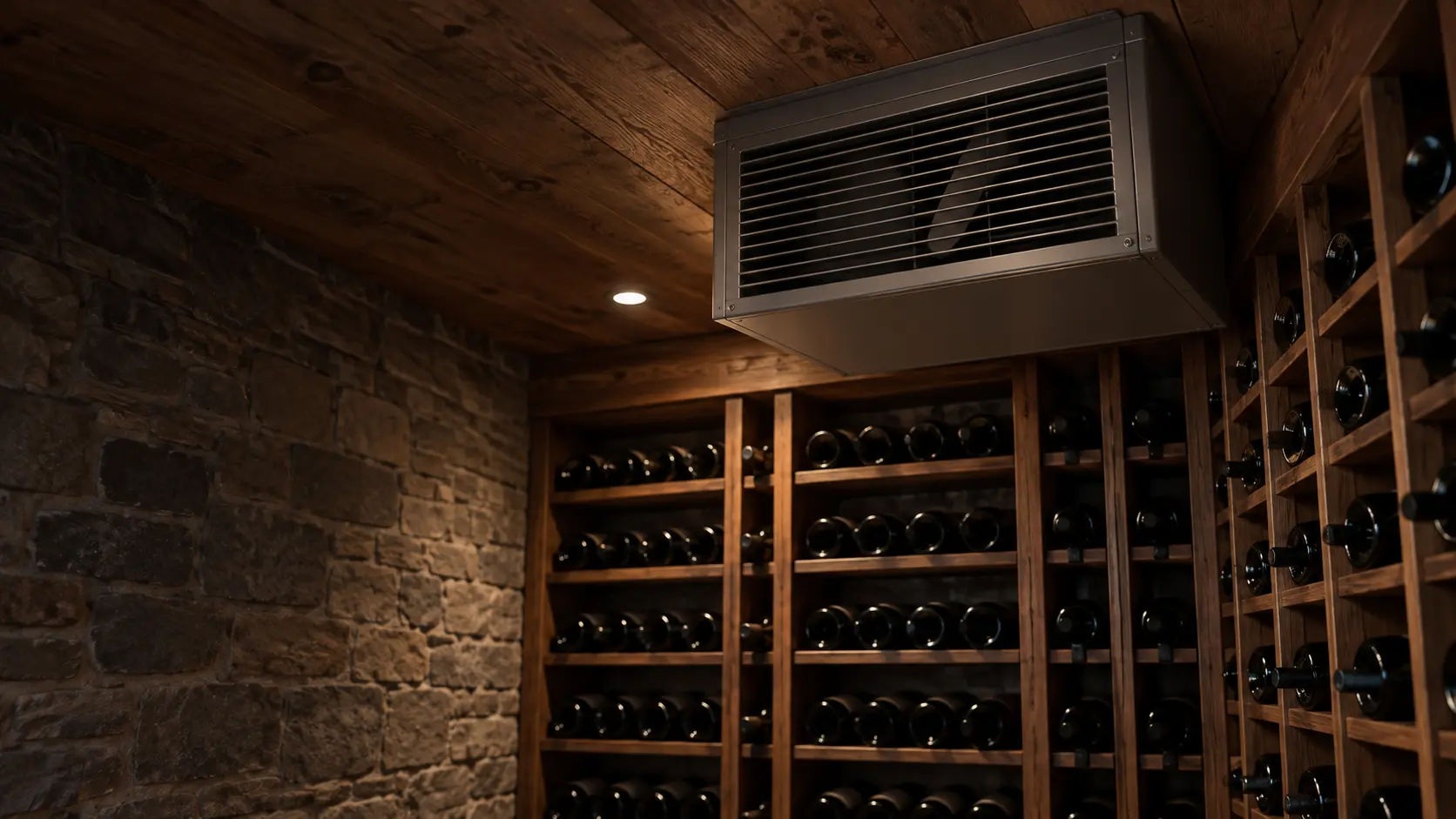
Split and ceiling-mounted systems
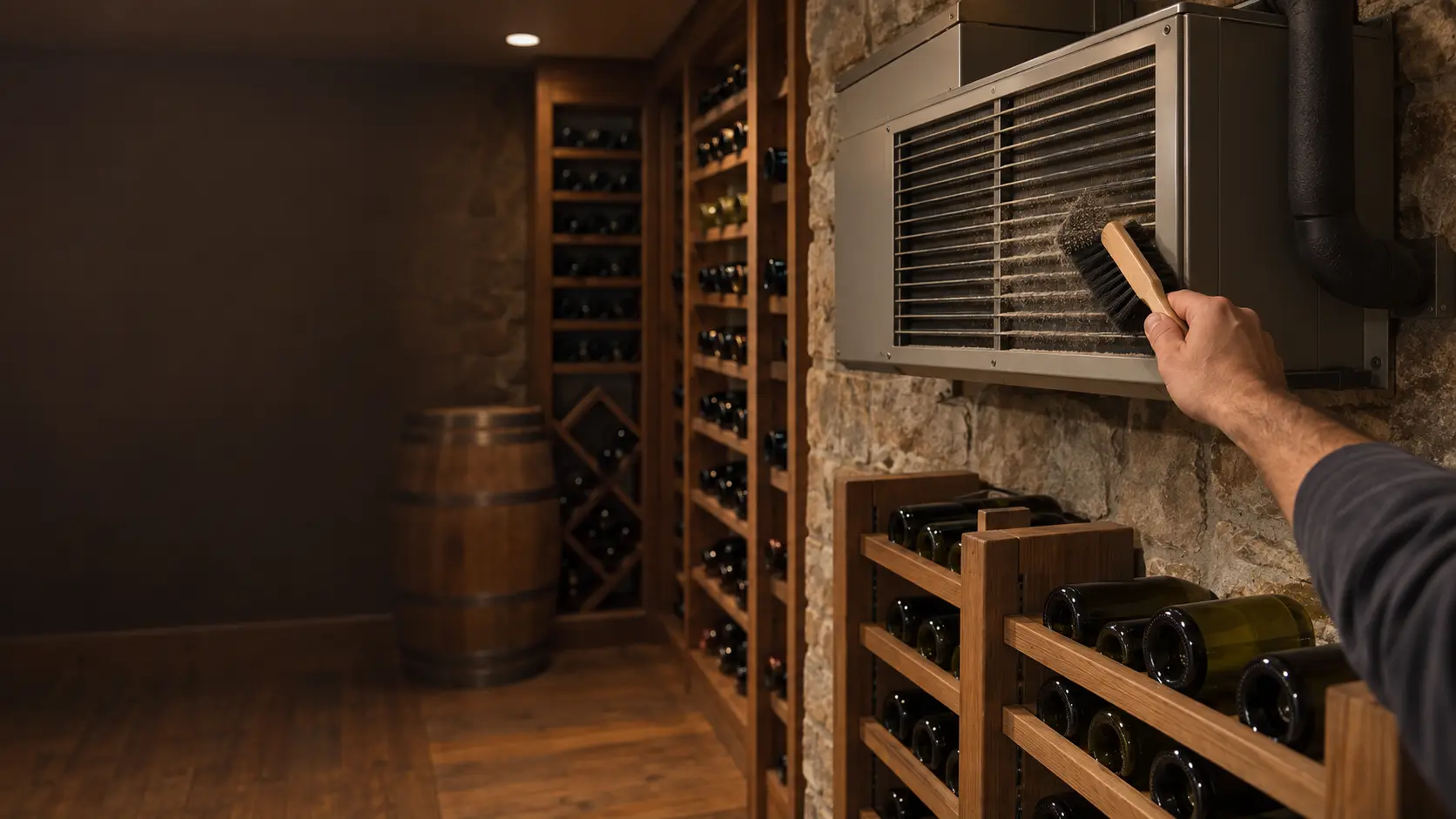
The condensing unit outside or in a remote room collects leaves, grass and dust on its fins. Inside the cellar, a ceiling evaporator has its own washable filter on the return side of the grille; WhisperKool attaches it with hook-and-loop strips.

How often the makers ask for it
Intervals differ between manufacturers because their units breathe different air, but none of them is yearly-or-never. Put the shortest one that applies to your unit on the calendar and adjust after a few rounds: a coil that comes up clean every time can wait a little longer, one caked with lint needs more frequent attention.
Tie the job to something you already do each season, such as changing smoke alarm batteries or the clocks, and keep a spare filter on the shelf next to the unit. A cleaning that depends on remembering tends to slip until the first hot week, which is exactly when a clogged coil does the most harm.
- WhisperKool: vacuum the condenser coils every three months; wash the evaporator filter and clean the coils twice a year; clear debris from an outdoor condensing unit monthly.
- CellarPro: clean the coils periodically, and replace its optional filter every three to nine months.
- Wine Guardian: check filters monthly or quarterly, vacuum both coils yearly, and replace filters that no longer come clean.
- Any maker: sooner if the exhaust space holds laundry, pets, a workshop or construction dust.
Source: WhisperKool — Ceiling Mount H.E. owner's manual (maintenance schedule and end-user duties) — Vacuum condenser coils every three months; semiannual evaporator coil and filter cleaning; monthly debris check; filter held with hook-and-loop strips; compressed air allowed on the evaporator coil; condensing unit serviced by an HVAC-R technician; CellarPro — 1800 Series owner's manual — Condenser alarm above 140°F for two hours; 8 inches of rear clearance for cleaning; magnetic filter replaced every 3–9 months; no compressed air on coils; Wine Guardian — Ducted split installation, operation and maintenance manual — Manual-reset high-pressure switch, most often tripped by restricted airflow; washable filter behind the duct collar; monthly or quarterly filter checks, yearly coil vacuuming
What damages a coil while cleaning it
The fins are thin enough to fold under a finger and sharp enough to cut one. CellarPro warns about both and asks owners not to use compressed air on its coils, because the blast can drive dirt deeper into the system. WhisperKool, on the other hand, lists compressed air as an option for its evaporator coil. Where the makers disagree, the manual for your own unit wins.
Avoid household cleaners, pressure washers and stiff brushes on any coil. A bent patch of fins blocks air like dust does; a fin comb from a hardware store straightens small areas, but a badly crushed coil face is a job for a technician.
Source: WhisperKool — Ceiling Mount H.E. owner's manual (maintenance schedule and end-user duties) — Vacuum condenser coils every three months; semiannual evaporator coil and filter cleaning; monthly debris check; filter held with hook-and-loop strips; compressed air allowed on the evaporator coil; condensing unit serviced by an HVAC-R technician; CellarPro — 1800 Series owner's manual — Condenser alarm above 140°F for two hours; 8 inches of rear clearance for cleaning; magnetic filter replaced every 3–9 months; no compressed air on coils; CellarPro — How to clean the condenser coils — Vacuum with a brush attachment; the fins are sharp and can cut skin