

Why does a wine cellar get too cold in winter?
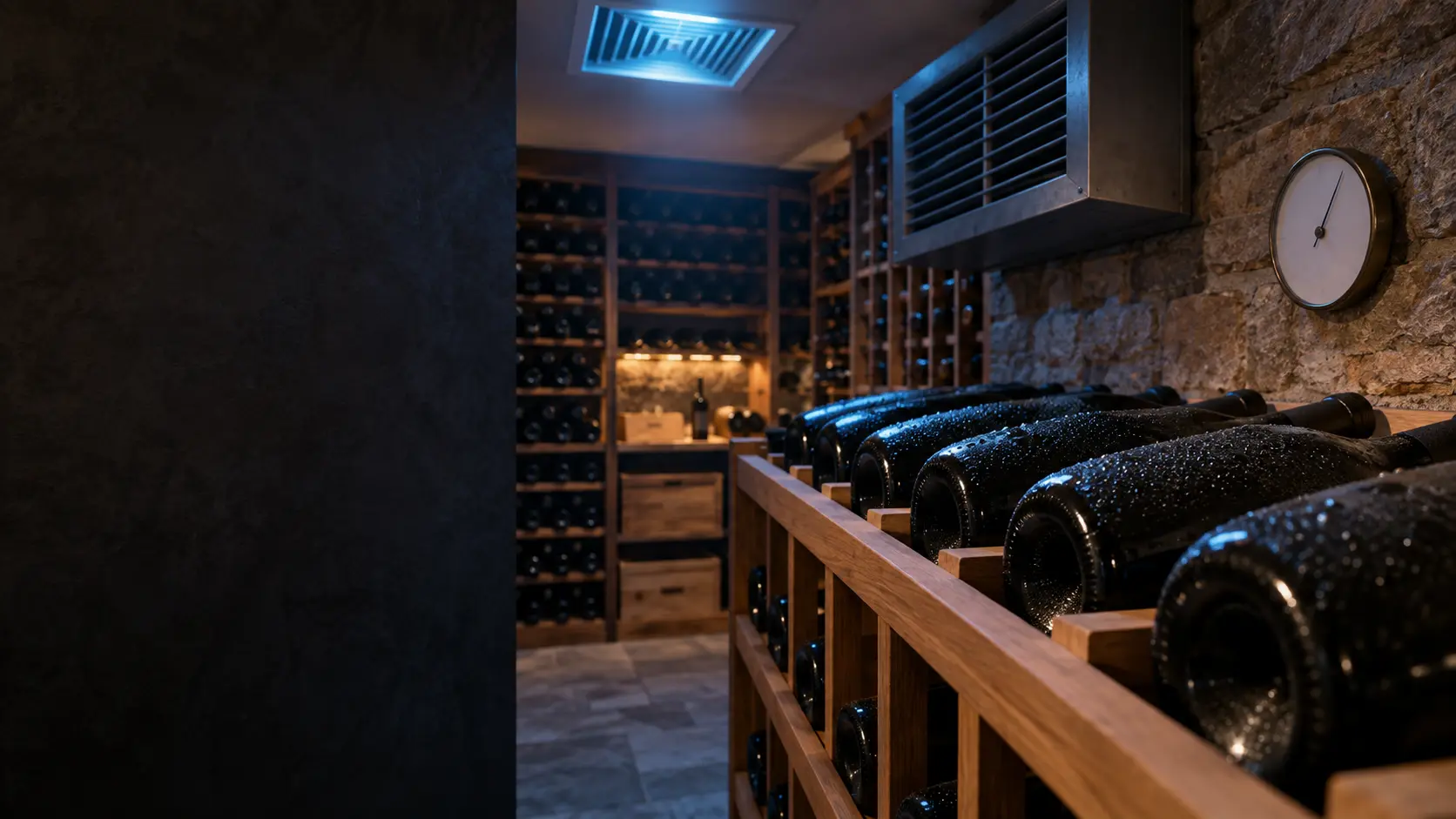
A cellar gets too cold in winter because heat leaves it faster than anything puts heat back, and the cooling unit has no way to add any. In summer the same room gains heat from the house and the unit pulls it out. When the neighboring space falls to 40°F, the direction reverses and the room simply follows the outside temperature down.
The space on the other side of the wall
A cellar built against an exterior wall, a garage or an unheated basement corner is the usual case. Walls insulated for summer protection still pass heat in both directions, only slowly. Over a week of freezing nights the walls, floor and bottles all cool together, and a thermostat set at 55°F has nothing to act on, because the unit is already off.
A unit that only cools
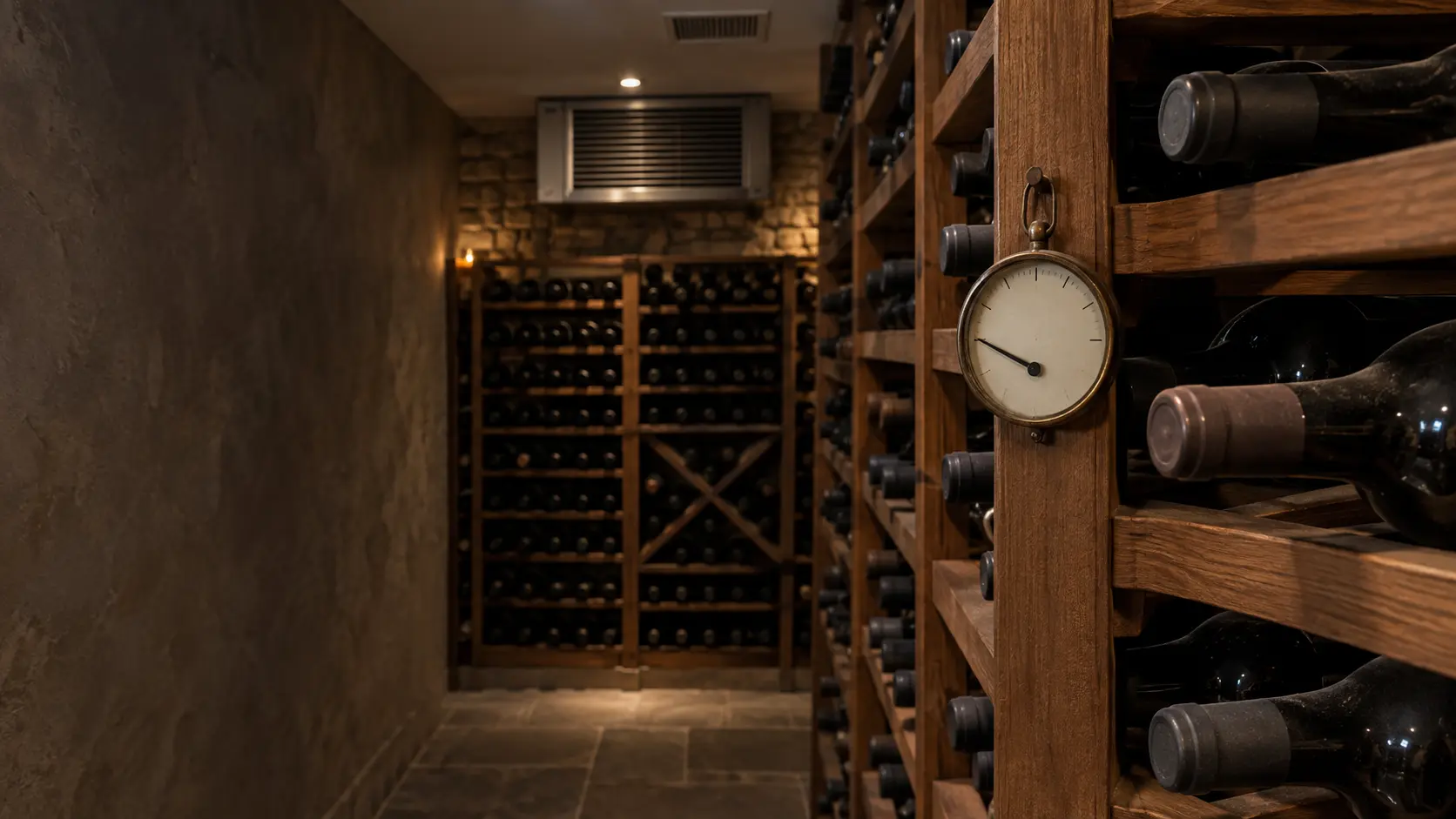
Most cellar cooling units are refrigeration machines: they move heat from the cellar air to the exhaust side. A reading below the set point means the compressor is idle, which is correct behavior. Check the controller first: a display that reads low while the compressor is silent points to a cold room, while a display that reads low with the unit running points to a sensor or controller problem. The page on reading the cellar controller shows how to tell the two apart, and the symptom page for a cellar that is too cold lists what each pattern means.
What does low outdoor temperature do to a cooling unit?
Low surrounding temperature can stop a cooling unit from starting properly or make it behave oddly, because these units are designed for a stated range of surrounding air. The owner's manual for many models lists a minimum ambient temperature for the space the unit draws its air from; the figure varies by model, so look it up for yours. Below it the refrigeration circuit runs outside the conditions it was designed for.
Exhaust and intake air that is already cold
A through-the-wall unit takes its condenser air from the room behind it. When that room is an unheated garage, the condenser rejects heat too easily, and the circuit may cycle erratically or run at very low pressure. Ducted and split systems are affected in the same way if the air handler or condensing section sits in an unheated attic or crawl space.
Frost and short runs
A unit that runs briefly and then frosts over can be responding to low ambient air rather than a failing part. If frost appears, turn the unit off and let it thaw; the guide on evaporator ice explains what the pattern shows. Refrigerant work is never a do-it-yourself step. Under EPA rules, technicians who maintain, service, repair or dispose of equipment that could release refrigerants must hold Section 608 certification.

Which cellar setups can actually add heat?
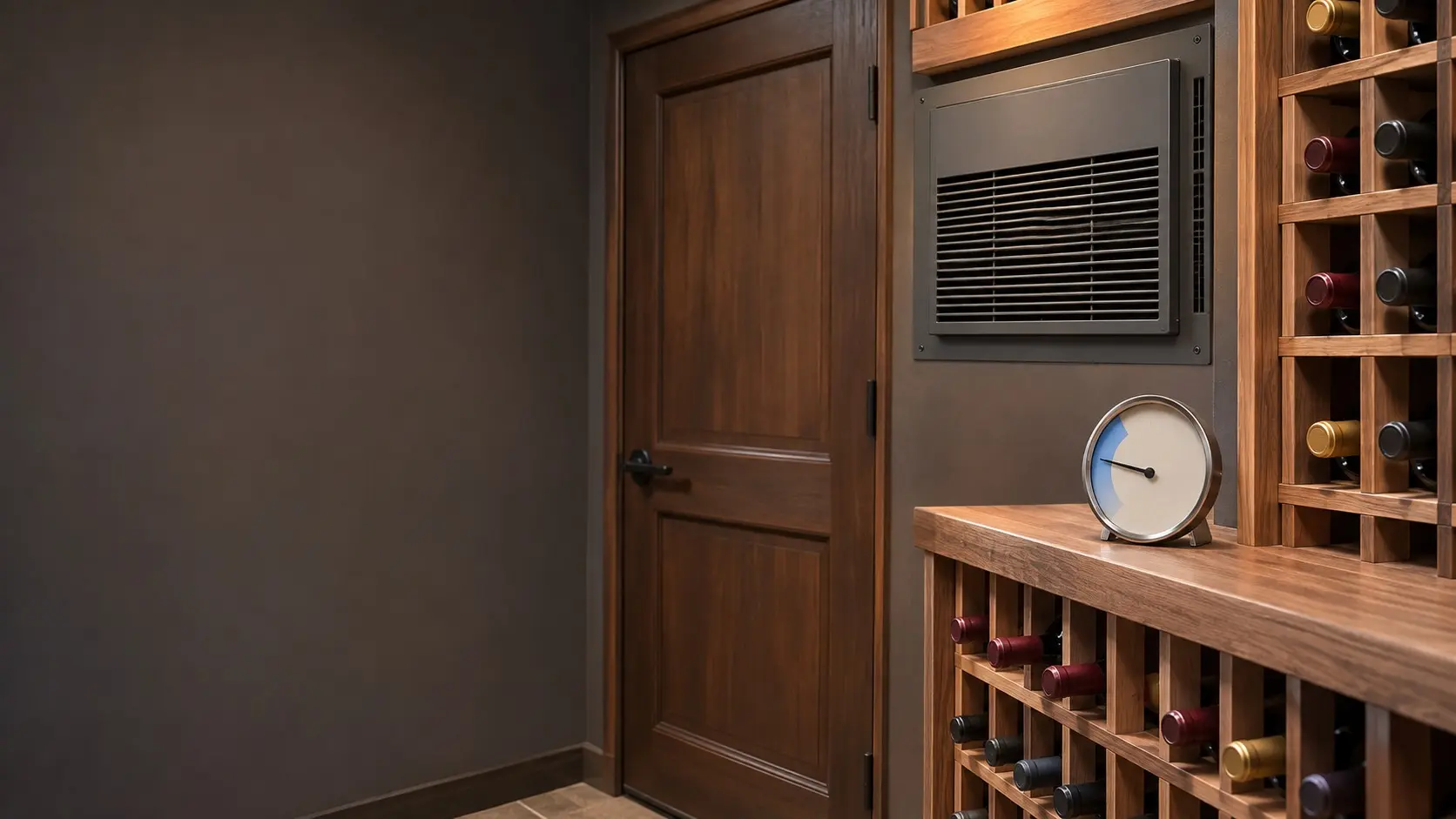
Only some setups can add heat, and the method depends on how the cellar is cooled and what the controller supports. Look at the model plate and the owner's manual before buying anything; the guide to finding the model plate covers where it is on each unit type.
| Setup | How heat gets in | What to check |
|---|---|---|
| Unit with a built-in heater option | The controller switches a heating element at a low set point | Whether your model has the option, or only a cooling mode |
| Separate cellar heater on its own thermostat | A small electric heater wired to a thermostat set a few degrees below the cooling set point | Circuit capacity, clearances and who wired it |
| Ducted cellar with a house supply branch | Conditioned house air is ducted in on demand | Humidity swings and a damper that leaks in summer |
| Unit in a warmer spot | The condensing side is moved or given warmer air | Ducting length and a dedicated exhaust path |
A heater and a cooling unit must never compete. Set the heater to start a few degrees below the point where the cooling unit starts, so the two do not run against each other. A heater that sits in the middle of the room also dries the air, so humidity is the next thing to watch; the guide to raising humidity in a wine cellar covers that.
Who does the wiring
A plug-in heater on a protected outlet is one thing. A hard-wired heater, a new circuit or a relay that makes a thermostat switch the cooling unit's supply is another, and that belongs to an electrician. The cellar's controller and probes can be tested by a technician during a controller and sensor repair visit, and a faulty probe that reports a lower reading than the room really has is one possible reason for a "cold cellar".
What does cold do to wine, and what does it not do?
A cool cellar slows the aging of wine rather than harming it, and cold only becomes a danger when the wine approaches freezing. Because of its alcohol, wine freezes at a lower temperature than water's 32°F, and freezing can push corks out or crack bottles. A cellar that holds a steady temperature somewhat below 55°F is generally not a problem for the collection; it mostly slows how quickly the bottles mature.
Swings matter more than a steady low
The real concern is a wide daily swing, such as 48°F at dawn and 62°F by late afternoon after a sunny day, because the liquid expands and contracts against the cork. A steady cellar a few degrees too cold beats an unstable one at the perfect number. That is why the logger approach in the guide on the heat load test is useful in winter as well as summer.
What to watch for on the bottles
- Corks that rise slightly out of the neck after a hard cold snap.
- Labels that peel or curl in a cellar with a sudden jump in humidity.
- Small crystals in the bottle, which cold can bring out of the wine and which are not a sign of damage.
How do you fix a cold cellar this week?
Start with the reading, then the cause: confirm the temperature with a second thermometer, find out what the neighboring space is doing, and only then choose a heater, a warmer exhaust path or a controller adjustment.
- Place a second thermometer on a middle shelf and compare it with the display after an hour.
- Check the temperature of the room behind or above the cooling unit with a hand thermometer.
- Look at the unit for frost, and note whether the fans spin while the compressor is off.
- Close drafts at the cellar door; the guide to a cellar door that seals shows the quick tests.
- Raise the set point by one or two degrees only if the controller reads correctly; a set point does not make a cooling unit warm the room.
If the cellar is still cold after those checks, a cooling load and room check looks at the surroundings, the exhaust path and the controller together, and tells you whether the answer is a heater, a different route for the exhaust air or a room that needs more insulation.