


What the room and the unit are telling you
Common problems
guides.
What it means when the cellar will not come down to 55°F, water runs down the wall below the unit, the evaporator turns white with ice, or the cooling never seems to rest.
Mon–Sat, 8am–8pm
- Three guides
- Read before you book
- Says where to stop
Book a visit
Three short steps, about a minute.
or call (844) 398-5977
Loading appointment form…
The appointment form couldn’t load. Please try again.
Common problems,
guide by guide.
This section covers the three complaints that bring most wine cellar owners to us: a room that will not stay at 55°F, water where it should not be, and a coil that turns into a block of ice. Each guide starts from what you can see or measure in the cellar and the room next to it, and works back toward the part or the building detail responsible.
All 18 guides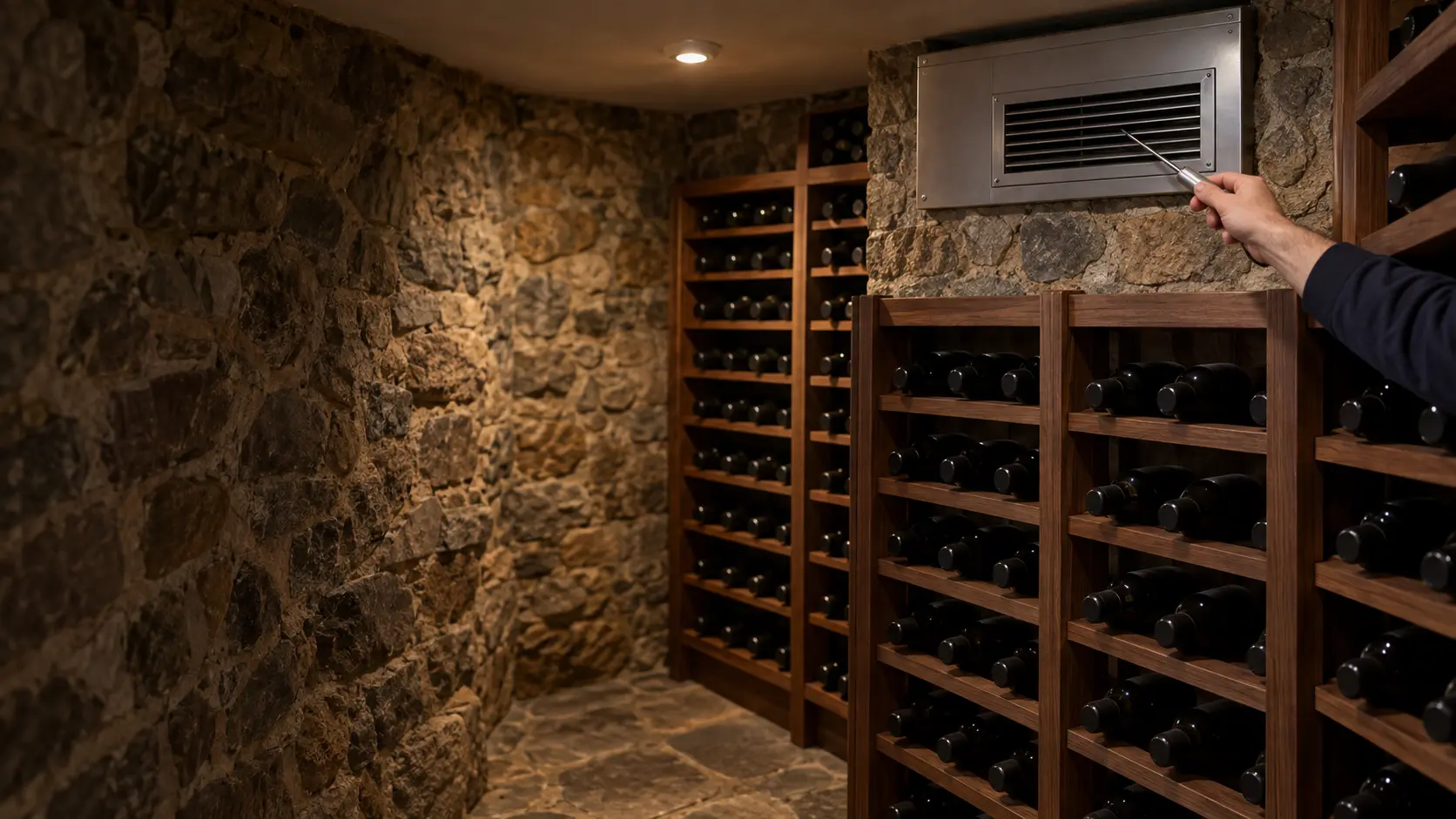

What the room and the unit are telling you.
A cellar cooling unit is only half of a system. The other half is the room: its insulation and vapor barrier, a door that seals on all four sides, and a space on the exhaust side that can absorb the heat. Many visits end with the unit working exactly as designed and the room letting in heat or moisture faster than it can be removed, so every guide here gives the room the same attention as the machine.
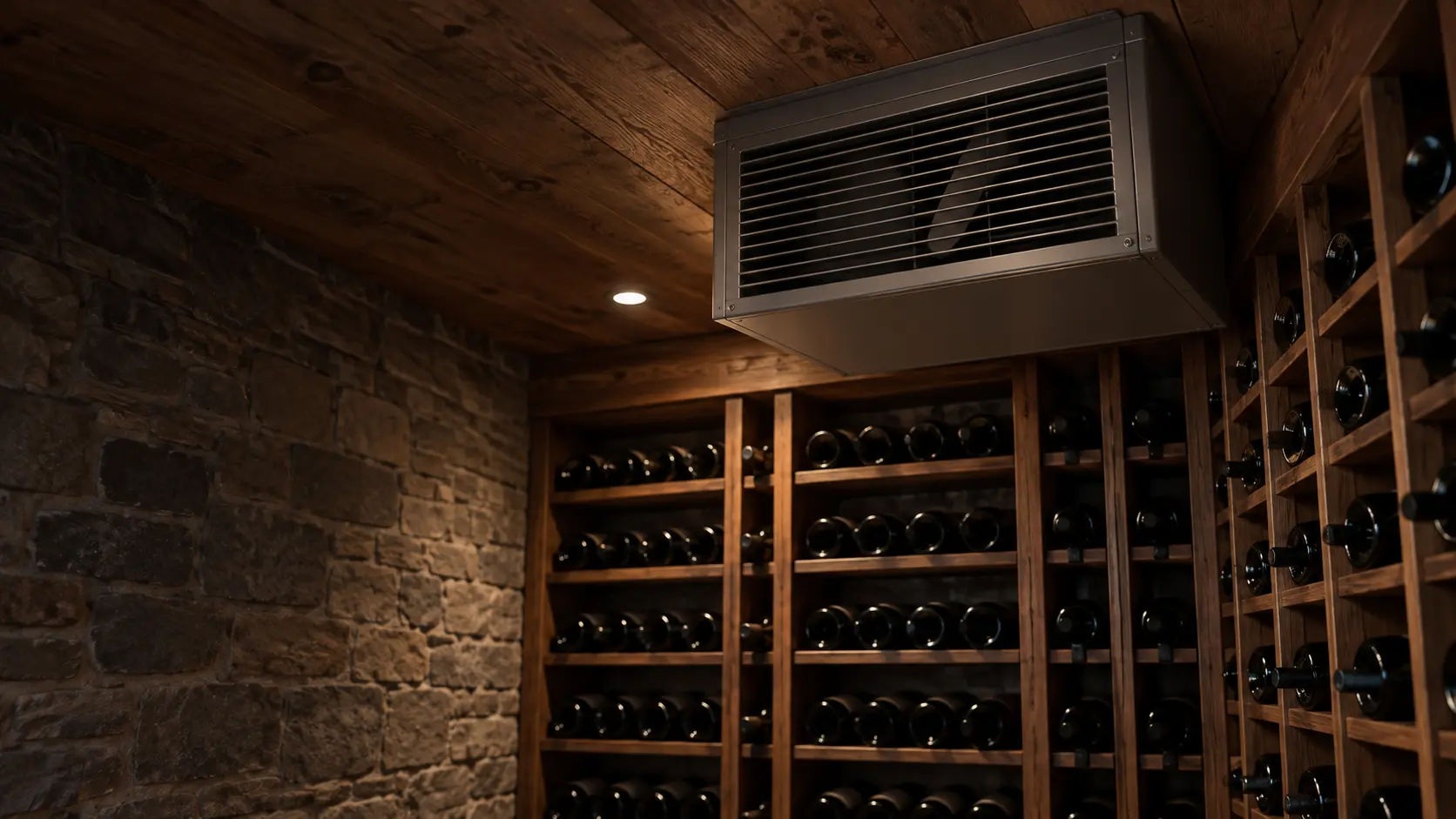
The guides cover all four kinds of cellar cooling we repair: self-contained units through the wall, ducted self-contained units, split systems with the condenser outdoors or in a mechanical room, and ceiling-mounted evaporators. Where a cause sits in a different place on each design, the guide says so rather than treating every unit as a box in a wall.
Facts that come from a maker's manual are named and linked at the foot of each guide, with the sections they support. Where the makers disagree, as they do on something as basic as whether the unit should share a GFCI outlet, the guides report both positions and send you to your own manual rather than picking a side.
Not sure where to start?The short answerWhy the cellar will not hold 55°F: the room, the exhaust side or the unit
A wine cellar cooling unit not cooling is often a unit that works but cannot keep up: the exhaust side breathes air above about 85°F, the door leaks, the room lacks a vapor barrier, or the unit was undersized.
The short answerWhy the cellar unit drips water, and which side of the wall it lands on
A wine cellar cooling unit leaking water is usually making more condensate than its drain path can move: a clogged or kinked drain line, a unit tilted the wrong way, an iced coil melting all at once, or humid air leaking in around the door or through a missing vapor barrier.
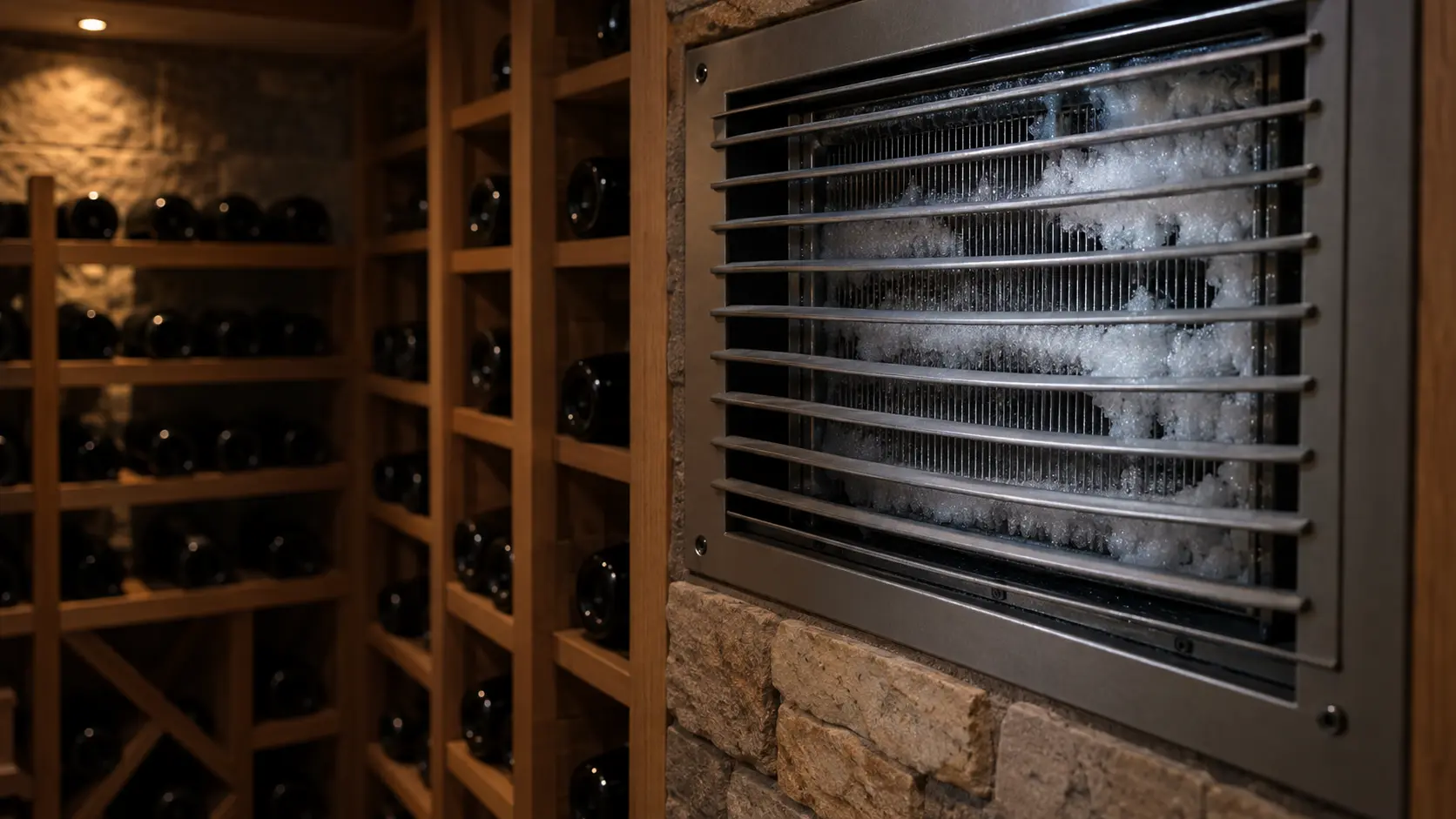
The short answerWhy the evaporator ices over, and what the ice pattern reveals
A wine cellar cooling unit freezing up is usually starved of air across the cellar-side coil, running with an exhaust room colder than the maker allows, or short of refrigerant.
When reading
is not enough.
If the checks in these guides did not settle it, the visit picks up from there, stop by stop.
What repairs cost- 01The room and the unit, both measured
- 02The cause and the figure, before any work
- 03Common cellar parts in the van
- 04The cellar heading back to 55°F
The problems
these answer.
Each has a page of its own, with the causes in the order worth checking.
All 17 problems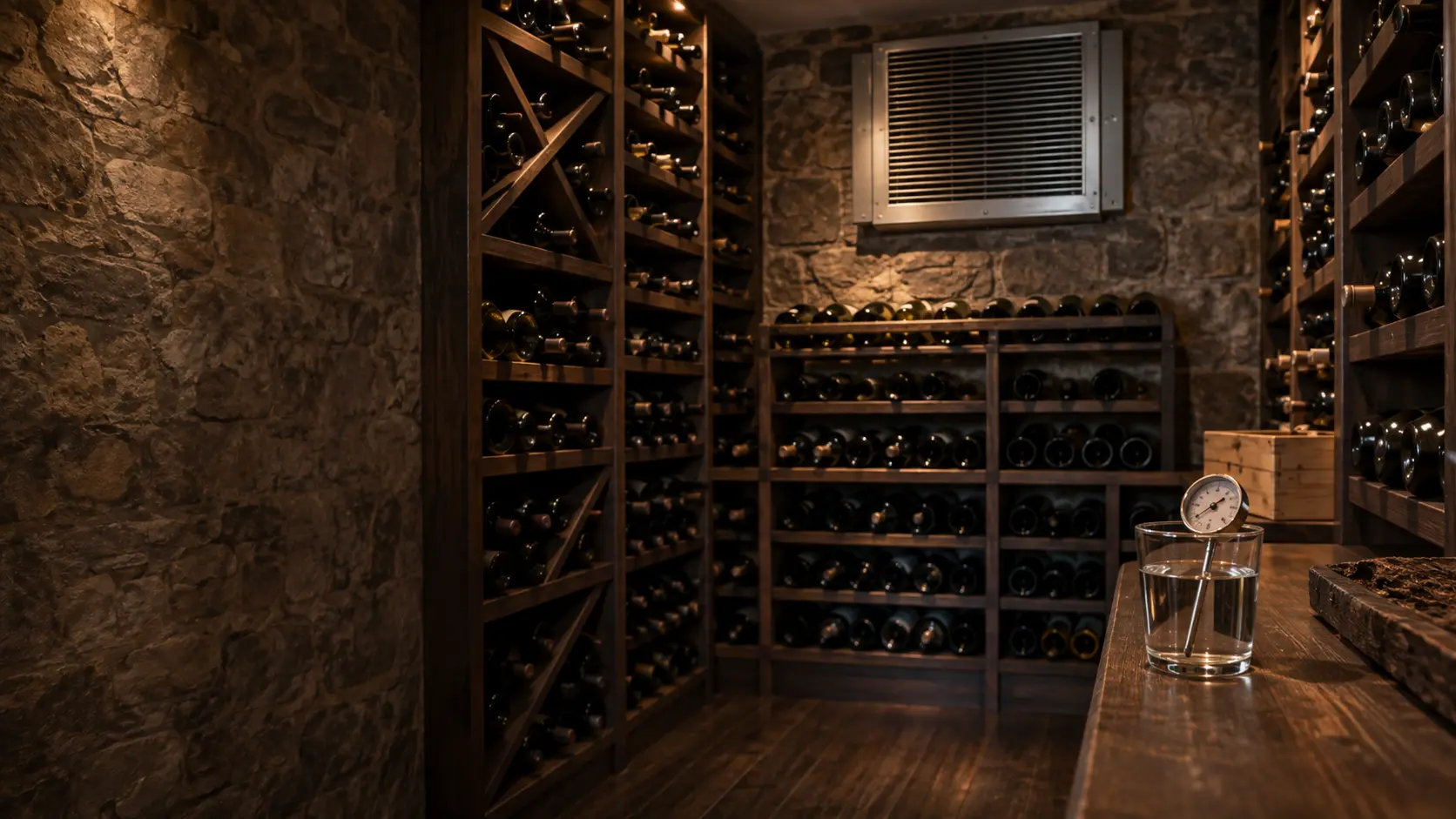



Questions about
common problems.
Which of these problems puts the wine at risk fastest?
Can a warm cellar and a leaking unit have the same cause?
Do these guides apply to a cellar built decades ago?
What if the cause is the room rather than the unit?
The other
sections.
Split by what you are trying to find out rather than by which part of the appliance it concerns.
All guides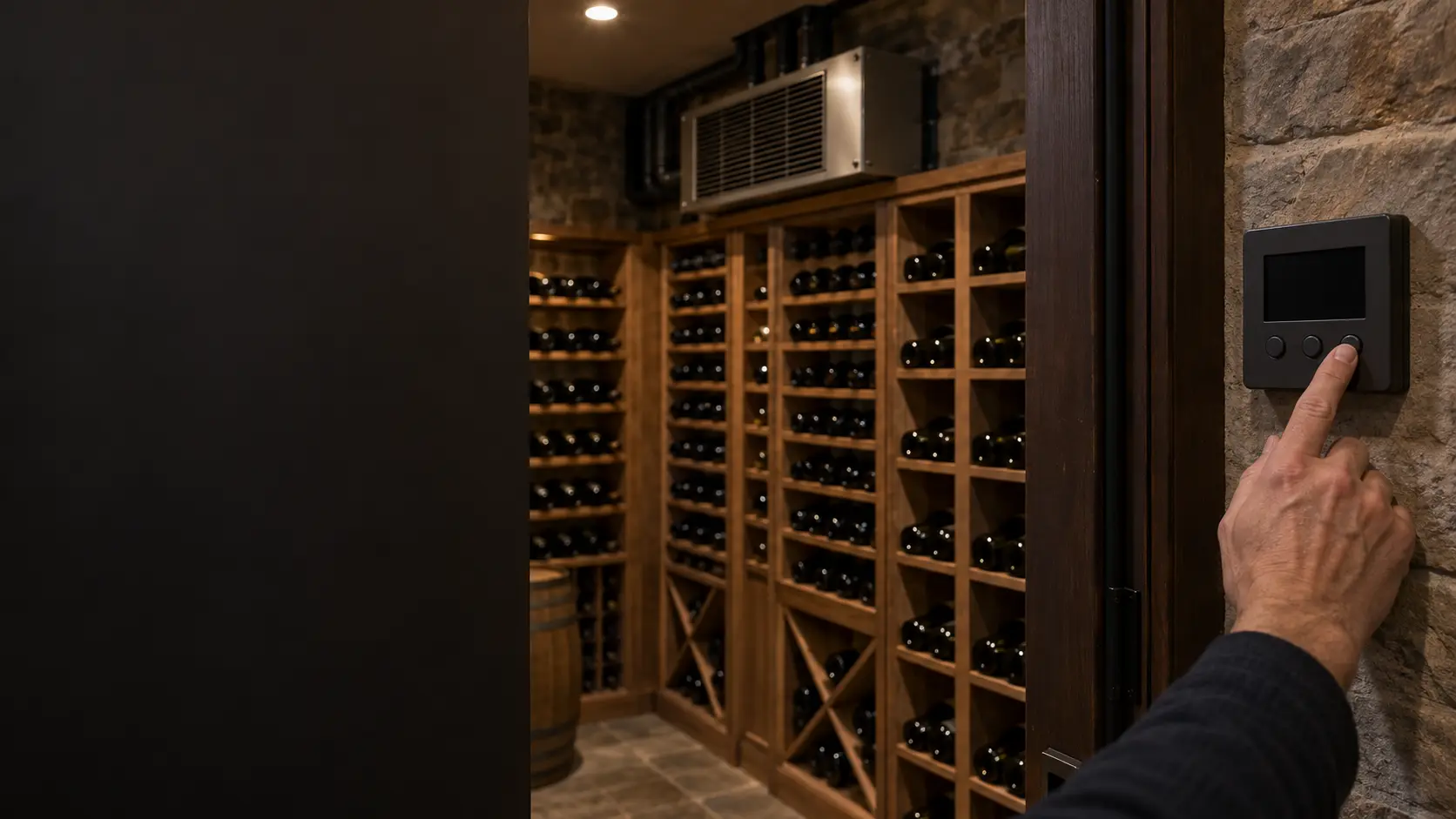
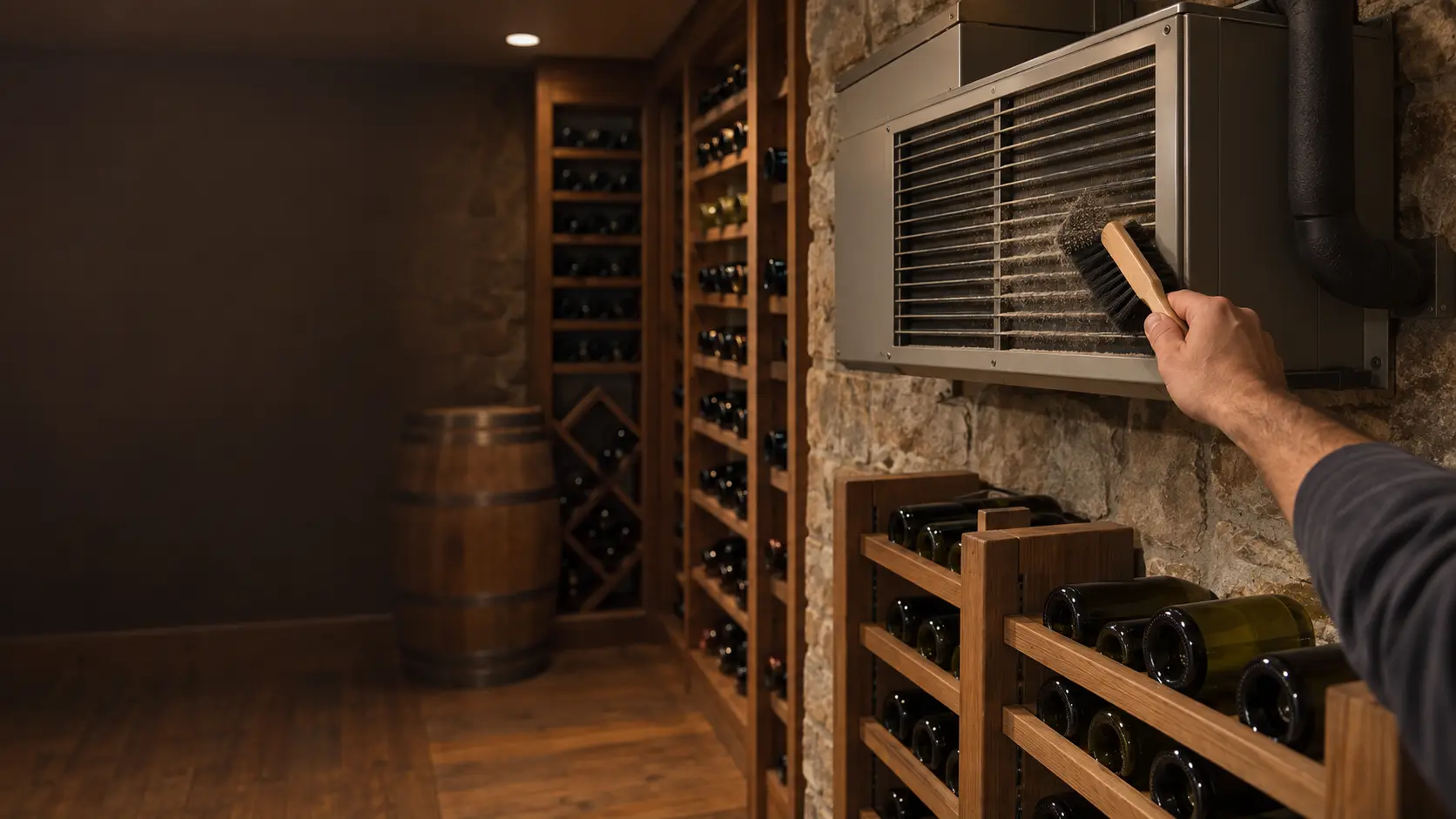
Maintenance and prevention
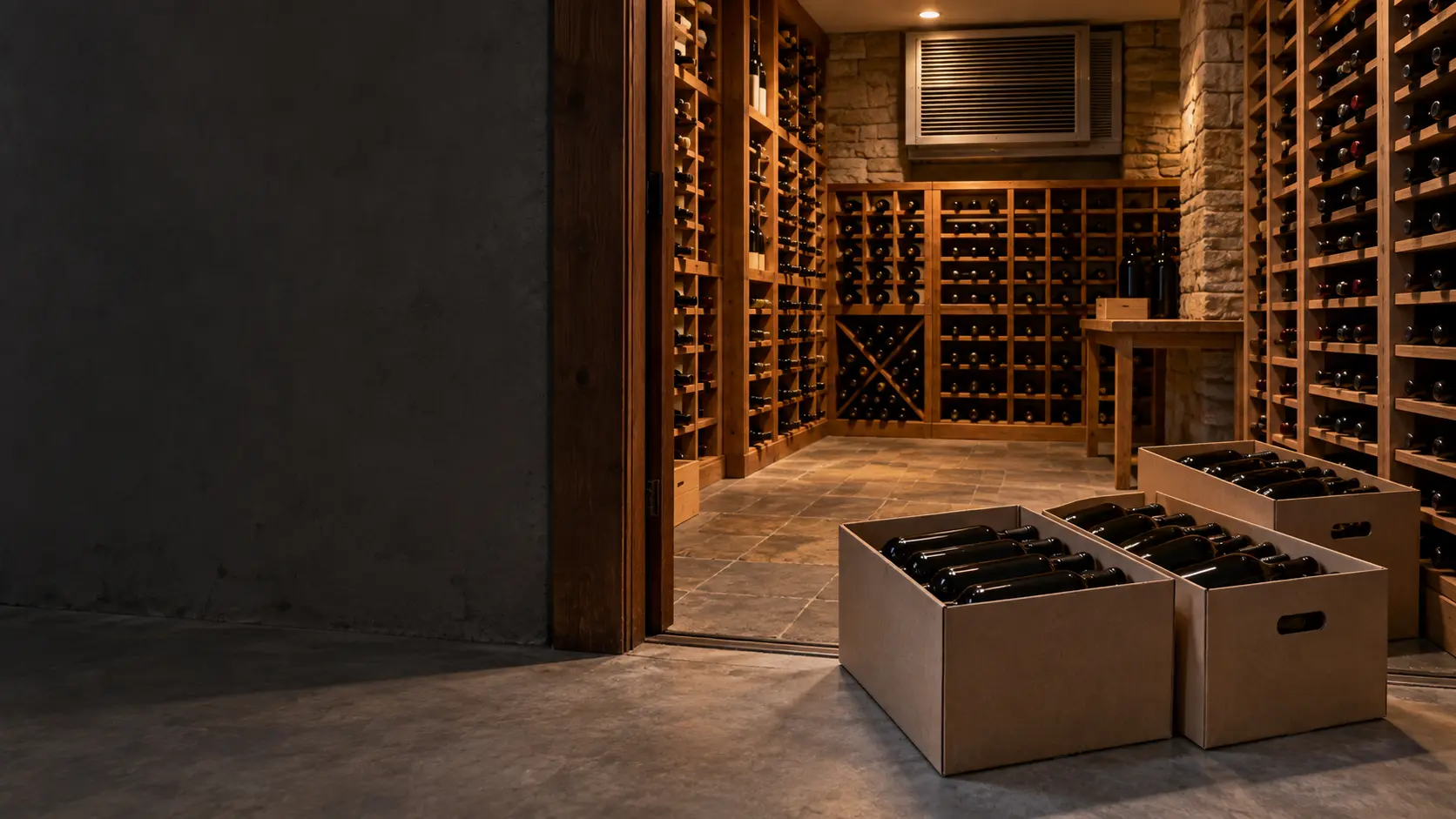
The collection, power and water


Installation and setup
Start from your question
The four questions most visits start with, each with the guide that answers it.
18 guidesWhere to start Where to startBack to your everyday
Let’s get your wine cellar cooling unit working again.
Three short steps online, or one call. Tell us what you are seeing and pick a window that works.