

Electricity first, then the water
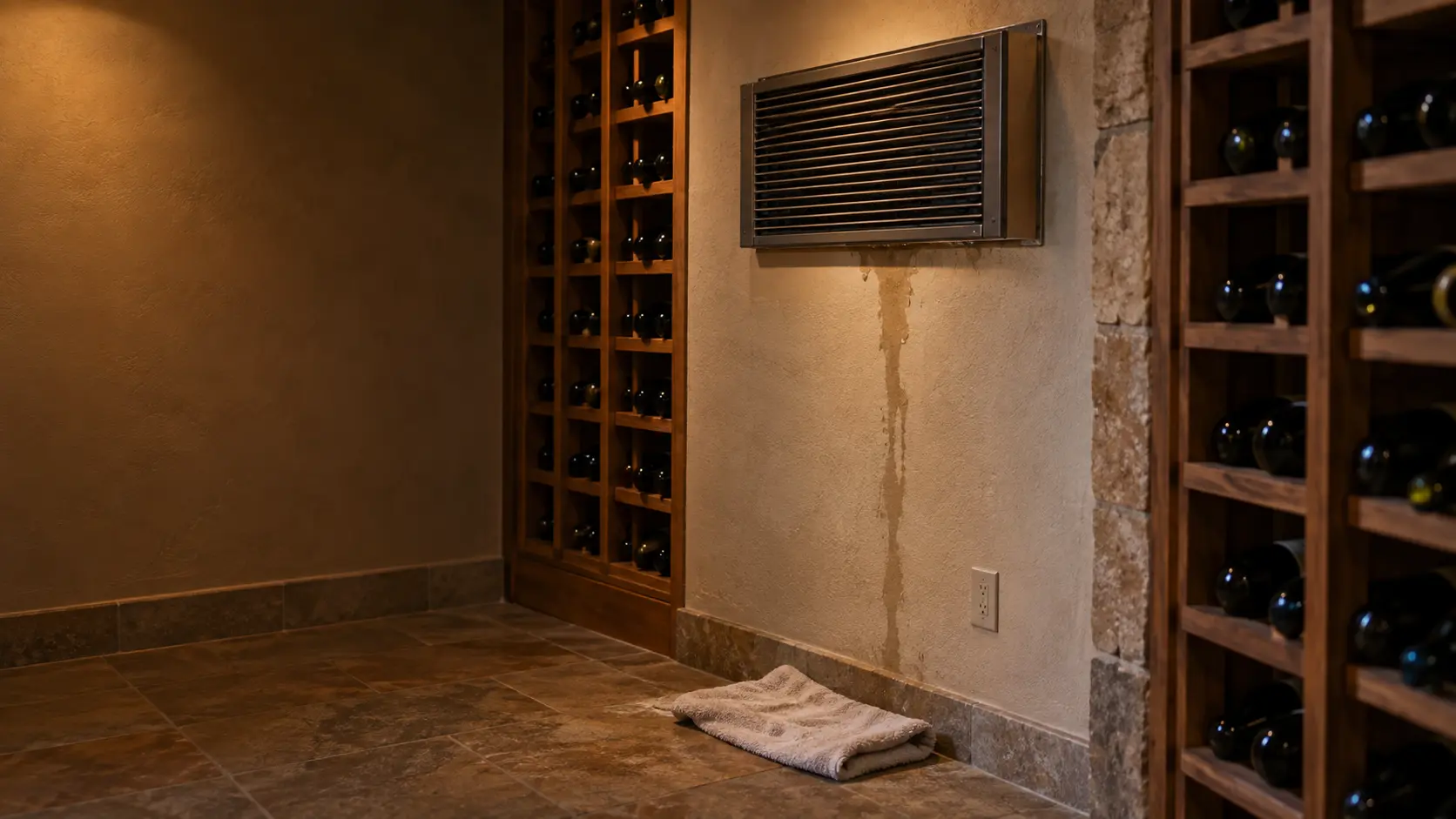
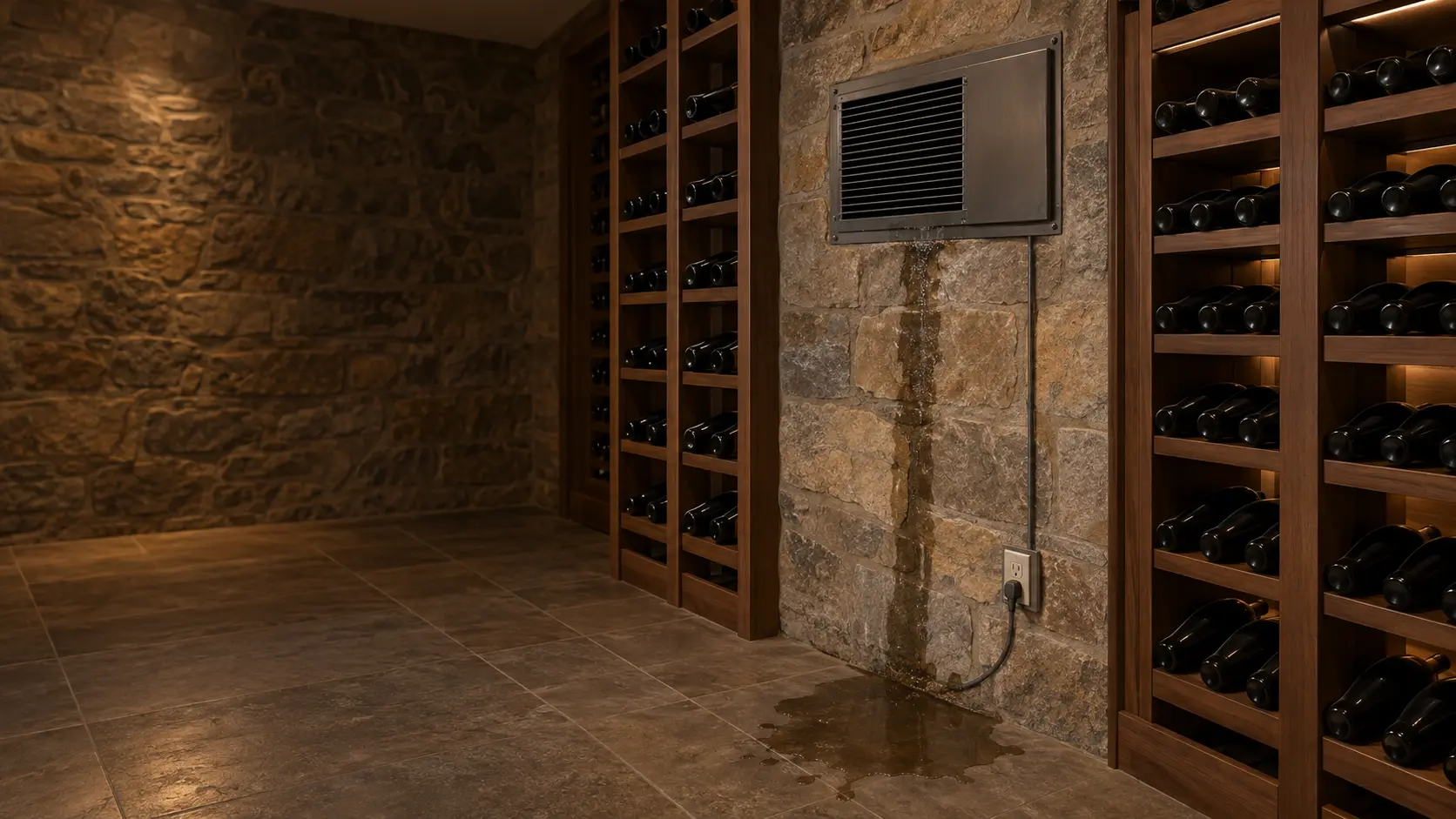
Ready.gov's advice for flooding applies on a small scale here: it warns of electrocution, tells people to keep their hands off any wet electrical device and out of standing water near one, and to shut the power off only where that can be done safely. In a cellar, the outlet for a through-the-wall unit is often right under it, and a thin sheet of water down the wall can reach the receptacle, the light switch by the door and the low-voltage cable of a wall controller in one run.
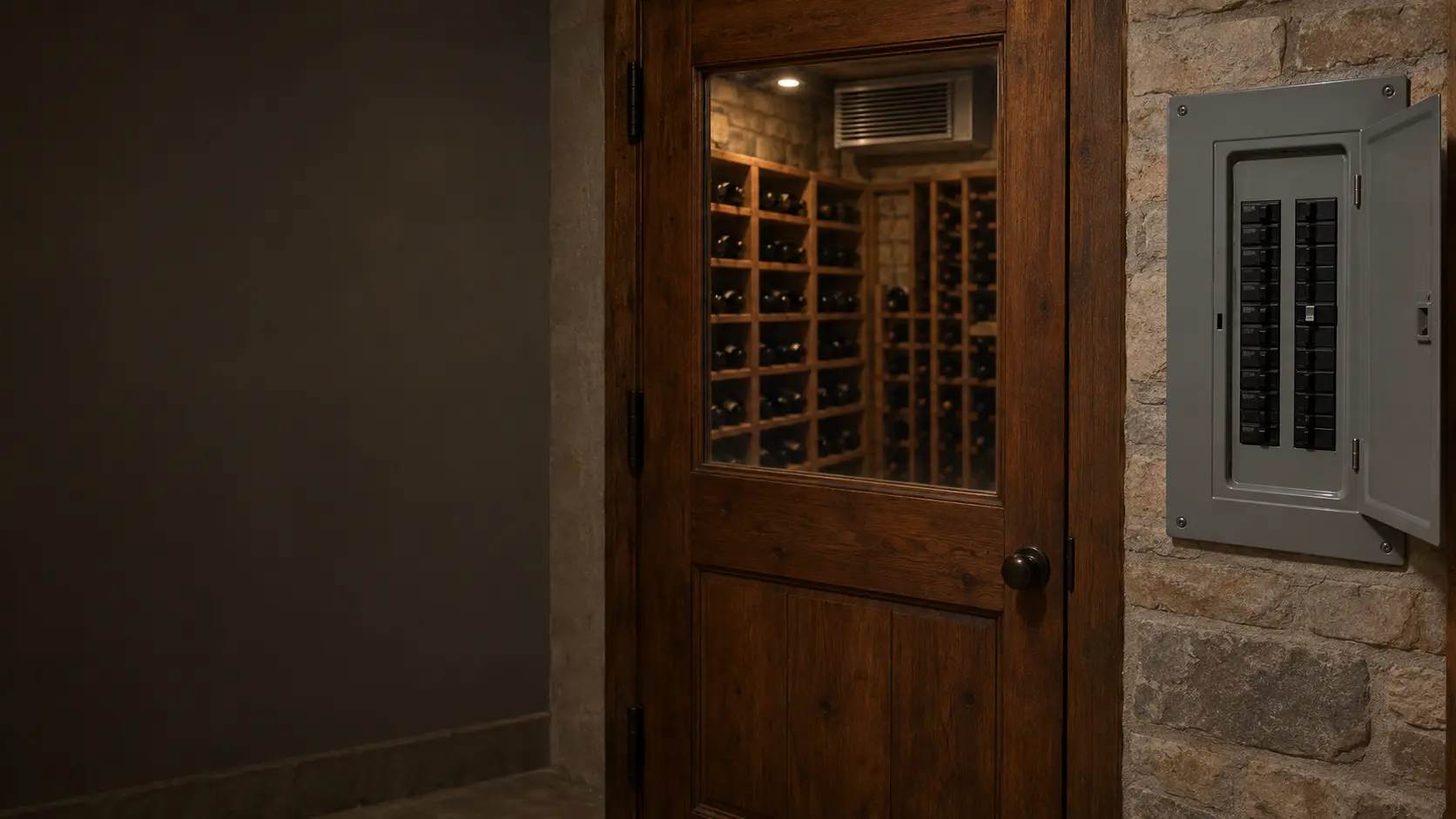
Go to the breaker panel, not to the cellar. When the panel and the floor before it are both dry, switch off the circuit for the unit and, if it shares one, the cellar lights. If the only way to the panel is across wet concrete, leave everything, keep people and pets out, and call an electrician.
- Stay out of the cellar while the floor under the unit is wet.
- Switch the unit's circuit off at the panel, standing on a dry surface.
- Do not pull a plug that is wet or that sits under dripping water.
- Only with the circuit dead: mop up, bring a light and inspect the drain.
Source: Ready.gov — Floods — Do not touch electrical equipment if it is wet or if you are standing in water; turn off the electricity only if it is safe to do so
What the GFCI on that circuit is doing
Breezaire asks for every one of its units to be plugged into a GFCI outlet on a circuit of its own, and that device is the one most likely to have acted already. According to CPSC's fact sheet, a GFCI keeps comparing outgoing and returning current, and an imbalance of 0.006 amperes is enough for it to open the circuit, fast enough to act before the shock reaches the heart. One GFCI receptacle also protects the ordinary outlets wired after it on the same run.
A cellar built before GFCI protection spread through the code may have none at all, or only one in a nearby bathroom that happens to feed the cellar outlet. If you do not know which device protects the unit, assume nothing does and use the breaker.
Resetting a GFCI that has tripped
Leave it tripped until the outlet, the plug and the wall above them are dry to the touch. A GFCI that trips again after a reset on a dry circuit is telling you about damage the water left behind, and that is an electrician's visit before it is ours.
Source: CPSC — What Is a GFCI? (fact sheet) — A GFCI cuts power when outgoing and returning current differ by as little as 0.006 amperes and also protects outlets further along the same circuit; Breezaire — WKL Series Installation Instructions — Plug into a GFCI outlet on its own circuit; the pull-down drain tube is for temporary overflow and extensions must run downhill; a poorly sealed room makes the unit run constantly and overflow; new building materials release moisture that fades

Where a cellar unit's water comes from
Breezaire's service answers start from a point owners rarely expect: the unit cannot make water. Everything in its pan was moisture in the cellar air, pulled out as the coil held the room near 50 to 70 percent humidity. A unit that suddenly sheds a lot of water is being fed damp air from somewhere, or its drain path has stopped carrying away the normal amount.
WhisperKool puts it the other way around: condensation is normal, and water near the unit usually traces to a drain line that is unconnected, blocked or not sloped. Which half of that is true decides whether the fix is a cleared tube or a sealed room.
Through-the-wall units and the pull-down tube
Breezaire's WKL units carry a pull-down drain tube meant only for temporary overflow, and their instructions ask that any extension run downhill the whole way, since the system relies on gravity. A tube pushed back up, or an extension with a rise in it, lets the base pan fill and spill over the shelf the unit rests on.
Ceiling units and the condensate pump
CellarCool's ceiling-mounted units lift their water with a small pump that senses the level in the drip tray. Its support page lists what stops it: mold or bacterial growth in the tray, drywall dust from a house still under construction, a drain line that sags into an uphill section, and a line routed outdoors that freezes in winter.
Split evaporators and a line behind the drywall
WhisperKool recommends against running a drain line inside a finished wall, because nobody can see a blockage or a slow leak there. When a stain spreads on the drywall below a split evaporator with no drip in sight, a hidden line is the first suspect.
Source: Breezaire — Service Q and A — The unit cannot make water; it removes moisture entering the cellar while holding 50 to 70 percent humidity; WhisperKool — Frequently Asked Questions — Water near a unit usually traces to an unconnected, blocked or badly sloped drain line; drain lines should not be concealed behind a wall
When the unit is keeping up with a leaky room
Breezaire lists two symptoms of a poorly sealed cellar together: a unit that runs constantly while the temperature barely drops, and water overflowing from the unit. Humid air sliding under a door with no bottom seal, or through a gap in the vapor barrier around a pipe, turns into water on the coil in steady amounts.
A brand-new cellar can behave the same way for a few weeks. Breezaire notes that fresh wood, paint and concrete hold a lot of moisture and release it slowly, and that the symptom fades on its own once the materials dry out.
- Water every day, rising in humid weather: damp air is getting into the room.
- Water right after the drain was disturbed: the tube, fitting or slope.
- Water only from a ceiling unit: the pump, its tray or its line.
- Water only in the first weeks after construction: building materials drying out.
Source: Breezaire — WKL Series Installation Instructions — Plug into a GFCI outlet on its own circuit; the pull-down drain tube is for temporary overflow and extensions must run downhill; a poorly sealed room makes the unit run constantly and overflow; new building materials release moisture that fades
Before the unit runs again
Keep the circuit off until the outlet, the cord and the plug are dry and nothing shows scorching or corrosion. Then wipe the racking and lift out any wooden cases sitting in water; Breezaire's construction notes warn that runaway humidity brings mold on bottles and walls and loosens labels.
If the source was the drain and you have cleared it, restart the unit and watch the drain outlet over the next hour. If the source was damp air, the room needs attention first, and the unit can wait.
Source: Breezaire — Wine Cellar Dynamics and Construction Guide — Humidity left to rise brings mold on bottles and walls and makes labels fall off