Protect the collection while you decide
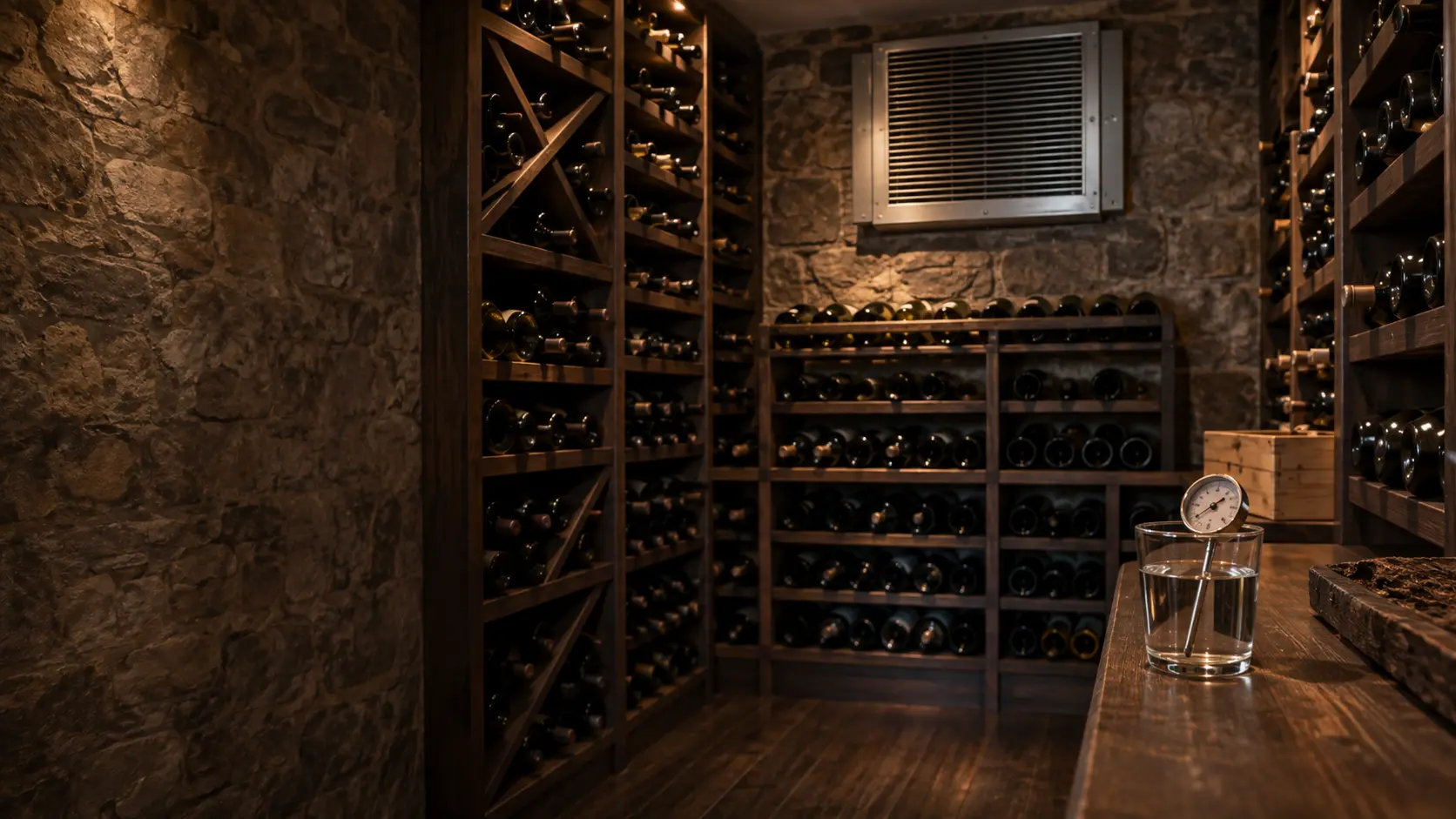
The machine can wait a few days; the cellar temperature cannot climb for weeks. Keep the cellar door shut so the mass of glass and wine holds its temperature as long as possible, and if a thermometer shows the room passing about 70°F, move the bottles you care most about to the coolest dark interior space in the house. CellarPro uses the same mark in its own controller, raising an alarm when the cellar stays above 70°F for an hour.
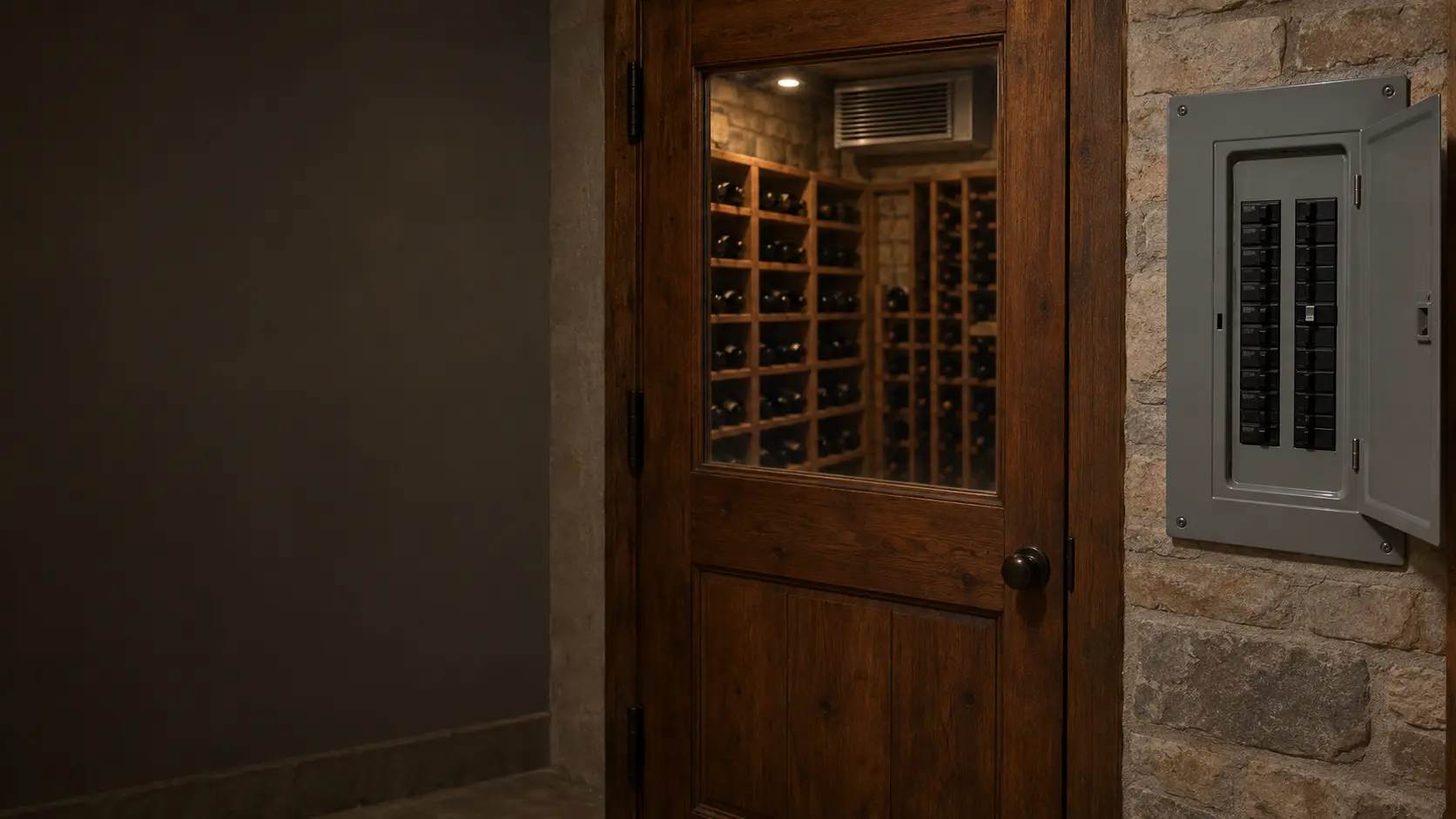
Write down what the unit did before it stopped: a display message, a noise, a breaker that tripped, water under the grille. Those notes shorten the diagnosis, and the diagnosis is what the repair or replace question hangs on.
Source: CellarPro — 1800 Series owner's manual — Alarm above 70°F for an hour; without a moisture barrier the unit becomes a dehumidifier; three-minute startup delay; hole 1/4 inch larger than the unit; up to a week of nonstop running at first
Is it the unit, or the room it works in?
A surprising share of worn-out cellar units were worked to death by their rooms. WhisperKool names a door that does not seal as one of the most common reasons a system runs continually, and CellarPro warns that without a moisture barrier and an airtight room its unit effectively becomes a dehumidifier and may produce buckets of water. Years of that shorten any compressor's life.
Before anyone prices a new machine, the door seal, the vapor barrier, the space receiving the exhaust heat and any recent changes to the cellar should be checked. If one of them is the cause, fixing it is part of either answer, and that is the first thing to settle when deciding whether to repair or replace a wine cellar cooling unit: a repaired unit will fail again in the same room, and a new one will too.
A hot exhaust space
Condenser heat that has nowhere to go raises the pressure inside the system until a protective switch or a controller alarm stops it. On a unit with that history, look at where the exhaust ends up, a closet, a sealed utility room, a garage in July, before accepting that the compressor is simply old.
Source: CellarPro — 1800 Series owner's manual — Alarm above 70°F for an hour; without a moisture barrier the unit becomes a dehumidifier; three-minute startup delay; hole 1/4 inch larger than the unit; up to a week of nonstop running at first; WhisperKool — Ceiling Mount H.E. owner's manual — A door that does not seal is one of the most common causes of continuous running; the warranty is not active until the checklist is approved

What failed, in order of what it involves
Cellar units share the parts of any small refrigeration system, and the cost of fixing them climbs in a familiar order. Most visits end in the first group. The decision only becomes difficult in the third.
- Smaller jobs: an evaporator or condenser fan motor, a temperature probe, a condensate pump or blocked drain, a loose connection, a controller display.
- Middle: a main control board, a start component on the compressor, a humidifier module on units that carry one, frozen coils caused by a failed airflow part.
- Largest: a compressor that will not run, a refrigerant leak, a damaged line set on a split system, all sealed-system work.
Before accepting a compressor verdict
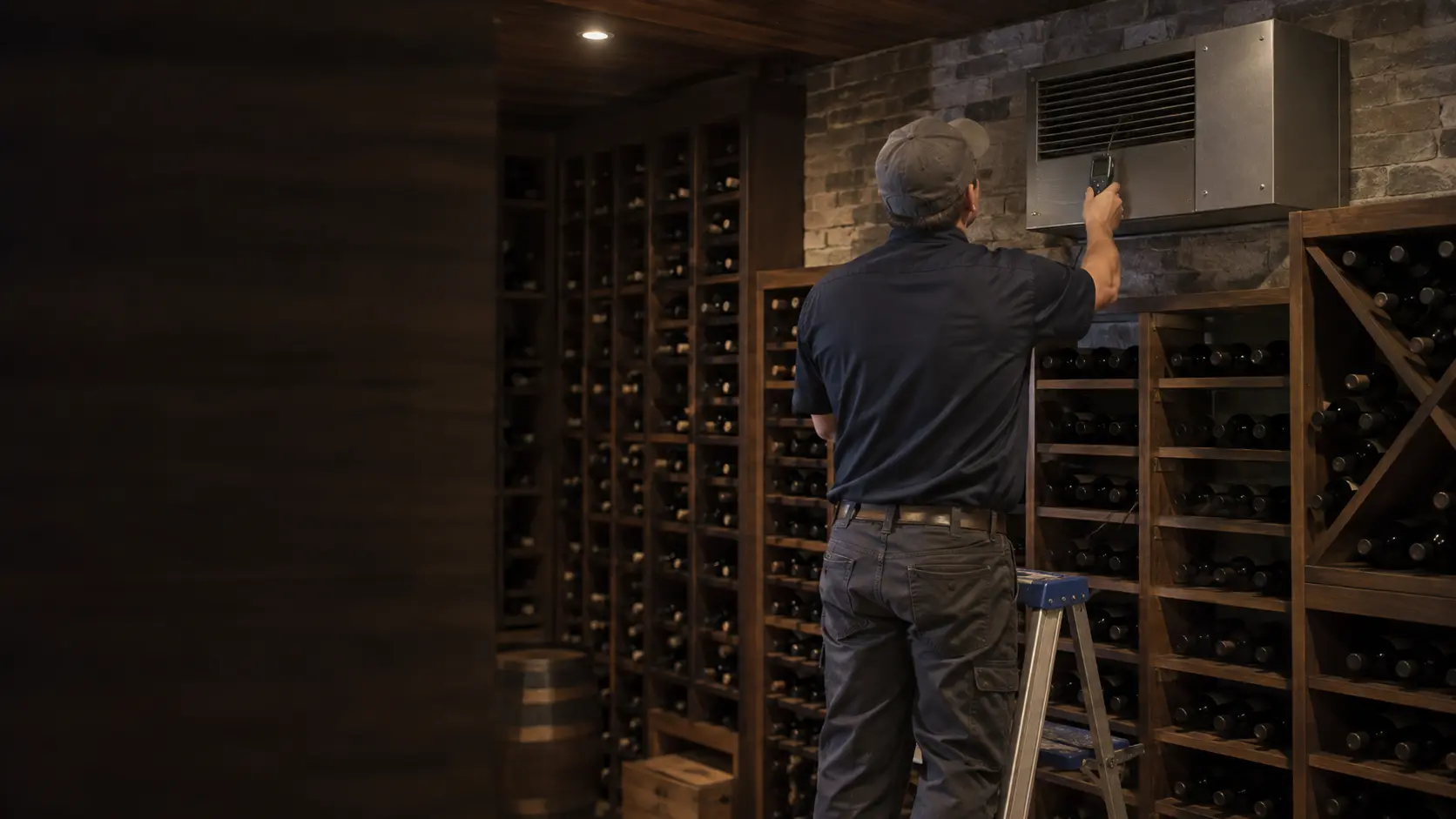
Ask how it was confirmed. A compressor that clicks and stops may be held off by a start relay, by high pressure from a blocked condenser or by a controller in its built-in startup delay; CellarPro's units, for instance, wait three minutes after power returns before they start.
Refrigerant leaks
A unit that is low on refrigerant has a leak somewhere. Adding refrigerant without finding and sealing it buys time, not a repair. On a split system, where the lines may run through finished walls and ceilings, the location of the leak decides the cost more than the leak itself.
Source: US EPA — Section 608 technician certification — Technicians who service or dispose of refrigerant-containing equipment must be certified
How the system type changes the answer
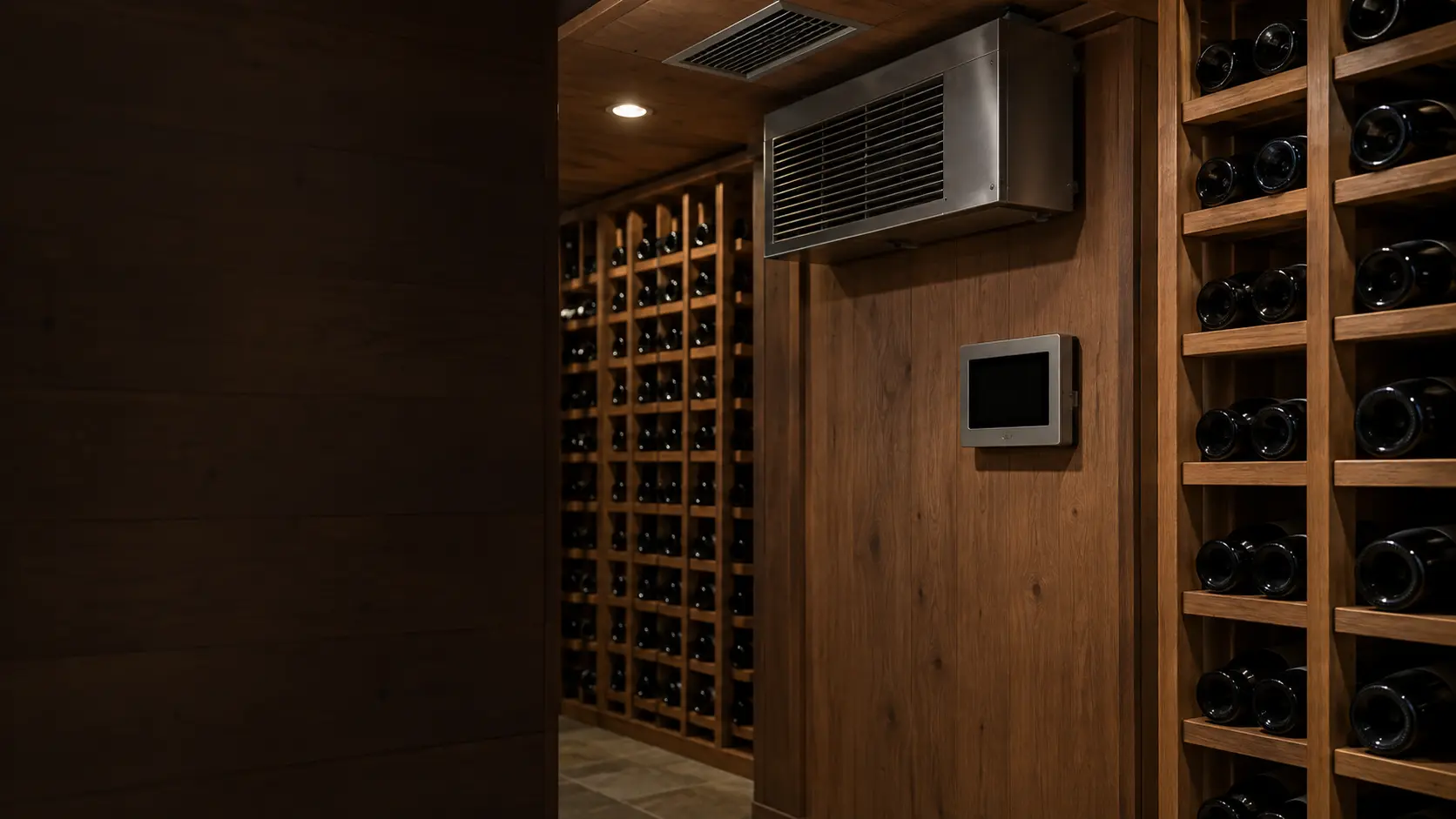
Of all the layouts, a through-the-wall unit is the cleanest replacement: it slides out of a framed opening and a new one slides in. That holds only if the new unit fits the same opening; CellarPro, for one, cuts its hole a quarter inch larger than the unit, so a model with different dimensions means reframing, insulating and sealing the wall again.
Ducted units sit somewhere between. The ducts, grilles and drain usually stay, and only the cabinet changes, provided the new one matches the duct sizes. Split systems have the most sunk into the building: a line set in the walls, an evaporator in the ceiling, a condensing unit on a pad. Replacing only the failed half is sometimes possible and sometimes not, depending on the refrigerant and the equipment's age, which is a question for the technician who has read the data plates on both halves.
Source: CellarPro — 1800 Series owner's manual — Alarm above 70°F for an hour; without a moisture barrier the unit becomes a dehumidifier; three-minute startup delay; hole 1/4 inch larger than the unit; up to a week of nonstop running at first
What a replacement costs besides the unit
The old equipment's refrigerant has to be handled properly. EPA treats equipment that is taken apart on site, as a split system is, like central air conditioning: the refrigerant is recovered before disposal under its servicing rules. Self-contained units that leave whole go the way of window air conditioners, and whoever finally scraps them must see that the refrigerant is captured.
A new unit also needs its settling time. CellarPro notes that a fresh unit may run nonstop for up to a week while it pulls a loaded cellar down, and some makers do not activate their coverage until an installation checklist has been returned; WhisperKool's split systems are one example. Budget for the bottles to wait in a cool dark place during the swap.
- Refrigerant recovery from the old equipment before it leaves the house.
- Reframing and resealing a wall opening if the new unit has a different footprint.
- A cool, dark place for the bottles during the swap and the first days of running.
- Paperwork some makers need back before their coverage starts.
Source: CellarPro — 1800 Series owner's manual — Alarm above 70°F for an hour; without a moisture barrier the unit becomes a dehumidifier; three-minute startup delay; hole 1/4 inch larger than the unit; up to a week of nonstop running at first; WhisperKool — Ceiling Mount H.E. owner's manual — A door that does not seal is one of the most common causes of continuous running; the warranty is not active until the checklist is approved; US EPA — Stationary refrigeration safe disposal requirements — Equipment dismantled on site must have refrigerant recovered under servicing rules; for equipment entering the waste stream intact, the final person in the disposal chain ensures recovery